
Neoteck 10kHz LCR Meter Tweezers
4.7Editor score
Auto component identification
Rotatable color display
Excel data export
This guide compares the top Lcr Meter Tweezer models for accuracy, features, and value to help you choose the best tool for your electronics work.
Finding the right Lcr Meter Tweezer is essential for modern electronics repair and component testing. These compact tools combine precision measurement with the convenience of tweezers, making them ideal for SMD work and quick diagnostics in tight spaces.
We evaluated ten top-rated models based on accuracy, frequency range, display quality, and ease of use. Each product was selected for its ability to handle diverse components including resistors, capacitors, and inductors with reliable performance.
Every pick highlights unique strengths such as auto-identification, calibration options, or portability. Prices and availability may vary so check the latest details before purchasing to ensure you get the best deal for your specific needs.
4.7Editor score

4.3Editor score

4.7Editor score
The following table provides a side-by-side comparison of all ten selected Lcr Meter Tweezer models to help you quickly identify key specifications and features that matter most for your workflow.
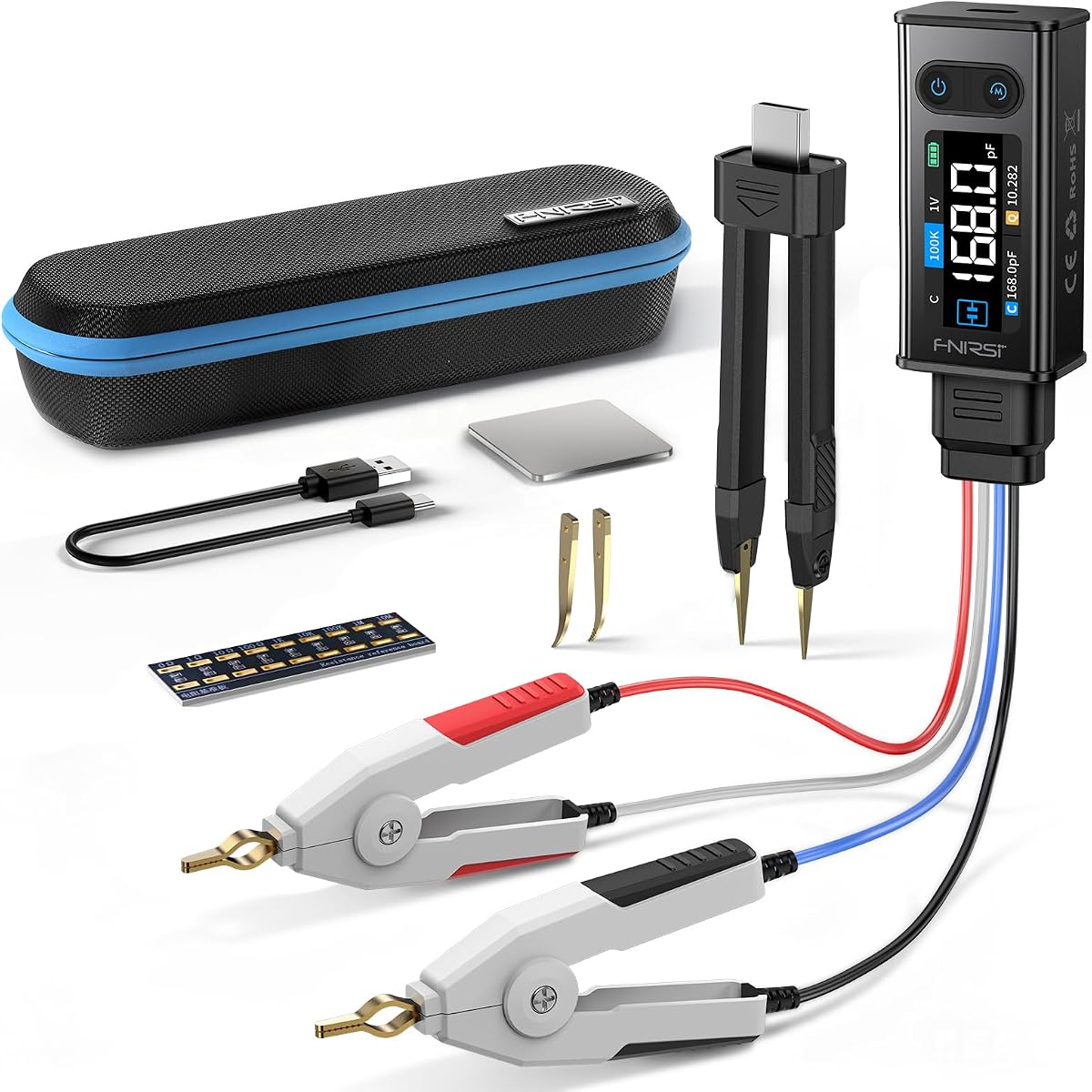



The FNIRSI LCR-ST1 stands out as a reliable choice for hobbyists and professionals needing quick component verification. With a solid rating and robust feature set it balances performance with affordability effectively for SMD repairs and general testing tasks.
We may earn a commission when you buy through this link, at no additional cost to you.
Its multifunctional capabilities include precise measurement of resistance, capacitance and inductance across three test frequencies. The auto recognition feature saves time by identifying components instantly while the HD color display ensures clear readings even in dimly lit workspaces.
While the screen cannot rotate the device is compact and comes with both pointed and hook head tweezers for versatility. The ability to export data via Excel adds value for those who need to log results regularly for quality control or documentation.
Ideal for users seeking a portable and efficient tester without breaking the bank this unit delivers consistent results. It is a strong recommendation for anyone looking to upgrade their electronics toolkit with a dependable Lcr Meter Tweezer.
Auto recognition allows technicians to identify electronic parts in seconds reducing workflow interruptions during complex repairs.
Included storage bag and rechargeable battery ensure you can work anywhere without worrying about lost parts or power.
We may earn a commission when you buy through this link, at no additional cost to you.
The Neoteck 10kHz offers an impressive balance of features for its price point making it a top budget option. Its high rating reflects user satisfaction with accuracy and usability especially for quick SMD identification and basic PCB troubleshooting tasks.
We may earn a commission when you buy through this link, at no additional cost to you.
A standout feature is the rotatable display which accommodates left and right-handed users comfortably. The multi-point calibration reduces parasitic errors ensuring reliable readings even when working with small components or dense circuit boards in tight spaces.
Though limited to 10kHz it covers essential frequencies for most common repairs and development projects. The inclusion of a spare tweezer tip and comprehensive accessory kit adds significant value ensuring you have what you need right out of the box.
This model is perfect for beginners or professionals needing a secondary tool for quick checks. If you prioritize cost efficiency without sacrificing key functionality this is a smart addition to any electronics workbench setup today.
The 180-degree rotation ensures comfortable reading from any position reducing strain during extended testing sessions.
Open Load and Short calibration options help eliminate stray capacitance for more accurate component measurements.
We may earn a commission when you buy through this link, at no additional cost to you.
The Smart Tweezers ST5S is a benchmark for precision in the Lcr Meter Tweezer category. Its 0.1% accuracy and Swiss-made gold plated leads make it suitable for high-end diagnostics where reliability and consistency are non-negotiable for engineers.
We may earn a commission when you buy through this link, at no additional cost to you.
The ClearValue OLED display provides excellent contrast and readability even in challenging lighting conditions. Automated component identification simplifies workflows while manual modes offer flexibility for deeper analysis of complex parameters like ESR and impedance.
Although it lacks some connectivity features found in cheaper models its build quality and calibration certificates justify the investment. The inclusion of a clam shell case and spare leads ensures durability and long-term usability in demanding environments.
This unit is best suited for professionals who need absolute confidence in their measurements. If accuracy and build quality are your priority and budget allows this is the ultimate tool for critical electronics testing needs.
With 0.1% accuracy this model delivers laboratory-grade precision suitable for sensitive and high-value component testing.
Lifetime support and two year warranty reflect the manufacturer confidence in product longevity and customer satisfaction.
We may earn a commission when you buy through this link, at no additional cost to you.
The FNIRSI LCR-ST2 extends performance with a 100kHz frequency range ideal for RF to large electrolytics. Its larger display and four RMS test levels provide superior flexibility for both SMD and through-hole component verification tasks effectively.
We may earn a commission when you buy through this link, at no additional cost to you.
Primary and secondary parameter displays allow thorough analysis without constant manual switching. The magnet on the back keeps the device secure on metal surfaces saving workspace clutter and improving convenience during repair processes.
Gold plated tweezer tips and Kelvin clips ensure reliable contact and reduced parasitic effects. This comprehensive kit supports detailed diagnostics and makes it a robust choice for serious hobbyists or repair technicians seeking broader capabilities.
Ideal for those needing more range than standard 10kHz units this model covers diverse applications well. The combination of features and build quality makes it a compelling upgrade for professionals requiring advanced testing options regularly.
100kHz range extends usability to RF components making it versatile for advanced circuit board repairs.
Magnetic rear mount allows secure placement freeing up hands for delicate soldering or component handling tasks.
We may earn a commission when you buy through this link, at no additional cost to you.
The Pro1 100KHz delivers outstanding accuracy with 0.1% precision making it a top choice for quality control and lab use. Its perfect rating highlights strong performance and reliability across various testing scenarios including critical component verification.
We may earn a commission when you buy through this link, at no additional cost to you.
With five test frequencies and three test voltages it offers flexibility for different component types. The wide measurement range ensures coverage from tiny SMD resistors to large inductors without needing additional tools for most tasks.
While details on the display are sparse the core measurement capabilities are robust. The inclusion of lifetime support suggests strong customer service backing which adds confidence for buyers investing in a high-end tester.
This unit is best for those prioritizing precision and comprehensive testing capabilities. If you need a tool that guarantees reliable readings for advanced electronics work this model provides the technical depth required.
With 0.1% accuracy it ensures minimal measurement error for critical diagnostics and quality assurance checks.
Lifetime support indicates manufacturer commitment to helping users maintain optimal performance over long term use.
We may earn a commission when you buy through this link, at no additional cost to you.
The DM103 addresses accuracy drift with user-defined calibration allowing technicians to maintain precision over time. This feature ensures data accuracy remains consistent even with aging components making it a practical tool for professional use.
We may earn a commission when you buy through this link, at no additional cost to you.
Its flip OLED screen accommodates different working angles for better visibility during testing. The compact ergonomic design enables one-handed operation which is crucial when working on small SMD components or tight circuit boards.
With adjustable frequency and test voltages it adapts to diverse needs efficiently. The built-in battery and Type-C charging ensure long working times without interruptions so focus remains on the task at hand.
Ideal for users who value long-term reliability and adaptability this model offers solid value. If you need a portable tool that you can recalibrate to avoid drift it is a strong contender for daily tasks.
User-defined calibration lets you adjust to standard resistors ensuring stable readings over extended periods of use.
One-hand operation design reduces strain and improves efficiency when handling tiny components on dense boards.
We may earn a commission when you buy through this link, at no additional cost to you.
The LT1 Mini LCR offers unique versatility with an integrated signal generator for wave and step outputs. This functionality supports more advanced diagnostics such as sweep frequency measurements adding value beyond standard component testing capabilities.
We may earn a commission when you buy through this link, at no additional cost to you.
Its auto screen rotation simplifies handling for different users ensuring clear visibility from various angles. With a large 400mAh battery it supports long continuous use sessions without frequent recharging interruptions during workflow tasks.
Automatic recognition reduces manual mode selection saving time for technicians. The clear digital display ensures readings are easily interpreted even in low light environments where standard meters might struggle to perform effectively.
This unit is perfect for hobbyists and engineers needing extra diagnostic features in a portable format. If you want a single tool for testing and signal generation this model provides exceptional utility for DIY or lab use.
Built-in signal generator provides square sine and step waves enabling broader testing scenarios for circuit verification.
Large capacity battery supports hours of continuous use reducing downtime during intensive repair or diagnostic sessions.
We may earn a commission when you buy through this link, at no additional cost to you.
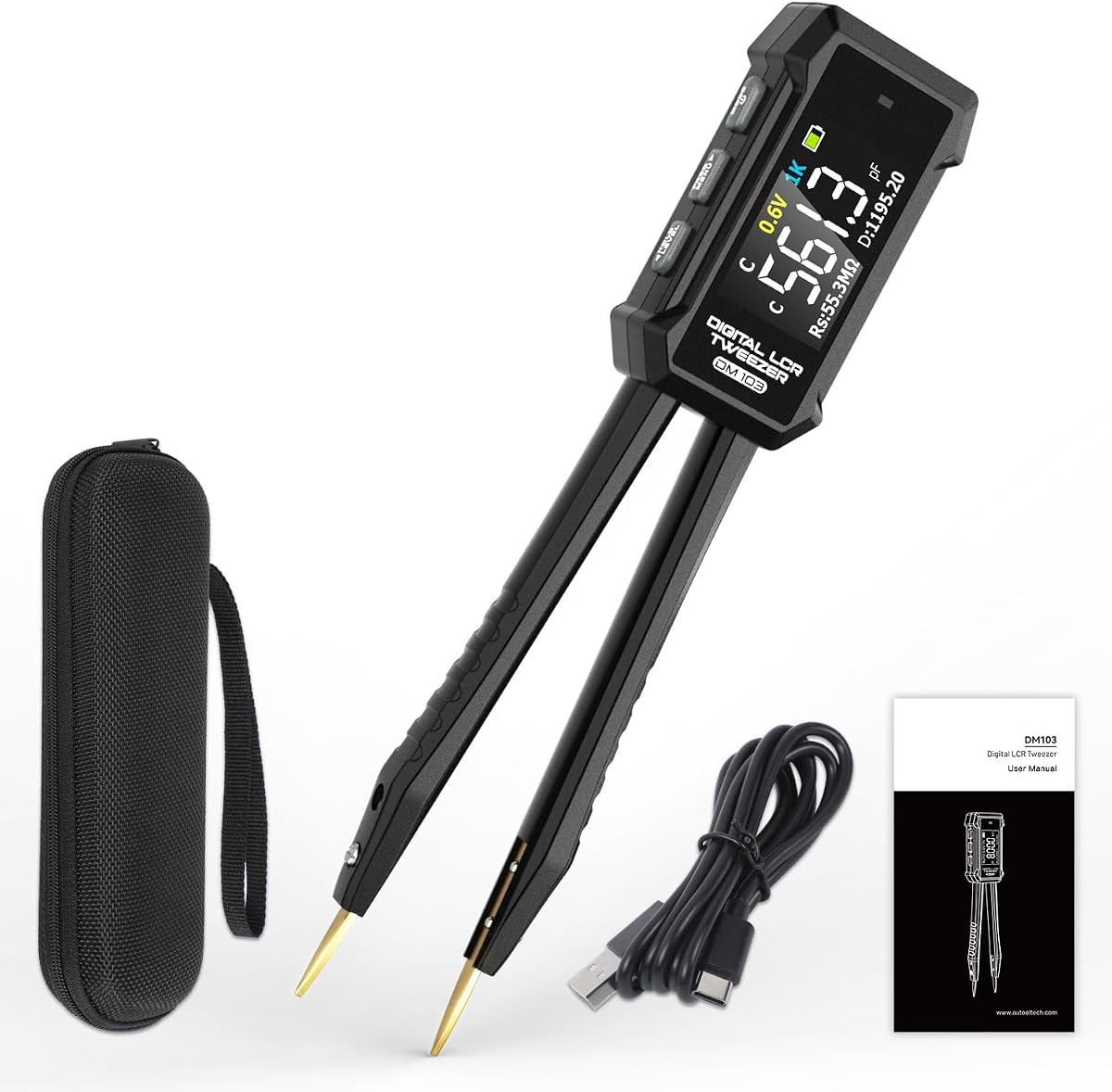
The AUTOOL DM103 features a high-quality IPS display that ensures clear visibility in both bright and dark environments. Dual parameter display allows simultaneous reading of primary and secondary data which enhances diagnostic speed and accuracy significantly.
We may earn a commission when you buy through this link, at no additional cost to you.
Gold plated precision probes provide reliable contact on tiny SMD components and high-density PCBs consistently. This stable connection helps maintain measurement integrity especially when working with fine pitch parts where loose contact causes errors.
Firmware upgrades via Type-C ensure the device stays current with latest performance optimizations. Auto recognition reduces manual steps and makes testing intuitive for users of all skill levels seeking reliable component verification results.
Ideal for users who value visual clarity and modern tech features this model delivers a premium experience. If readability and software updates are important for your workflow this unit offers excellent value and convenience.
Self-luminous IPS screen reduces eye strain in varying lighting conditions for better focus during long sessions.
Gold plated probes ensure stable measurements on fine pitch SMD components preventing connection errors during tests.
We may earn a commission when you buy through this link, at no additional cost to you.
The Global Specialties LCR-58 is a straightforward tool focused on core DCR measurement and basic LCR functions. Its simplicity makes it easy to use for quick checks where advanced parameters or auto recognition are not required by users.
We may earn a commission when you buy through this link, at no additional cost to you.
Switch between series and parallel modes easily to match component testing needs efficiently. The data hold function ensures you can record results accurately without rushing to copy them manually after testing each component quickly.
With overload protection and low battery indicators it offers reliable safety features for everyday work. While it lacks modern bells and whistles it serves well for maintenance tasks or budget-conscious buyers needing basic precision.
This model is best for users who prefer simplicity over complex features. If your work involves standard resistor or capacitor checks without deep analysis this tool provides straightforward functionality at an accessible price point.
Straightforward operation makes it accessible for users who need quick checks without complex configuration steps.
Overload protection prevents damage to the device during unexpected spikes ensuring durability in workshop environments.
We may earn a commission when you buy through this link, at no additional cost to you.
The Mini Smart Tweezer offers high frequency testing up to 100KHz making it suitable for RF and advanced applications. Its perfect rating indicates strong user trust in its accuracy and build quality for a variety of testing needs.
We may earn a commission when you buy through this link, at no additional cost to you.
CNC metal housing ensures durability and stability during use. With auto recognition and multiple test modes it simplifies workflows while maintaining flexibility for different component types and diagnostic requirements in repair work.
Voltage measurement adds versatility beyond standard LCR parameters. The adjustable frequency options allow users to tailor testing conditions to specific component requirements ensuring optimal performance and accurate data across diverse scenarios.
Ideal for those needing high frequency capabilities in a rugged portable format. If durability and frequency range are priorities for your diagnostics this model provides a reliable and well-reviewed solution for electronics testing.
Up to 100KHz testing supports RF component analysis expanding utility beyond basic electronics repair work.
CNC metal housing protects internal electronics ensuring longevity during regular use in workshop environments.
We may earn a commission when you buy through this link, at no additional cost to you.
Selecting the right Lcr Meter Tweezer involves evaluating accuracy, frequency range, display quality, and extra features that match your specific workflow needs and budget constraints.
Accuracy determines how close a measurement is to the true value. For professional diagnostics high accuracy like 0.1% ensures reliability in sensitive circuits.
Look for units with calibration options to maintain accuracy over time and avoid drift issues during regular use.
Different components behave differently at various frequencies. Most hobbyist tools offer up to 10kHz but advanced work may require 100kHz for RF or large electrolytics.
Choose a model that covers the frequency range needed for your specific component types to ensure valid test results.
A clear display is critical for reading small values on tiny SMD components. OLED or IPS screens offer better contrast and readability in various lighting conditions.
Rotatable screens improve ergonomics and allow comfortable viewing for both left and right-handed users during long sessions.
Auto ID saves time by instantly identifying resistors, capacitors, and inductors without manual mode switching. This feature streamlines workflow especially when dealing with mixed components on boards.
Ensure the auto recognition system is responsive and handles a wide range of values accurately for efficient testing.
Regular calibration helps maintain measurement integrity over time. User-defined calibration options allow you to adjust readings based on reference standards.
Units with Open, Load, and Short calibration features reduce parasitic errors and ensure more reliable results in complex testing scenarios.
For quality control or documentation, data logging capabilities are essential. Look for models that save records and export them to PCs via USB or Excel formats.
Easy data transfer simplifies reporting and helps track component performance over time for maintenance records or analysis.
Since Lcr Meter Tweezers are handheld, battery life and charging options matter for field work. Rechargeable units with Type-C ports ensure long uptime and easy power access.
Compact designs with included storage bags protect the device during transport and keep accessories organized on the go.
High-quality probes with gold-plated tips ensure stable contact and reduced resistance on small components. Some kits include spare tips for better long-term durability.
Accessories like Kelvin clips or additional testers add value and versatility for different testing scenarios and component types.
To ensure accurate results always calibrate your unit before each session. Perform Open, Short, and Load calibration to remove stray capacitance and resistance from your leads and test environment.
Use the correct test voltage and frequency for your component type. Lower frequencies work best for large capacitors while higher frequencies help analyze smaller resistors or inductors effectively.
Store your Lcr Meter Tweezer in a dry safe place using the included case. Keep tips clean and dry to prevent oxidation which can affect contact quality and measurement reliability over time.
An Lcr Meter Tweezer measures Resistance, Capacitance, and Inductance of electronic components. Many models also support testing for diodes, continuity, impedance, and quality factor for comprehensive component analysis.
Yes, Lcr Meter Tweezers are specifically designed for SMD components. Their probe tips are optimized to handle tiny parts on PCBs without shorting adjacent traces during testing.
You should calibrate your Lcr Meter before each important test session. Regular calibration ensures long-term accuracy and minimizes errors caused by environmental changes or component drift over time.
Series mode models series circuit effects and is ideal for low impedance components. Parallel mode suits high impedance components. Choosing the right mode improves measurement accuracy for specific part types.
Many advanced models support data storage and export via USB or Excel. This feature is useful for quality control or logging test results for later analysis or reporting purposes.
Most modern Lcr Meter Tweezers come with rechargeable batteries and Type-C charging ports. This ensures you can work for extended periods without needing to replace disposable batteries.
Auto identification is generally highly accurate for standard components. However, for complex or unknown parts manual verification using secondary parameters is recommended for absolute certainty.
Most units offer 10kHz to 100kHz ranges. Higher frequencies support RF testing while lower frequencies are better for large capacitors and inductors requiring different impedance characteristics.
The top picks in this guide offer a range of solutions from budget-friendly options like Neoteck to premium units like Smart Tweezers. Each has unique strengths that cater to different user needs and expertise levels.
Prioritize features like accuracy, frequency range, and display quality based on your specific tasks. If you work on RF components choose higher frequency options but for general repair focus on ease of use.
Prices and availability can change over time so always verify current specs and offers before purchasing. Investing in the right tool ensures efficient and reliable diagnostics for your electronics projects.