
Sipeed Tang Nano 20K
4.5Editor score
20K LUT4 Logic Cells
Open Source RISC-V
Compact Single Board
This guide compares the top Fpga Retro Consoles available in October 2026, evaluating performance, features, and compatibility to help you choose the perfect
Fpga Retro Consoles represent a unique intersection of modern hardware technology and nostalgic gaming experiences. These devices leverage Field Programmable Gate Array technology to recreate classic console hardware with incredible accuracy and low latency. Whether you are a developer or a gamer, these boards offer distinct advantages over standard emulation solutions.
To compile this list, we evaluated each product based on FPGA capacity, connectivity options, supported emulator cores, and overall build quality. We examined official documentation, community feedback, and technical specifications to ensure accuracy. Our goal is to provide a comprehensive overview of the current market landscape for FPGA-based retro gaming hardware.
Each pick in this guide highlights specific strengths such as portability, expandability, or raw processing power. You will find detailed breakdowns of what each device offers for your setup. Please note that product availability and specifications may change over time, so verify details before purchasing to ensure compatibility with your needs.
4.5Editor score
4.8Editor score

4.5Editor score
The following table provides a side-by-side comparison of all ten products selected for this guide. It highlights key specifications and core capabilities to help you quickly identify the device that best fits your specific requirements and budget constraints.




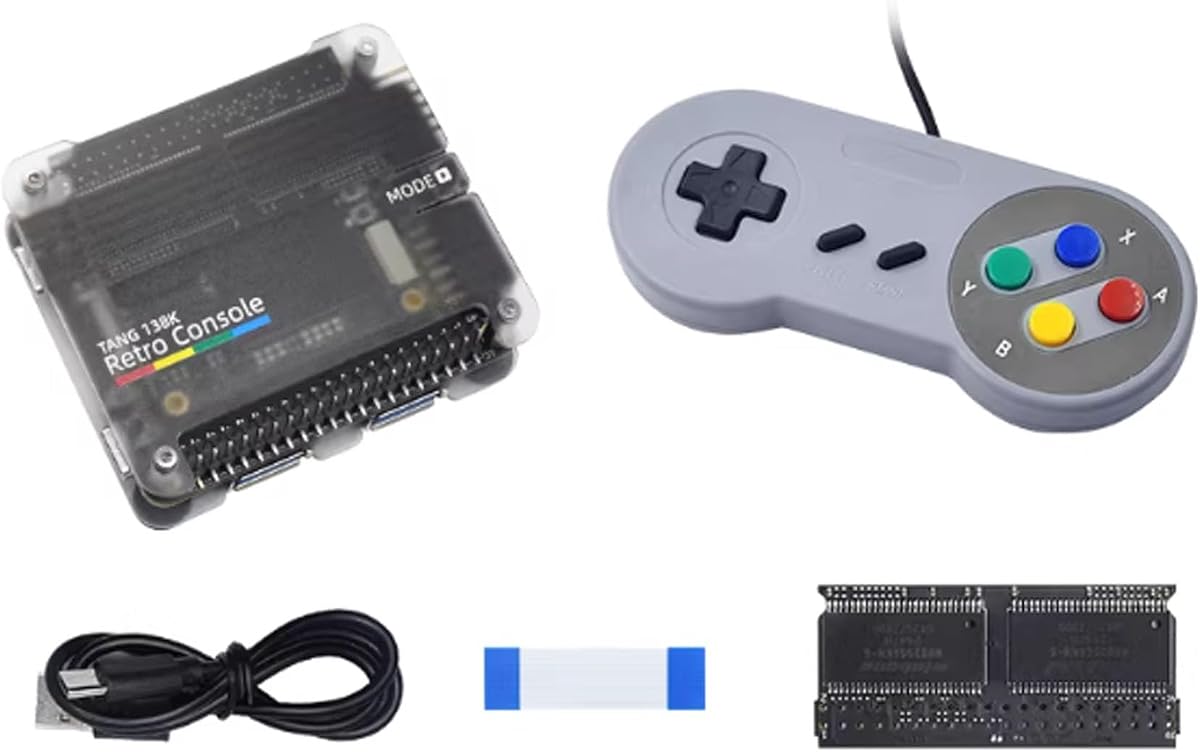
This board represents one of the most capable FPGA development platforms for retro gaming. It features a 138K LUT FPGA which provides ample resources for complex emulator cores. The inclusion of HDMI output ensures you can connect directly to modern displays without additional hardware.
We may earn a commission when you buy through this link, at no additional cost to you.
The device stands out due to its versatility as both a development board and a gaming console. You can use it with Raspberry Pi 5 PCIe HATs for expanded functionality. The dual PMOD interfaces allow for custom input devices or additional peripherals to be connected easily.
While the price is higher than entry-level boards, the performance justifies the cost for serious users. You may need technical knowledge to set up the environment properly. This is acceptable given the flexibility and power it offers over simpler solutions.
If you are a developer looking for a robust platform to build custom retro games, this is the ideal choice. It bridges the gap between hobbyist projects and professional development. We recommend it for users who want the most powerful FPGA experience available.
The 138K LUT configuration allows for running multiple complex emulator cores simultaneously without performance degradation.
Support for Raspberry Pi 5 PCIe HATs opens up unique integration possibilities for advanced retro setups.
We may earn a commission when you buy through this link, at no additional cost to you.
This comprehensive kit offers a powerful combination of hardware and software for retro gaming enthusiasts. It supports both 60K and 138K LUT4s, giving you flexibility in your project choices. The BL616 MCU onboard ensures smooth operation and debugging capabilities for your development tasks.
We may earn a commission when you buy through this link, at no additional cost to you.
The inclusion of USB3.0 and HDMI outputs makes it easy to connect to modern peripherals and high-resolution displays. You can use the Linux dev board features to run custom applications alongside your retro game cores. The compact size allows you to fit it easily into your existing setup.
Although the setup requires some technical expertise, the benefits are significant for experienced users. You will need to manage external power sources during operation. These trade-offs are reasonable considering the level of control and performance the device provides.
This product is best suited for those who want a complete development environment ready out of the box. It serves as both a gaming console and a professional tool for FPGA programming. We highly recommend it for users who value flexibility and high performance in their systems.
USB3.0 and multiple USB2 ports ensure you can connect controllers and storage devices without bandwidth bottlenecks.
The ability to choose between 60K and 138K SOMs allows you to tailor the board to your specific project needs.
We may earn a commission when you buy through this link, at no additional cost to you.
This board distinguishes itself with a unique RISC-V core that enhances its versatility for developers. It offers a 138K LUT Gowin FPGA with a integrated AE350 hardcore, enabling complex logic designs. The HDMI output supports high resolutions which ensures crisp visuals on modern screens.
We may earn a commission when you buy through this link, at no additional cost to you.
The fanless design makes it an excellent choice for quiet environments where noise is a concern. You get dual PMOD ports for connecting various modules or custom input devices. This combination of features provides a professional-grade development experience in a small package.
New users may face a learning curve with the IDE and documentation is sometimes limited. However, the community support helps mitigate this issue over time. These challenges are acceptable for a board that offers such high performance and unique architectural features.
We recommend this device for those who need a powerful, quiet solution for retro game development. It is particularly well-suited for projects requiring RISC-V integration or silent operation. If you want a high-end board that does not compromise on performance, this is an excellent choice.
The fanless design ensures silent operation ideal for quiet gaming sessions or noise-sensitive environments.
Built-in RISC-V AE350 hardcore simplifies development tasks by providing a powerful CPU core on the board.
We may earn a commission when you buy through this link, at no additional cost to you.
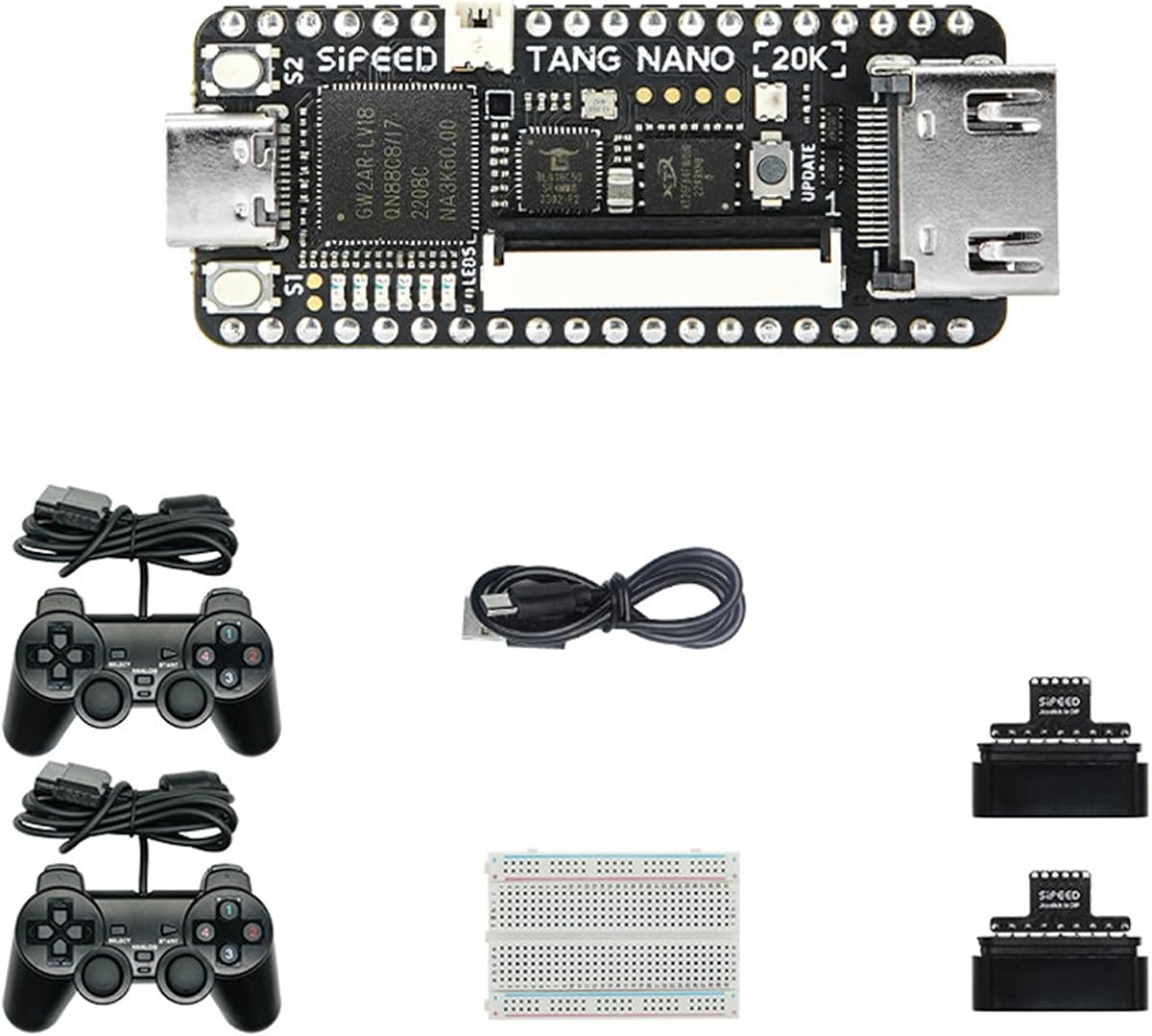
The Nano 20K provides a solid entry point into FPGA development with its 20K LUT4 logic cells. It comes equipped with 64Mbits SDRAM which supports running Linux on this single board computer. This makes it suitable for a range of projects from simple retro consoles to complex digital designs.
We may earn a commission when you buy through this link, at no additional cost to you.
You get onboard JTAG support which simplifies the debugging process significantly. The board supports RGB LCD displays which allows for direct screen integration without extra converters. This level of integration is rare in this price segment and adds significant value to your development work.
Limitations in SDRAM capacity might restrict some heavier Linux operations. There is also no direct HDMI output on this specific variant which requires additional hardware for display. These trade-offs are typical for a budget-friendly board but should be noted before purchase.
This board is perfect for hobbyists who want to learn FPGA programming without breaking the bank. It offers enough power to run classic game cores and Linux-based applications. We recommend it for those seeking a balance between affordability and functional capabilities.
JTAG debugging support allows you to trace and fix hardware issues efficiently during development.
Support for RGB LCD screens means you can build custom handhelds without needing external video converters.
We may earn a commission when you buy through this link, at no additional cost to you.
This kit version of the Nano 20K provides everything you need to get started immediately. It includes the BL616 onboard debugger which facilitates communication with the FPGA. The system runs RISC-V Linux which allows for a wide range of applications and retro game setups.
We may earn a commission when you buy through this link, at no additional cost to you.
The kit supports RGB LCD and HDMI ports making display connections straightforward for your projects. You can use the microSD slot to store games and system files easily. This comprehensive package saves you time looking for compatible components elsewhere.
Some users report that setup instructions can be vague for beginners. The included accessories might vary between batches which could cause confusion. These issues are minor and can be resolved with community support and online resources.
We recommend this kit for those who want a hassle-free entry into FPGA development. It offers a complete ecosystem for building retro games or other digital projects. If you prefer a ready-to-go solution over buying individual parts, this kit is an excellent choice.
Getting a complete kit removes the guesswork of sourcing compatible components for your FPGA project.
Running RISC-V Linux directly on the board simplifies application development and game loading significantly.
We may earn a commission when you buy through this link, at no additional cost to you.
This product offers open source RISC-V software which appeals to those who value freedom and customization. It supports multiple display outputs making it versatile for various visual setups. The onboard BL616 debugger enhances the development experience significantly for technical users.
We may earn a commission when you buy through this link, at no additional cost to you.
You can run NES emulators and other retro game cores efficiently on this board. The GW2AR-18 FPGA chip provides sufficient logic cells for most standard emulation tasks. This makes it a practical choice for creating custom handheld consoles or arcade cabinets.
Memory constraints may limit the complexity of your Linux environment. The boot process can be complex and requires careful configuration to avoid issues. These drawbacks are acceptable given the open source nature and overall performance of the device.
We recommend this board for developers who prioritize open source software and display flexibility. It is suitable for building custom retro systems that need to adapt to different screens. If you want a board that supports open standards well, this is a strong candidate.
Open source RISC-V software allows full control over your system and customization without proprietary restrictions.
Multiple display outputs mean you can connect to different types of screens using the same base hardware unit.
We may earn a commission when you buy through this link, at no additional cost to you.
This handheld console delivers 300+ classic games out of the box without needing downloads. It is credit card sized which makes it incredibly portable for travel or daily use. The USB-C port supports multiplayer battles which adds social value to the gaming experience.
We may earn a commission when you buy through this link, at no additional cost to you.
You can use it as a STEM coding board to learn C++ using Arduino IDE. This educational aspect makes it a valuable gift for students or tech enthusiasts. The open source ecosystem ensures you can find thousands of community assets to expand your library.
While it lacks HDMI output for TV play, this is a trade-off for its size and battery life. It is limited to 8-bit games which may not appeal to those seeking modern console experiences. However, for nostalgic gaming on the go, it is unmatched.
We recommend this device for anyone looking for a portable retro gaming solution with a learning twist. It is perfect for kids and adults who want to play classic games anywhere. If you value compact design and educational features, this console is a top choice.
The credit card size allows you to keep this console in your wallet for instant access anywhere.
USB-C multiplayer connectivity allows you to play head-to-head battles with friends easily.
We may earn a commission when you buy through this link, at no additional cost to you.
This console features a large 3.95-inch IPS screen with full viewing angles for immersive play. The 1024×768 resolution delivers sharp visuals that enhance classic game graphics significantly. You get an Allwinner A133P chip that ensures smooth gameplay across multiple emulators.
We may earn a commission when you buy through this link, at no additional cost to you.
A 5000mAh lithium battery provides up to five hours of continuous play. Dual Hall joysticks offer precise control and vibration feedback adds to the immersion. This combination of screen size and performance makes it stand out in the handheld market.
The device does not come with a memory card which requires you to bring your own. You will need to format and load ROMs before you can start playing. This initial setup step is common for open source consoles but requires preparation.
We recommend this console for users who prioritize screen quality and battery life. It is ideal for long sessions where you need a reliable and bright display. If you want a portable system that feels like a dedicated handheld, this is a great option.
The 3.95-inch IPS screen ensures vibrant colors and sharp visuals that make games look crisp.
A massive 5000mAh battery allows for hours of gaming without needing to recharge frequently.
We may earn a commission when you buy through this link, at no additional cost to you.
This device comes with a Linux system that is ready to support retro gaming immediately. It is a handheld console designed with ergonomics in mind for comfortable long play sessions. The Anbernic brand is known for quality hardware that meets user expectations effectively.
We may earn a commission when you buy through this link, at no additional cost to you.
You can enjoy a wide variety of emulators thanks to the Linux foundation. The device is gaming ready out of the box which simplifies the setup process for most users. Strong community support means you can find help easily if you need assistance.
Some users may need to customize ROMs or tweak settings for optimal performance. However, the device is generally stable and easy to use once configured. These minor adjustments are standard for Linux-based retro consoles and do not impact the overall experience.
We recommend this console for those seeking a reliable Linux-based handheld experience. It is ideal for players who want a balance of performance and portability. If you trust established brands and want a ready-to-play solution, this is a strong choice.
Gaming ready out of box means less time waiting and more time playing classic games.
A handheld design focused on ergonomics ensures comfortable play for extended sessions without hand fatigue.
We may earn a commission when you buy through this link, at no additional cost to you.
This handheld runs an open-source Linux system with TRIMUI OSD interface for total control. It features Hall Effect joysticks that prevent drift and ensure precise gameplay over time. Dual USB Type-C ports allow for fast charging and connection of external peripherals simultaneously.
We may earn a commission when you buy through this link, at no additional cost to you.
You get a 3.95-inch display with 1024×768 resolution for sharp visuals. The 5000mAh battery ensures hours of uninterrupted gameplay without needing frequent recharges. This level of control and hardware quality makes it a top contender in its category.
The device does not come with pre-installed games so you must add your own ROMs. This requires some setup but gives you full freedom to curate your library. The benefit of custom control outweighs the initial effort required to load games.
We recommend this console for power users who want complete control over their gaming library. It is perfect for those who value high-quality components and open source flexibility. If you want a handheld that respects your right to choose, this is the best option.
Open-source Linux with TRIMUI OSD gives you full control over your gaming library and system settings.
Hall Effect joysticks ensure precise and drift-free control for a smooth gaming experience.
We may earn a commission when you buy through this link, at no additional cost to you.
Choosing the right FPGA retro console requires understanding hardware capabilities and your specific needs.
The FPGA capacity determines which consoles can be emulated effectively. Larger LUT counts like 138K support more complex systems like Amiga or Saturn compared to 20K boards. Consider what era of games you want to play before buying. Higher capacity ensures future-proofing for advanced cores.
Many FPGA boards support Linux which allows for custom applications and file management. RISC-V support is becoming common and offers modern computing features alongside gaming. Check compatibility with your preferred OS and emulator software. This affects how easily you can configure your setup.
Look for HDMI or RGB output options depending on your display setup. Modern displays need HDMI for crisp visuals while older monitors may require RGB. Ensure the board supports your target resolution like 1080P. Good video output preserves the authentic look of classic games.
USB ports and SD slots are essential for controllers and storage. HDMI and USB-C connectivity ensures modern peripheral compatibility. Multiple PMOD ports allow custom expansion for specific needs. Good connectivity simplifies your setup and enhances usability significantly.
Durable materials ensure your console lasts through frequent use. Metal or high-quality plastic shells protect internal components. Consider weight and size for portable versus stationary use. Quality build reduces risk of damage during transport or daily operation.
Active communities provide tutorials and support for troubleshooting issues. Comprehensive documentation helps you learn how to use the device. Check forums and wikis for available resources before buying. Strong support ensures you get help when facing technical challenges.
For portable devices battery life is critical for uninterrupted gameplay. Larger capacity batteries allow longer sessions. Some boards require external power and are not portable. Consider your usage patterns to match the device with your needs.
Some consoles come with preloaded games while others require manual installation. Preloaded systems offer convenience but may lack customization. Open-source systems give more control but require setup. Decide if you want a plug-and-play experience or full control.
To begin use properly insert a micro SD card formatted for your system. Load your emulator cores and ROMs onto the card carefully. Connect controllers to USB ports and ensure they are recognized by the board. This setup allows you to access games immediately after powering on.
Keep your device clean by wiping the screen with a soft cloth. Avoid exposing the console to moisture or extreme heat. Store it in a protective case when not in use. These steps help maintain performance and extend the lifespan of your device.
Regularly update your firmware to keep compatibility with new cores. Download updates from official sources to avoid errors. If you encounter issues reset the board or reflash the OS. Proper maintenance ensures a smooth gaming experience over time.
FPGA retro consoles recreate hardware at the logic level which results in zero latency and authentic input. Emulators run on software which can introduce slight delays. However, FPGA boards are more complex to set up. Choose FPGA for accuracy and emulators for convenience.
Not necessarily many boards come with pre-built cores and Linux systems ready to use. However, to create custom designs you may need some coding knowledge. Check if your chosen model supports ready-to-use binaries. Most users can play without deep technical skills.
These boards are designed for classic 8-bit and 16-bit systems. Modern games require more power than most FPGAs provide. Stick to retro titles for optimal performance. Some high-end boards might handle later consoles but not new releases.
You typically copy ROM files to a micro SD card. Insert the card into the slot and select the game from the interface. Some devices require specific folder structures. Follow the device documentation for exact steps to avoid errors.
Most modern models include HDMI outputs for easy connection to TVs. Older or compact boards may require adapters for video output. Check the specs for compatible resolution and connector types. Ensure your TV supports the output standard for best results.
Yes, most boards support standard USB controllers via their ports. Ensure the controller is compatible with the operating system. Wireless controllers may require specific drivers. Check the manual for supported controller models before buying.
With proper care, FPGA retro consoles can last for many years. The hardware is durable if not physically damaged. Software support depends on community activity. Choose devices with active forums to ensure longevity and updates.
The Sipeed Tang Nano 20K is a top budget choice. It offers a balance of performance and affordability. Look for kits that include necessary accessories. This board is great for beginners entering the FPGA world.
We have highlighted ten distinct options that cover a wide range of needs and budgets. From the Sipeed Tang Console for power users to the Arduboy for portability, there is something for everyone. Select the device that aligns with your technical comfort and gaming goals.
Prioritize hardware capacity and connectivity that match your intended setup. Open source flexibility is a major advantage for customization enthusiasts. Ensure you have the necessary accessories and support resources before purchasing to avoid frustration during setup.
Prices and availability can change frequently so always verify details before buying. Check the latest community feedback for updates on software support. With the right choice, you can enjoy accurate retro gaming experiences for years to come.