
VEVOR 12 in Shutter Exhaust Fan
4.5Editor score
1347 CFM Airflow
Low Noise Operation
Plug and Play
Selecting the right greenhouse fan ensures optimal air circulation and temperature control for thriving plants. A quality unit removes excess heat, humidity, and CO2 depletion while preventing mold growth and strengthening plant stems through consistent airflow patterns.
We evaluated ten leading models based on airflow capacity, motor efficiency, noise output, and smart features like thermostats. Each product was analyzed for build durability, ease of installation, and compatibility with different greenhouse sizes and growing environments.
Every pick highlights key specifications, pros, and cons to streamline your decision process. Prices and availability fluctuate often, so verify current listings before purchasing to ensure you secure the best value for your specific cultivation needs.
4.5Editor score
4.7Editor score

3.0Editor score
As an Amazon Associate we earn from qualifying purchases.
This side-by-side comparison highlights the core specifications and unique capabilities of each fan model to help you identify the best fit for your space.




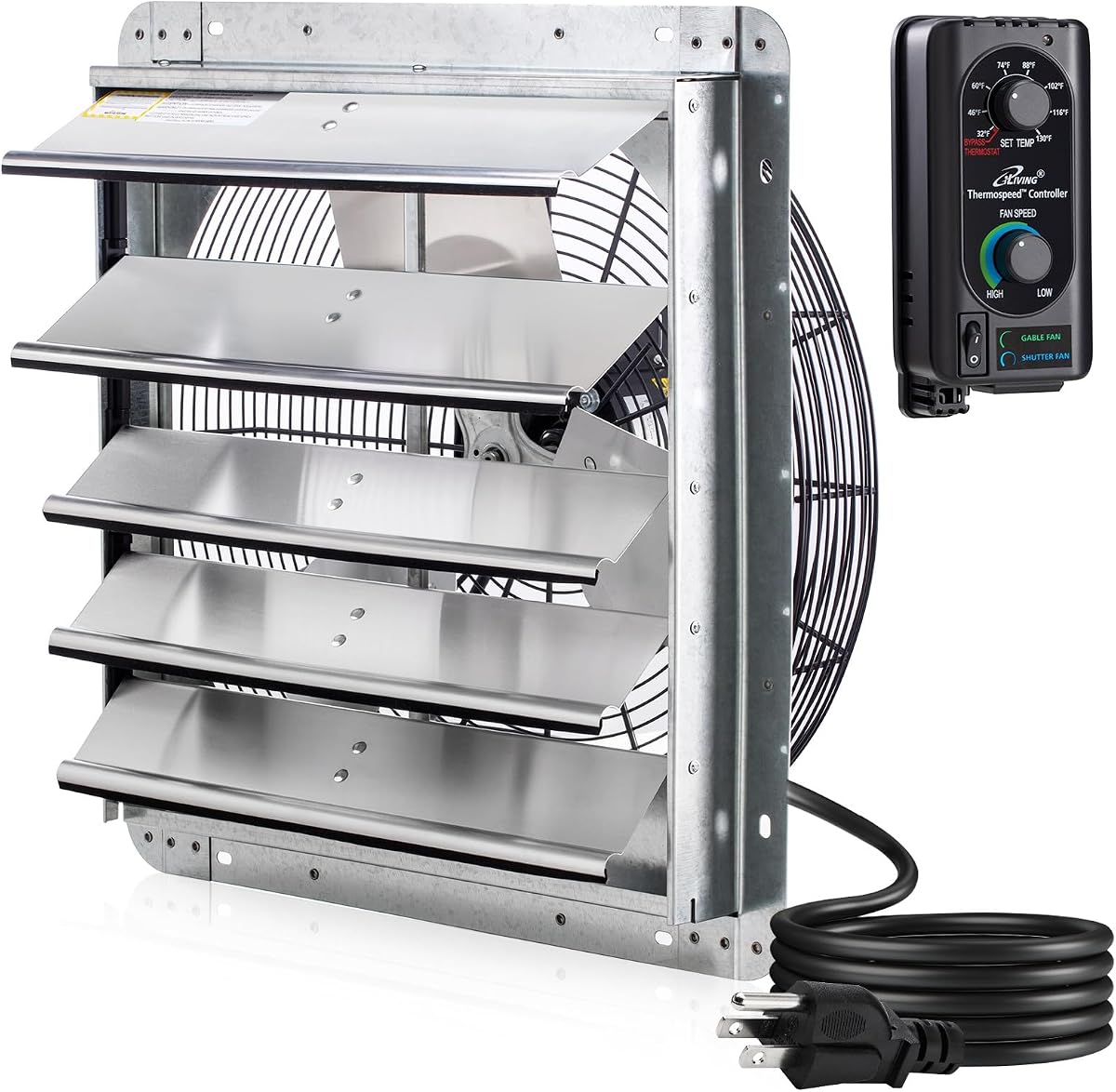
The iLIVING 12-inch shutter exhaust fan ranks as our top choice for greenhouse ventilation due to its powerful 960 CFM airflow and reliable thermostat control. With a 4.6 star rating, users appreciate its industrial-grade build and effective heat removal capabilities.
We may earn a commission when you buy through this link, at no additional cost to you.
Its direct-drive motor and permanently lubricated bearings ensure long-term durability even in humid environments. The automatic shutter mechanism prevents backdrafts, while the variable speed controller allows precise adjustments for different seasons.
While the noise level stays under 65dB, it may still be noticeable in very quiet rooms. However, its robust construction and safety certifications make it a trustworthy investment for serious growers.
This fan is ideal for medium to large greenhouses needing consistent air exchange. Its plug-and-play setup and local support make installation straightforward for most DIY enthusiasts.
The integrated thermostat keeps the fan running only when needed, saving energy and maintaining stable temperatures automatically.
Galvanized steel frames and corrosion-resistant blades withstand harsh conditions inside greenhouses or workshops for years.
We may earn a commission when you buy through this link, at no additional cost to you.
The Amico 12-inch fan stands out as a budget-friendly option without compromising on performance, offering 1282 CFM airflow with an energy-saving DC motor. Rated 4.4 stars, it is popular for its whisper-quiet operation and smart thermostat features.
We may earn a commission when you buy through this link, at no additional cost to you.
Its 25W DC motor consumes significantly less electricity than traditional AC fans, making it cost-effective for continuous use. The 8-speed control allows fine-tuned ventilation, and the memory function saves settings during power outages.
The 3-foot temperature probe might be too short for large spaces requiring distant monitoring. Still, its weatherproof construction and FCC certification provide peace of mind for greenhouse applications.
Choose this unit if you prioritize energy efficiency and quiet operation. Its simple plug-in design ensures you can set up ventilation quickly without professional wiring.
Using a 25W DC motor reduces electricity costs by up to 66% compared to standard AC exhaust fans.
The fan retains your preferred speed and settings even after a power failure, ensuring uninterrupted climate control.
We may earn a commission when you buy through this link, at no additional cost to you.
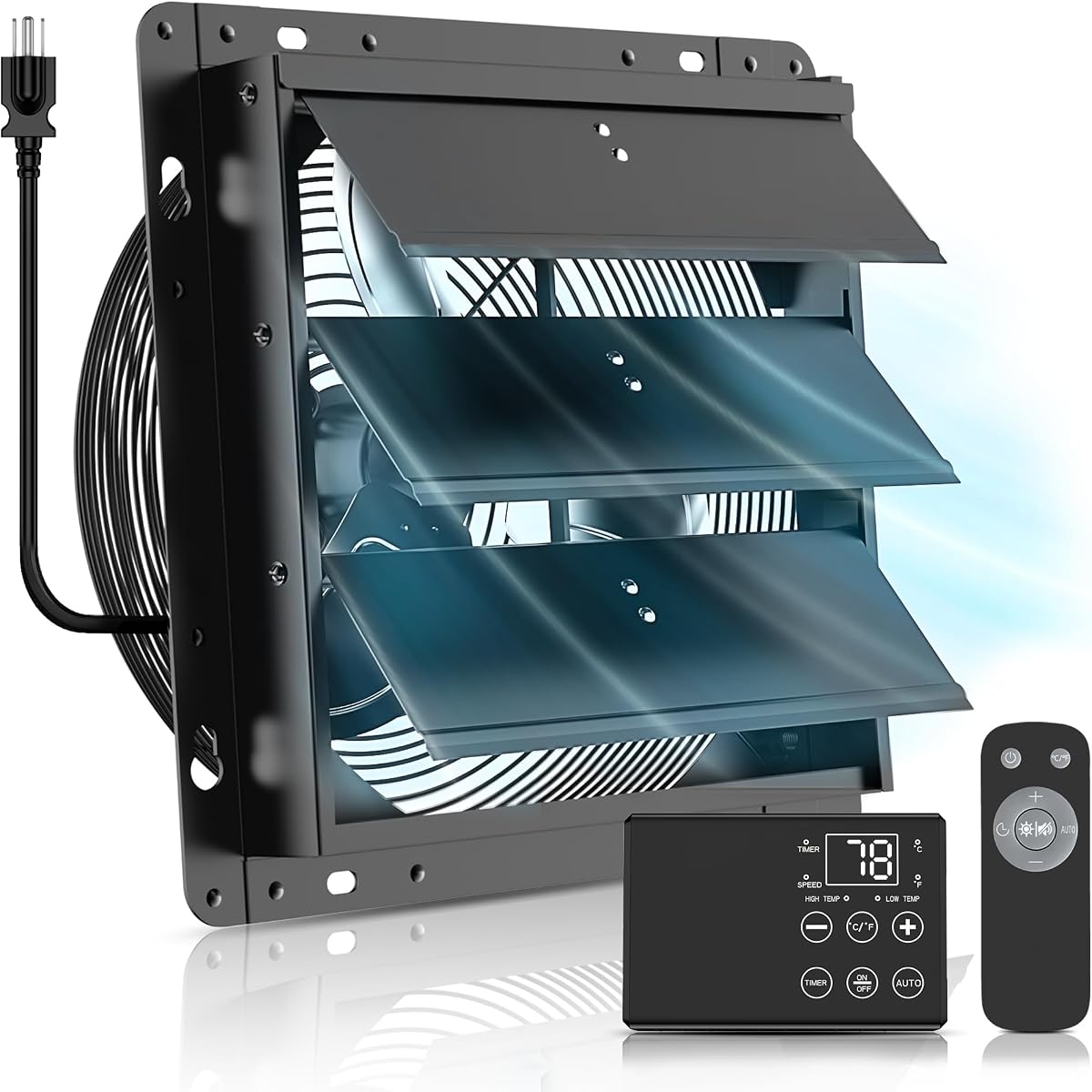
The VEVOR Greenhouse Air Circulation Fan offers high-end features like an LCD control panel and humidity sensor, making it suitable for advanced growing setups. Despite a 3.0 rating, its 1800 CFM capacity and 10-speed options provide versatile air movement.
We may earn a commission when you buy through this link, at no additional cost to you.
Its auto mode adjusts fan speed based on real-time temperature and humidity readings, optimizing plant health automatically. The scheduling function helps manage air exchange cycles without constant manual intervention.
Some users report inconsistencies in performance or control responsiveness, which affects its overall rating. However, the robust metal frame and aluminum blades ensure longevity in demanding environments.
This model works best for tech-savvy growers needing precise environmental control. Consider it if you want integrated humidity management alongside powerful ventilation.
Auto mode adjusts speed based on live temperature and humidity data to maintain ideal growing conditions automatically.
Ceiling and wall mount options allow flexible placement to maximize airflow throughout large greenhouse structures.
We may earn a commission when you buy through this link, at no additional cost to you.
The Ehiair 8-inch fan is designed for compact greenhouses or chicken coops, delivering 760 CFM airflow with remote convenience. Rated 4.1 stars, its ultra-quiet operation and plug-and-play installation make it user-friendly for small spaces.
We may earn a commission when you buy through this link, at no additional cost to you.
The 66-foot remote allows adjustments from anywhere, ideal when the fan is mounted high. Its sound-absorbing padding and efficient motor reduce noise below 40 dB, ensuring a comfortable environment.
Limited cable length can restrict placement flexibility without extension cords. Despite this, the rugged galvanized steel frame resists rust and corrosion effectively.
Select this for small gardens or sheds where noise matters. It offers great value for budget-conscious buyers needing reliable basic ventilation.
Adjust speeds and timer settings remotely, eliminating the need to access the fan mounted high on a wall.
Sound-absorbing padding and a balanced motor design minimize vibration noise for peaceful greenhouse environments.
We may earn a commission when you buy through this link, at no additional cost to you.
The iLIVING 18-inch model is the powerhouse for large greenhouses, providing 1736 CFM airflow with a 4.7-star rating. Its direct-drive motor and 2600 square foot coverage make it ideal for extensive commercial or hobby setups.
We may earn a commission when you buy through this link, at no additional cost to you.
Automatic shutters and variable speed control allow precise climate management even in vast areas. The industrial-grade steel construction ensures durability against dust, moisture, and continuous operation.
Installation requires a larger wall cutout and structural support due to its size and weight. However, its UL certification and local support make it a reliable choice for serious growers.
Buy this if you need maximum ventilation for large spaces. Its robust build and smart controls justify the investment for long-term greenhouse management.
With 1736 CFM, this fan rapidly exchanges air in spaces up to 2600 square feet effectively.
Galvanized steel and aluminum components resist corrosion, ensuring years of reliable operation in humid conditions.
We may earn a commission when you buy through this link, at no additional cost to you.
This dual 5-inch fan set is specifically engineered for grow tents, offering directional ventilation without mechanical oscillation. Rated 4.1 stars, it provides 330 CFM airflow ideal for seedlings and small indoor setups.
We may earn a commission when you buy through this link, at no additional cost to you.
The clamp design adjusts easily to various poles, and the IP54 rating ensures safety in humid environments. Its brushless DC motor promises a long lifespan of up to 67,000 hours.
While airflow is limited compared to exhaust fans, it perfectly complements larger systems by ensuring all plant areas receive fresh air. The quiet 37dB setting suits sensitive indoor grows.
Use this for internal circulation within tents or small greenhouses. Its waterproof build and adjustable angles make it versatile for hydroponics or soil grows.
Dual fans allow you to target airflow to specific plant zones without relying on noisy mechanical oscillation.
Brushless DC motor technology ensures extended operation life, reducing maintenance and replacement costs over time.
We may earn a commission when you buy through this link, at no additional cost to you.
The VEVOR 12-inch fan delivers 1347 CFM airflow with a sturdy steel housing, earning a 4.5-star rating for reliable performance. It is excellent for garages, greenhouses, and workshops needing quick air exchange.
We may earn a commission when you buy through this link, at no additional cost to you.
Its automatic louvers open and close seamlessly to prevent debris entry when off. The 40W AC motor runs smoothly with low noise, making it suitable for residential environments.
While it lacks advanced digital controls, its simple plug-and-play setup and rain guard make it practical for most needs. The robust build handles damp conditions better than plastic alternatives.
Choose this for a straightforward, durable solution at a reasonable price. It balances power and simplicity well for general ventilation tasks.
Automatic shutters open during operation and seal tightly when off to keep rain and insects out.
Steel housing provides rigidity and durability against moisture and physical impact in demanding environments.
We may earn a commission when you buy through this link, at no additional cost to you.
The Amico 10-inch fan combines remote control with an ultra-efficient 13W DC motor, rated 4.3 stars for convenience. It offers 1000 CFM airflow and 9 speed settings for precise environmental tuning.
We may earn a commission when you buy through this link, at no additional cost to you.
Its remote allows easy adjustments from a distance, and the power-off memory function ensures settings remain after outages. The motor runs cool, extending its lifespan without overheating issues.
The smaller size may limit coverage for large greenhouses. However, its energy efficiency and smart features make it a modern choice for tech-focused growers.
Opt for this if you value ease of use and low energy bills. It provides a quiet, reliable solution for medium-sized spaces needing control flexibility.
Adjust ventilation levels remotely without needing to access the unit directly for every change.
The 13W DC motor reduces utility bills significantly compared to traditional AC models.
We may earn a commission when you buy through this link, at no additional cost to you.
The VIVOSUN AeroWave clip fan offers auto oscillation and smart app integration, rated 4.3 stars for versatility in grow tents. Its 320 CFM output is perfect for circulation and strengthening plant stems.
We may earn a commission when you buy through this link, at no additional cost to you.
The app allows remote speed adjustments and timer scheduling for customized airflow patterns. Its IP54 rating and dual ball bearing motor ensure durability and quiet operation at just 33 dB.
Setup requires connecting to a smart hub for full features, which can be cumbersome. However, its targeted airflow and safety protections are excellent for small indoor growing spaces.
Select this for advanced indoor growing where automation matters. It is a strong companion for small greenhouses or dedicated grow tents.
Sync with VIVOSUN GrowHub for remote app control and automation with other smart growing devices.
Automatic retraction prevents jamming when obstacles are detected, ensuring safety and motor longevity.
We may earn a commission when you buy through this link, at no additional cost to you.
This dual clip fan set provides silent circulation ideal for hydroponics and seedling areas, rated 4.5 stars for reliability. It delivers 3-speed adjustable airflow below 40dB with IP54 waterproof protection.
We may earn a commission when you buy through this link, at no additional cost to you.
The adjustable clamps attach firmly to poles, allowing targeted airflow to prevent mold and strengthen stems. Its USB cord setup simplifies power access without complex wiring.
While it lacks digital controls, its simplicity and waterproof build suit humid environments well. It is perfect for small spaces needing gentle, continuous air movement.
Choose this for hydroponic systems or nursery setups. Its compact design and quiet performance make it a practical choice for beginners.
IP54 waterproof rating ensures safe operation in high-humidity environments common in hydroponics.
Dual fans allow flexible positioning to direct air exactly where plants need it most.
We may earn a commission when you buy through this link, at no additional cost to you.
Selecting the right fan involves matching capacity to your space size and considering control features that fit your automation needs.
CFM (Cubic Feet per Minute) determines how much air a fan can move. Larger greenhouses require higher CFM to effectively exchange heat and humidity every few minutes.
Match the CFM rating to your square footage. Aim for a fan that can fully circulate your air volume at least once every few minutes for optimal plant health.
DC motors are more energy-efficient and quieter than AC motors but may cost more upfront. AC motors are robust and common in industrial-grade models for continuous heavy use.
Choose DC if saving electricity is a priority. Select AC if you need maximum durability and higher sustained airflow without overheating.
Automatic thermostats activate the fan only when temperatures exceed set thresholds, saving energy and maintaining stable environments. Some advanced units also include humidity sensors for dual control.
Prioritize models with smart controls if you need hands-free climate regulation. Basic manual fans work well if you prefer direct oversight of operation.
Noise is measured in decibels (dB). Quiet fans operate below 40dB, while standard units may reach 65dB. Consider this if your greenhouse is near living areas.
Select quieter models for residential use to minimize disturbance. Industrial settings can tolerate higher noise levels for the sake of raw power and airflow.
Galvanized steel frames and aluminum blades resist rust and corrosion better than plastic. Waterproof ratings like IP54 or IP65 protect against moisture in humid growing environments.
Look for steel construction and sealed motors if your greenhouse faces high humidity or rain exposure. This ensures the unit lasts longer without maintenance.
Wall-mounted fans require cutouts and are ideal for exhaust. Clip-on fans offer flexible placement for circulation but may have limited power. Ceiling mounting saves floor space for small setups.
Decide based on your greenhouse layout. Exhaust fans need structural mounts, while circulation fans benefit from adjustable clamps to reach tricky spots.
Remote controls or app integration allow you to adjust settings without physically accessing the fan. Timers and memory functions ensure consistent operation even after power outages.
Choose smart features if you need convenience and automation. Basic models are more affordable and sufficient for static greenhouse environments.
Long warranties and reliable customer support indicate manufacturer confidence. Look for units with 1 to 3-year coverage and accessible service networks for repairs.
Always check warranty terms before purchasing. A solid support system ensures you get help quickly if the motor or controls fail unexpectedly.
Install the fan securely on a sturdy wall or ceiling frame, ensuring the air direction aligns with your ventilation strategy. Position intake fans low to pull fresh air in and exhaust fans high to remove hot rising air.
Set the thermostat to your ideal temperature range so the fan activates only when necessary. This reduces energy consumption and extends the motor life by preventing unnecessary continuous operation.
Regularly clean the fan blades and shutters of dust and debris to maintain optimal airflow. Check for any signs of wear or corrosion annually and lubricate motor bearings if they are not permanently sealed.
Determine your greenhouse square footage and multiply by the desired air changes per hour to find required CFM. For most greenhouses, a unit delivering one full air volume every few minutes is ideal.
DC motors are generally more energy-efficient and quieter but may have lower peak airflow. AC motors are more common and durable for heavy-duty industrial ventilation tasks.
Most modern fans are designed to be energy-efficient, especially DC models. Using a thermostat further reduces usage by running only when the temperature exceeds your set limit.
Clean the blades and housing every three to six months to prevent dust buildup that reduces airflow. Regular maintenance ensures the fan operates efficiently and quietly.
Standard fans lack weather resistance and automatic shutters, making them less ideal. Choose fans with IP ratings and corrosion-resistant materials to withstand humidity and moisture safely.
Shutters open when the fan runs to allow airflow and close when off to prevent rain, insects, or drafts from entering. This protects the interior environment when ventilation is not needed.
The iLIVING 18-inch model excels as a powerful choice for large spaces, while the VEVOR 12-inch offers great value for smaller setups. Budget seekers should consider the Amico 10-inch for its quiet efficiency and remote control.
Prioritize CFM capacity and motor type first, as these define actual performance. Ensure the unit matches your greenhouse size and environmental conditions to avoid underperformance or unnecessary strain.
Always check current prices and availability before purchasing since stock levels fluctuate frequently. Investing in a quality fan now will pay off in healthier plants and lower maintenance costs later.