
TP-Link 10GB PCIe Network Card (TX401)
4.2Editor score
10Gbps speed capability
Includes CAT6A cable
Low-profile bracket included
This guide compares the top 10GbE Network Card for PC models available in October 2026 to help you choose the fastest adapter for your setup.
Finding a reliable 10GbE Network Card for PC is essential for modern high-speed data needs. Whether you manage a home server or need faster file transfers, the right adapter changes everything significantly.
We evaluated ten top-rated PCIe adapters based on performance, compatibility, and value. Each product was scrutinized for chipset quality, driver support, and real-world speed potential across various systems.
This list shows the best options for different budgets and use cases. Note that product availability and pricing can change rapidly, so verify current details before making your final purchase decision today.
4.2Editor score

4.3Editor score

4.4Editor score
This side-by-side comparison highlights key specifications across all ten selected 10GbE Network Card for PC options to help you find the perfect match for your specific hardware requirements.


The TP-Link TX401 stands out as an affordable entry point for 10GbE networking. It offers solid performance for home labs and small offices needing faster transfers without breaking the bank significantly.
We may earn a commission when you buy through this link, at no additional cost to you.
It delivers up to 10Gbps speeds via PCIe 2.0 x1. The included CAT6A cable ensures you can reach top speeds immediately without extra purchases or configuration headaches during initial setup.
While the single port limits redundancy, the auto-negotiation feature handles mixed networks well. This card is excellent for basic upgrades but may lack advanced virtualization features found in enterprise gear.
Buy this if you need a straightforward 10GbE upgrade on a tight budget. It is ideal for NAS setups or gaming PCs where latency matters more than redundant links or complex management features.
The inclusion of a CAT6A cable makes this an excellent value proposition compared to competitors that sell the adapter alone.
Comes with both low-profile and full-height brackets allowing installation in most standard desktop cases easily.
We may earn a commission when you buy through this link, at no additional cost to you.
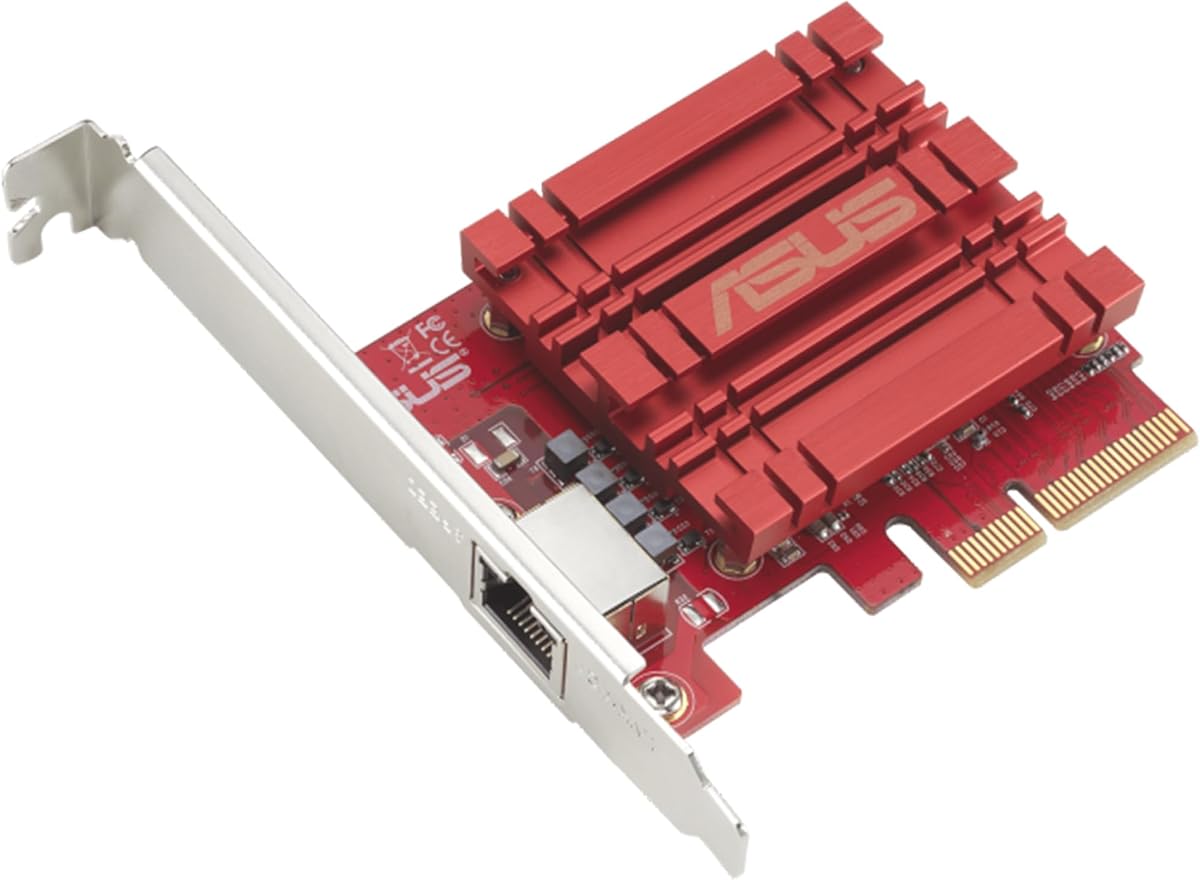
The Asus NADACA0140 delivers consistent 10Gbps networking with strong compatibility for Windows and Linux systems. Its QoS technology helps prioritize gaming or streaming traffic effectively.
We may earn a commission when you buy through this link, at no additional cost to you.
It supports standard copper cables and auto-negotiates down to 100Mbps for older networks. This flexibility makes it a robust choice for mixed environments where different device speeds coexist seamlessly.
Users report stable performance under heavy loads, though driver installation can sometimes require manual intervention on older kernels. The premium price reflects the brand reliability and feature set.
Choose this if you need reliable 10GbE performance with QoS capabilities. It suits users who value brand reputation and need stable connectivity for critical workloads or high-end gaming setups.
Built-in QoS ensures your most important data packets get priority, reducing lag during peak usage times effectively.
Supports a wide range of operating systems including various Linux kernels for flexible integration options.
We may earn a commission when you buy through this link, at no additional cost to you.
The Vogzone X550-T2 features the renowned Intel X550-T2 controller, offering dual ports for redundancy or aggregation. It is a top choice for server environments needing high reliability and performance.
We may earn a commission when you buy through this link, at no additional cost to you.
Its PCIe 3.0 x4 interface ensures full bandwidth utilization without bottlenecks. The card supports SR-IOV for virtualization and includes tools for batch firmware updates, reducing maintenance overhead significantly.
While powerful, it requires a PCIe 3.0 x4 slot and proper drivers for full feature access. Manual configuration might be needed for 2.5G/5G negotiation if auto-negotiation fails occasionally.
Buy this for server or workstation use where stability and redundancy matter. It is ideal for data center upgrades or home labs needing enterprise-grade features without the enterprise price tag.
SR-IOV support allows virtual machines to access the physical network card efficiently for better performance.
Two RJ45 ports enable link aggregation or failover setups to ensure continuous network availability always.
We may earn a commission when you buy through this link, at no additional cost to you.
The VunLink adapter uses the latest Realtek RTL8127AT chipset, delivering 10Gbps speeds with low power consumption. It is designed for efficiency and stability in modern desktop and server environments effectively.
We may earn a commission when you buy through this link, at no additional cost to you.
Its PCIe 4.0 x1 interface ensures full bandwidth on newer motherboards while remaining compatible with older slots. It supports multi-gig speeds up to 10Gbps automatically with existing cabling infrastructure easily.
This card is a great balance of price and performance. However, driver installation on Linux might require manual steps for optimal functionality compared to fully supported enterprise chips.
Choose this if you need a reliable, efficient 10GbE adapter for NAS or home labs. It fits well in systems where low heat output and cost efficiency are top priorities for budget-conscious buyers.
Engineered for lower power consumption and reduced heat output compared to traditional 10GbE solutions.
Works with x1, x4, x8, and x16 slots making it versatile for different motherboard configurations.
We may earn a commission when you buy through this link, at no additional cost to you.
The Intel X540T2 is a proven dual-port adapter offering reliable 10GbE connectivity for data centers and workstations. Its integrated Mac and Phy design simplifies hardware architecture effectively.
We may earn a commission when you buy through this link, at no additional cost to you.
It supports flexible I/O virtualization and high port partitioning for complex virtual environments. The card is known for stability and consistent performance under heavy network loads consistently.
While older than newer options, its enterprise-grade reliability keeps it relevant. Availability might be limited compared to new stock, but it remains a solid choice for mission-critical setups.
Buy this if you need a trusted dual-port 10G adapter for virtualization. It suits environments where long-term support and proven performance outweigh the need for the absolute latest chipset features.
Flexible I/O virtualization allows for up to 64 virtual ports on a single physical card for flexibility.
Single-chip solution with integrated Mac and Phy simplifies the card design and improves reliability.
We may earn a commission when you buy through this link, at no additional cost to you.
The TRENDnet TEG-10GECTX stands out for NDAA and TAA compliance, making it a rare choice for government projects. It delivers standard 10Gbps speeds with reliable support from the manufacturer.
We may earn a commission when you buy through this link, at no additional cost to you.
It features PCIe 3.0 x4 interface and auto-negotiation for 2.5G and 5G speeds. This flexibility ensures smooth integration with existing Cat5e or Cat6 infrastructure without complex configuration steps.
Backed by a three-year protection plan and strong tech support, it offers peace of mind. While primarily suited for compliance needs, its performance is solid for general use and small servers.
Choose this if government compliance is a requirement. It is also good for users wanting a reliable adapter with strong warranty coverage and local support in North America specifically.
NDAA and TAA compliant Network Adapters meet strict procurement standards for government projects easily.
Backed by 3 years of manufacturer protection ensuring long-term reliability for your network hardware.
We may earn a commission when you buy through this link, at no additional cost to you.
The YuanLey adapter offers the same reliable Realtek RTL8127AT chipset with the added benefit of lifetime technical support. It is a strong candidate for users who prioritize long-term service and assistance.
We may earn a commission when you buy through this link, at no additional cost to you.
It supports PCIe 4.0 x1 for optimal bandwidth and includes Wake-on-LAN for remote power management. The low-profile bracket ensures it fits in small form factor cases easily without issues.
Performance is consistent for file transfers and streaming. While the brand is smaller, the support promise and competitive pricing make it a compelling option for home and small business users.
Buy this if you value lifetime support and a solid budget adapter. It is ideal for users who want a straightforward upgrade with reliable after-sales service to guide them through any issues.
Backed by lifetime technical support ensuring help is available whenever you encounter setup or performance issues.
Wake-on-LAN functionality allows remote wake-up capability for better device management across your network.
We may earn a commission when you buy through this link, at no additional cost to you.
The TP-Link TX201 offers 2.5Gbps speeds, perfect for users who do not need full 10Gbps but want faster than Gigabit. It is an excellent choice for modern routers and switches.
We may earn a commission when you buy through this link, at no additional cost to you.
It includes QoS technology to prioritize gaming traffic, reducing latency effectively. The card works with existing Cat5e cables and auto-negotiates with lower speeds to ensure compatibility.
While not a true 10GbE adapter, it provides a significant upgrade over standard 1G ports at a fraction of the cost. It fits well for home networks and entry-level setups.
Choose this if your switch supports 2.5G and you want a budget-friendly upgrade. It is ideal for gamers and media users needing more speed than Gigabit offers without 10G expenses.
QoS technology delivers prioritized performance for gamers and ensures to avoid network congestion for PC gaming.
Significantly cheaper than full 10G options while still providing a major speed boost over 1G.
We may earn a commission when you buy through this link, at no additional cost to you.
The WAVLINK adapter features robust metal shielding to minimize interference and improve stability. This design helps maintain consistent performance in electrically noisy environments effectively.
We may earn a commission when you buy through this link, at no additional cost to you.
It uses the Realtek RTL8127AT chipset for reliable 10Gbps connectivity. The packaging includes both standard and low-profile brackets for flexible installation in various desktop cases easily.
Note that driver installation might trigger antivirus warnings due to signature recognition, but the driver package is safe. This card is a solid budget-friendly option for home users.
Buy this if you need basic 10GbE performance with good build quality. It is ideal for users looking for a cost-effective adapter with reliable shielding to protect data transmission signals.
Robust Metal Shielding minimizes electromagnetic interference and enhances stability and reliability for every connection.
Excellent heat dissipation can reduce the temperature quickly and maintain the stability of network transmission.
We may earn a commission when you buy through this link, at no additional cost to you.
The NICGIGA adapter uses the Intel X540-T1 controller for reliable 10Gbps performance. It offers a budget-friendly way to access Intel's proven networking technology without a high cost.
We may earn a commission when you buy through this link, at no additional cost to you.
It supports Windows Server and Linux virtualization environments well. The card includes standard and slim brackets for versatile installation in desktops and servers easily.
Keep in mind it requires a PCIe x8 or x16 slot for full bandwidth. While not the newest chip, it provides stable speeds and lifetime technical support for peace of mind.
Buy this if you want Intel reliability on a budget. It is ideal for users with available PCIe slots needing a stable 10G adapter for servers or workstations.
Converts PCIe slots X8/16 into 10G RJ-45 ports ensuring high bandwidth without bottlenecking your system.
Supplied with lifetime technical support helping you troubleshoot any issues quickly after purchase.
We may earn a commission when you buy through this link, at no additional cost to you.
Choosing the right 10GbE Network Card for PC involves understanding chipset compatibility, slot types, and your specific networking needs to ensure optimal performance and stability.
The chipset determines reliability and driver support. Intel chips like the X550-T2 or X540 offer enterprise stability, while Realtek chips like the RTL8127AT provide budget-friendly options for home use.
Look for well-tested controllers to avoid driver headaches on Linux or older Windows versions.
Ensure your motherboard has a compatible slot. Most 10GbE cards need at least x1 bandwidth but may require x4 for full speed. Newer cards use PCIe 4.0 x1, which works in older slots but may limit max throughput.
Check your motherboard specs to match the card's interface requirements properly.
Single-port cards are cheaper and simpler, while dual-port cards offer redundancy or link aggregation. For home labs, a single port is often enough, but servers benefit from dual links for failover.
Choose dual ports if you need high availability or link aggregation.
10GBASE-T uses RJ45 copper cables. Ensure you have Cat6a cables for full 10Gbps speeds, though Cat6 may work over shorter distances. Many cards ship with cables to save extra costs.
Verify cable ratings to avoid bottlenecks after installation.
Windows support is standard, but Linux kernel support varies. Check if the vendor provides updated drivers or open-source support for your specific distribution and kernel version.
Linux users should prioritize cards with strong community driver support.
Some cards run hotter than others. Look for energy-efficient designs if you are installing multiple cards or building a low-power NAS. Heat dissipation features like metal shielding can improve stability.
Check thermal performance if installing in a case with limited airflow.
For virtualized environments, features like SR-IOV are crucial. They allow VMs to access the hardware directly, reducing CPU overhead. Not all consumer cards support this, so check vendor specs.
Prioritize SR-IOV if you run ESXi or KVM hosts.
Network cards can fail during updates or physical stress. Look for vendors offering at least a 2-year warranty and responsive technical support. Lifetime support is a nice bonus for long-term peace of mind.
Strong support reduces downtime if you encounter setup or firmware issues.
First, power off your PC and ground yourself before opening the case. Locate an available PCIe slot and insert the card firmly until it clicks. Secure it with the case screw.
Next, connect a Cat6a Ethernet cable to the card's port and your switch or router. Power on the PC and install the latest drivers from the vendor's website or install the bundled driver package.
Finally, configure your network settings to enable 10Gbps speeds. Verify connection status in your OS and test file transfer speeds. Regularly update firmware to ensure security and stability.
For 10Gbps speeds, Cat6a cables are recommended. Cat6 can work for short distances, but older Cat5e cables might limit speeds to 2.5Gbps or lower. Using proper cabling ensures you get the advertised 10Gbps performance consistently.
Most cards fit physical PCIe slots but need a certain lane width for full speed. An x1 card works in x4/x8/x16 slots, but a x4 card might run slower in an x1 slot. Always check your motherboard's slot capabilities before buying.
Yes, 10GbE adapters auto-negotiate down to 1G or 100Mbps if your router or switch doesn't support 10G. You can connect to existing Gigabit networks without issues, though you will only get standard speeds on those links.
Intel chips like the X550-T2 generally have better native support in Linux kernels than Realtek. However, newer Realtek RTL8127 chips are improving. Always check community forums or vendor pages for your specific Linux version before purchasing.
This usually indicates a cabling issue or switch limitation. Ensure your cables are Cat6a rated and your switch supports 10Gbps. Also, check driver settings to ensure auto-negotiation isn't forcing a lower speed accidentally.
Yes, using link aggregation (802.3ad) on a switch can combine ports to increase bandwidth for multiple connections. Single streams won't exceed 10Gbps, but multiple simultaneous transfers can utilize the extra throughput.
Windows 10/11 often includes basic drivers, but installing the latest vendor drivers ensures stability and full features. Linux users may need to compile or download specific drivers for best performance and feature access.
Many cards support in-system updates via vendor utilities like Intel's NVM tool. Follow the vendor's guide carefully. Ensure stable power during the process to avoid bricking the card.
The TP-Link TX401 offers the best value for budget buyers needing straightforward 10G speeds, while the Vogzone X550-T2 is the top choice for enterprise-level performance and redundancy.
Prioritize your needs: budget, server reliability, or modern chipset efficiency. The best card depends on your specific motherboard slots, OS, and whether you need dual ports for failover setups.
Always check current prices and availability before purchasing. Prices change rapidly, and new models appear often, so verify the latest details to ensure you get the best deal for your setup.