
G-PLUG 15FT RG8X
4.5Editor score
Pure copper core
Double shielding design
Flexible outdoor use
This guide compares the top 10 coax cables for ham radio including RG8X, RG58, and KMR400 options to help you choose the right coax for your setup.
Choosing the right coax cable for ham radio is critical for maintaining signal integrity and minimizing loss over long distances. A quality cable ensures your transmitter power reaches the antenna efficiently without unnecessary attenuation or interference from external sources.
We compared ten highly rated coaxial cables based on conductor material, shielding quality, connector durability, and overall performance across various ham radio frequency bands. Our analysis focuses on real-world usability for base stations, mobile installations, and portable field operations.
Each pick highlights specific strengths like low loss characteristics, weather resistance, or flexibility for tight routing. Prices and availability change frequently so verify current details before purchasing to ensure you get the best value for your specific radio setup.
4.5Editor score

4.7Editor score
4.7Editor score
The following table provides a side-by-side overview of key specifications for all ten selected coaxial cables. Review conductor type, shielding method, and connector quality to find the best match for your ham radio station needs.


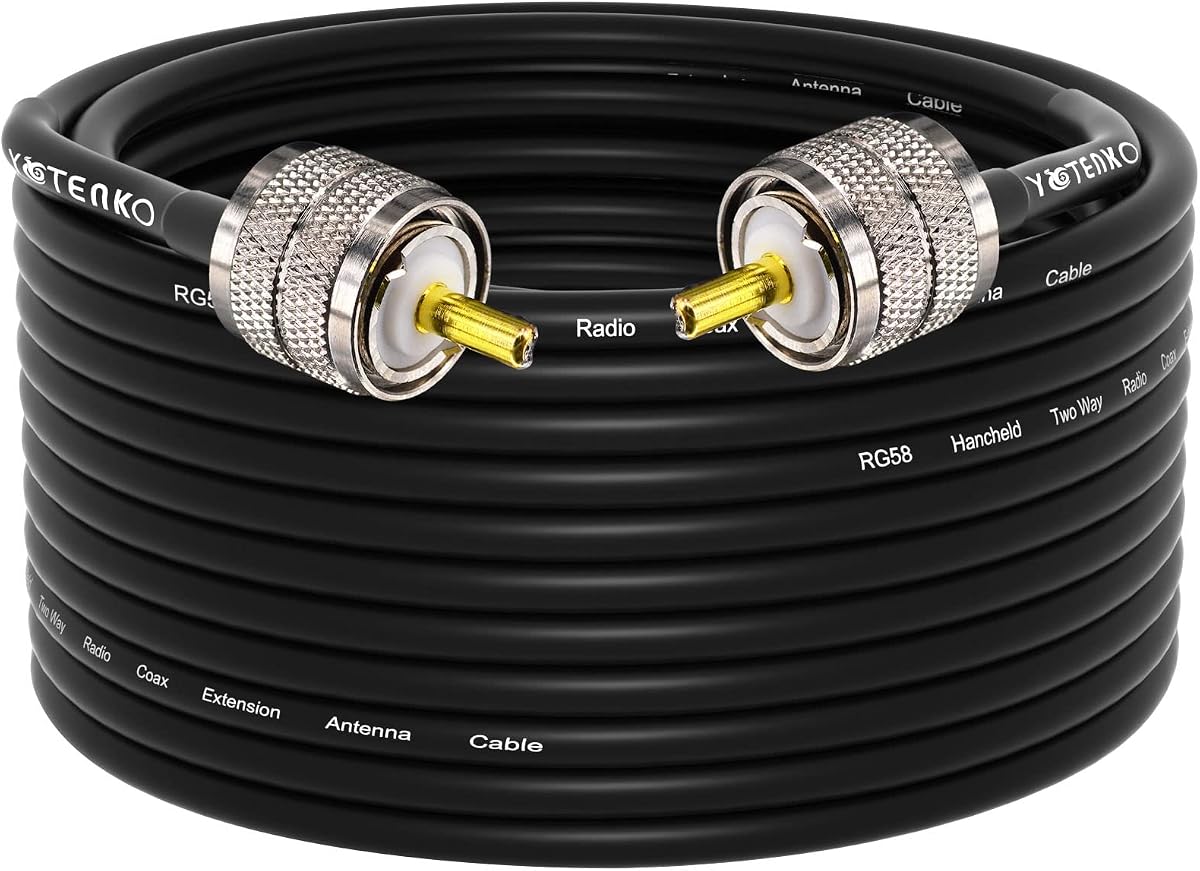

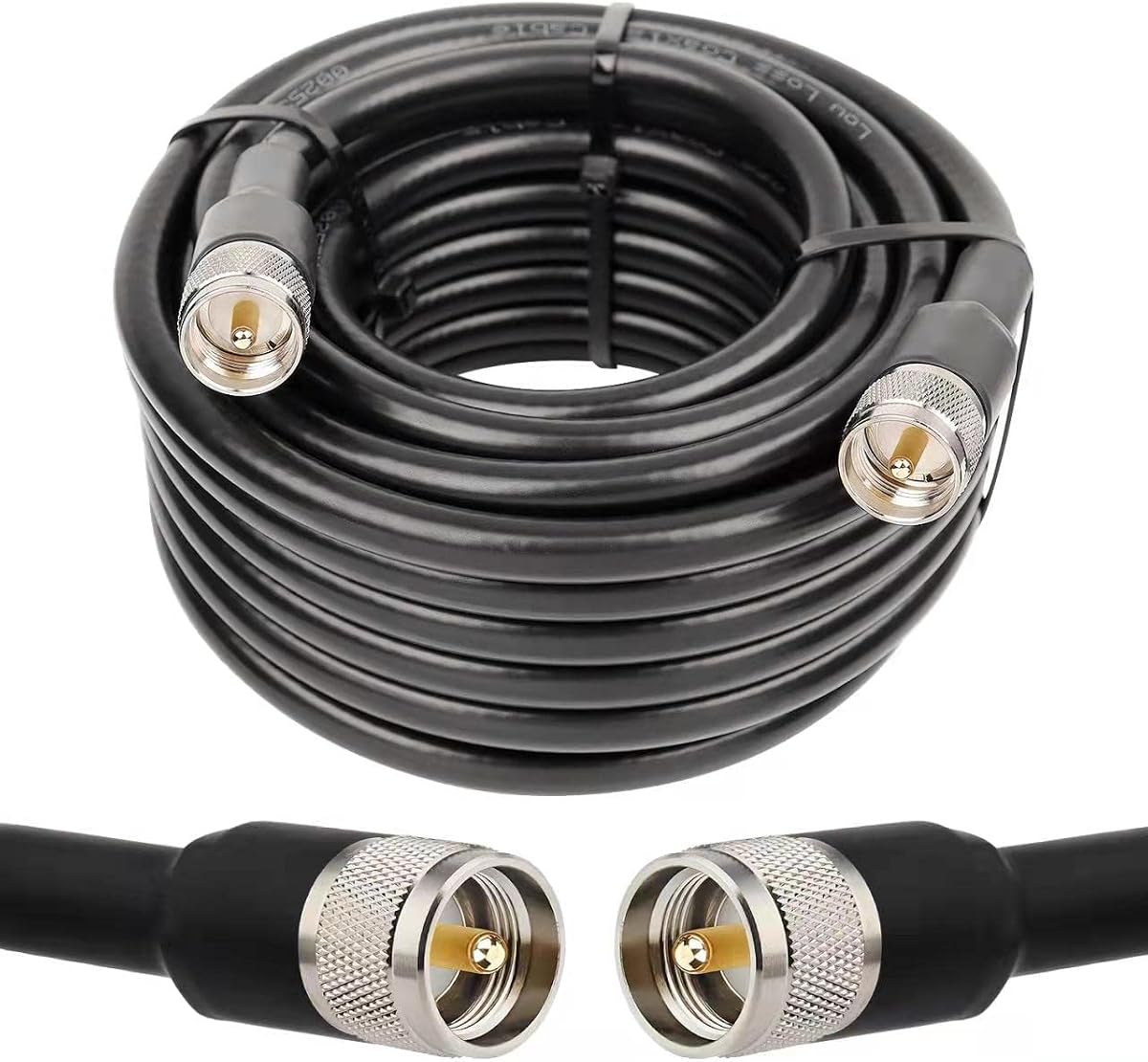

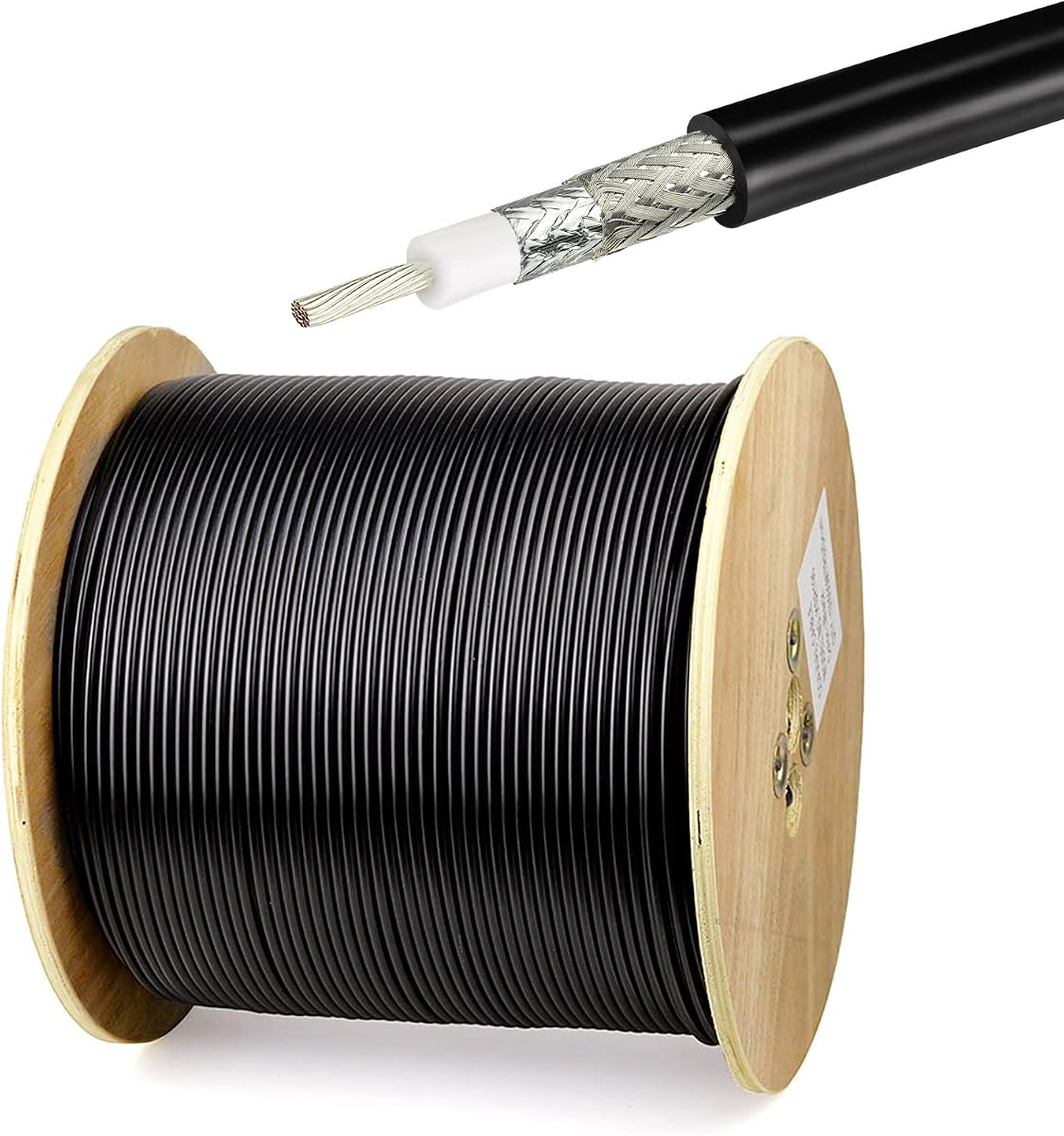
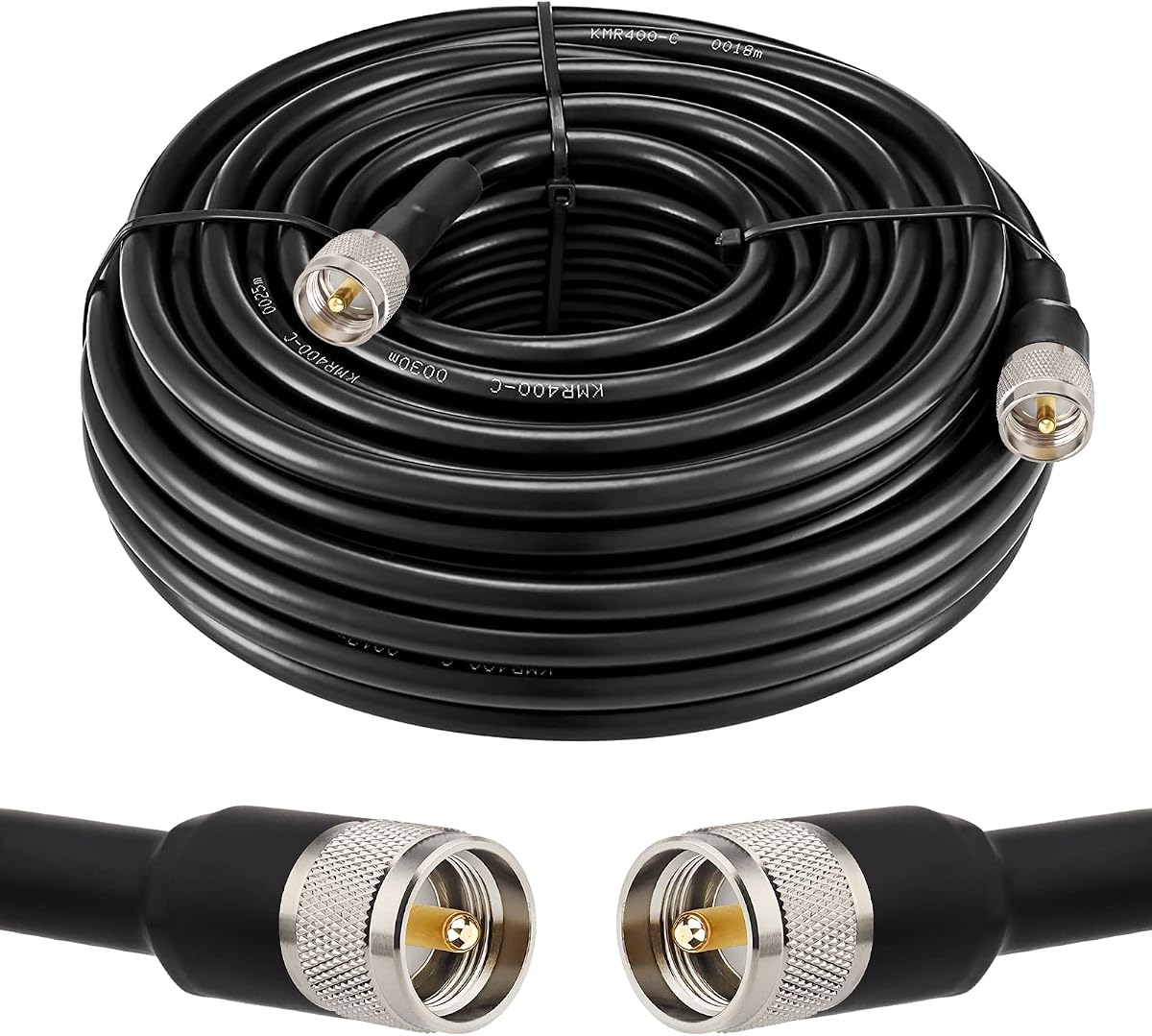
This 50-foot KMR400 cable delivers excellent performance with a rated loss of less than 2.8dB at 450MHz. Its construction prioritizes signal retention over long distances which is vital for amateur radio setups.
We may earn a commission when you buy through this link, at no additional cost to you.
The copper clad aluminum inner conductor is paired with a tinned copper braid and aluminum foil to protect against interference effectively. Heat shrink tube with adhesive ensures the connector stays firmly attached during field day operations.
While the 0.41 inch diameter is thicker than RG58 it allows for better performance with less attenuation. The jacket holds up well in outdoor environments where moisture resistance is crucial for consistent operation.
Ham radio operators needing reliable low loss cable for VHF or UHF will find this product a strong choice. It balances performance and durability at a reasonable cost for 50-foot applications.
Low loss design preserves power from transceiver to antenna without unnecessary degradation.
Adhesive heat shrink prevents connector pullout during heavy use or windy conditions.
We may earn a commission when you buy through this link, at no additional cost to you.
This 15-foot RG8X cable offers a practical and affordable solution for short runs in ham radio stations. It features a pure copper core that ensures stable conductivity across common amateur bands.
We may earn a commission when you buy through this link, at no additional cost to you.
Dual shielding minimizes external noise which is critical when operating near other electronic devices. Gold plated pins on PL259 connectors reduce oxidation risks for long term reliability.
The flexible PVC jacket withstands outdoor conditions without cracking easily. Installation is straightforward thanks to the weather resistant design and standard UHF connector compatibility.
Budget conscious amateurs or those needing a short patch cord will appreciate this value. It provides solid performance without the cost of premium large diameter cables for short distances.
Priced affordably this cable delivers good value for short distance connections.
Gold plated pins help prevent corrosion and ensure clean signal contact.
We may earn a commission when you buy through this link, at no additional cost to you.
This 100-foot KMR400 cable is built for long distance runs where low attenuation is paramount. Its large center conductor supports better signal retention than standard RG58 or RG8 cables.
We may earn a commission when you buy through this link, at no additional cost to you.
The clamp design PL259 connectors resist coming off and are nickel plated to prevent corrosion. Adhesive lined heat shrink tube seals the connection point against moisture and environmental stress.
Flexible UV proof jacket allows for twenty years of outdoor exposure in harsh conditions. The build quality justifies the premium price for serious operators needing reliable signal over long distances.
Amateur radio enthusiasts with distant antenna setups will benefit from the reduced signal loss. It is a solid investment for those prioritizing long term performance and weather resistance over budget.
Low loss characteristics maintain signal strength over 100 feet of cable length.
UV proof jacket ensures durability when installed outdoors for extended periods.
We may earn a commission when you buy through this link, at no additional cost to you.
This 50-foot RG8X cable uses a pure copper inner conductor for strong conductivity. Double shielding protects against leakage and interference to ensure clear transmission and reception.
We may earn a commission when you buy through this link, at no additional cost to you.
Molded nickel-plated brass connectors with gold center pins support frequencies up to 300 MHz reliably. The PVC jacket is strong enough for both indoor and outdoor installations.
It is slightly thicker than RG58 which might affect routing in tight spaces. However, the durability and low loss performance make it a reliable choice for most ham radio applications.
Radio operators needing a standard 50-foot coax will find this a robust option. Its construction balances signal integrity with physical strength for demanding environments.
Dual layer shield stops external noise from disrupting signal integrity.
Pure copper core offers superior conductivity compared to cheaper materials.
We may earn a commission when you buy through this link, at no additional cost to you.
This STEREN cable offers a dependable 50-foot RG8X solution for ham radio coax installations. Nickel-plated connectors ensure secure connections that resist corrosion over time.
We may earn a commission when you buy through this link, at no additional cost to you.
The fully molded design supports base stations and HF antennas well. Its PVC jacket withstands outdoor elements so it is suitable for vehicle and rooftop applications.
While it is thicker than RG58 it provides better signal quality for high-powered stations. It is a practical choice for those looking to upgrade from standard 58 cables.
Radio operators seeking a reliable upgrade for better signal quality will find this effective. It balances durability with performance for both mobile and base station setups.
Nickel-plated brass connectors protect against oxidation and corrosion.
Improved performance over RG58 makes this ideal for powerful transmitters.
We may earn a commission when you buy through this link, at no additional cost to you.
This 49.2-foot RG58 cable is designed for high efficiency in HF and VHF bands. Its ultra flexible 0.195-inch diameter makes it easy to route through tight conduits.
We may earn a commission when you buy through this link, at no additional cost to you.
Real bare copper shielding ensures better soldering properties and oxidation resistance compared to cheaper alloys. Extended 6cm heat shrink tubing protects connection points from frequent bending.
Loss is higher than RG8X so it is best for shorter runs where flexibility matters more. It is an excellent choice for mobile installations or temporary field setups.
Mobile operators needing a flexible cable for tight spaces will appreciate this design. It offers reliable performance for 2 meter and 10 meter band applications.
Slim diameter allows easy routing through window frames and vehicles.
Pure bare copper braid provides effective interference rejection.
We may earn a commission when you buy through this link, at no additional cost to you.
This 100-foot cable uses a 16AWG tinned pure copper conductor which outperforms standard 17AWG options. Double shielding helps prevent signal leakage and external interference effectively.
We may earn a commission when you buy through this link, at no additional cost to you.
Gold plated center pins and nickel-plated brass bodies add reliability to the connection. The PVC jacket is strong enough to handle both indoor and outdoor use consistently.
A two-year warranty offers peace of mind regarding durability. It serves well for CB ham radio setups needing longer runs without the cost of premium low loss types.
Amateurs looking for a solid 100-foot cable at a reasonable price will find this effective. It provides a balance of performance and cost for general applications.
Two-year warranty supports long term reliability expectations.
Thicker conductor ensures better current carrying capacity than average cables.
We may earn a commission when you buy through this link, at no additional cost to you.
This 50-foot RG8 cable features a loss of less than 1.5dB at 450MHz which is excellent for high frequency use. Its clamp design connectors prevent breaking better than crimp types.
We may earn a commission when you buy through this link, at no additional cost to you.
Heat shrink tubing with adhesive inner wall seals connections against moisture and contaminants. Copper nickel plated shells resist oxidation and corrosion in outdoor extreme weather.
The aluminum foil and tinned copper braid outer conductor protects signals over large distances. It is a durable option for those needing a reliable jump cable.
Operators needing a robust low loss cable for VHF will find this useful. Its heavy duty build ensures connectors stay secure during regular field use.
Clamp design ensures heavy duty connections that resist breaking.
Adhesive heat shrink seals the junction against moisture ingress.
We may earn a commission when you buy through this link, at no additional cost to you.
This 50-foot RG316 cable is a miniature coax ideal for tight spaces with only 0.1in diameter. Its silver plated copper conductor and braid ensure very low signal loss.
We may earn a commission when you buy through this link, at no additional cost to you.
Max frequency extends to 6GHz and Vswr stays below 1.15 at 3GHz. The flexible teflon jacket withstands harsh environments and provides superior chemical resistance.
It is perfect for building custom interconnections or using with SMA connectors for specific setups. Lightweight stranded core makes it easy to bend without breaking.
Amateur radio enthusiasts needing a flexible miniature coax for specific VHF/UHF tasks will find this useful. It offers low loss performance in a very thin profile.
Supports signals up to 6GHz for high frequency applications.
Silver plating enhances conductivity and prevents oxidation.
We may earn a commission when you buy through this link, at no additional cost to you.
This 50-foot RG8x cable is recommended for high-powered applications due to its low SWR of less than 1.15. It transfers signal with minimal loss over large distances effectively.
We may earn a commission when you buy through this link, at no additional cost to you.
The PVC jacket is waterproof and can be bent or strapped without inducing interference. Compatible with PL259, SMA, BNC, TNC, and N connectors for broad system integration.
Manufacturers offer customization for any length coax which helps with unique installation needs. It works well for ham radio systems including cell boosters and repeaters.
Operators needing flexible compatibility across different connector types will find this useful. Its low loss performance supports reliable signal transfer for various RF systems.
Supports multiple connector types including PL259 SMA and N.
Maintains signal strength with SWR under 1.15.
We may earn a commission when you buy through this link, at no additional cost to you.
Selecting the right coax cable depends on multiple factors including length, frequency, and installation environment. Understanding these details helps ensure optimal performance for your amateur radio setup.
RG8X and RG58 are common choices for ham radio. RG8X has a larger center conductor which reduces signal loss over longer runs while RG58 is thinner and more flexible for short mobile installations.
Choose RG8X for base stations and RG58 for tight spaces or portable setups.
Pure copper or copper clad aluminum affects conductivity and oxidation resistance. Pure copper provides better performance but costs more. Copper clad aluminum is lighter and cheaper but may oxidize faster.
Pure copper is preferred for long term reliability and best signal integrity.
Effective shielding like tinned copper braid and aluminum foil prevents interference from electronic noise. Dual shielding is common in quality coax to ensure cleaner transmission and reception.
Look for double shielding to minimize signal leakage and external interference.
UHF PL259 connectors are standard for amateur radio equipment. Ensure connectors are nickel plated and feature gold-plated center pins to prevent corrosion and maintain low SWR over time.
Secure clamped or molded connectors are better than crimp types for outdoor durability.
PVC jackets are waterproof and flexible but may degrade under UV exposure. Teflon or UV resistant PVC is better for outdoor antennas or harsh climates where the cable is exposed to elements.
Select UV proof or weather resistant jackets for outdoor installations.
Different coax types have different loss characteristics at specific frequencies. KMR400 or LMR400 cables offer lower loss at UHF frequencies compared to RG58 which suits high band operations better.
Verify attenuation specs at your operating frequency to minimize signal degradation.
Longer runs increase loss so choose cable that balances length and performance. Ensure the diameter fits your routing path such as through vehicle conduits or tight wall spaces.
Keep runs as short as possible to maintain optimal signal strength.
Prices vary based on materials and build quality. Higher priced cables often offer better longevity and performance. Check for warranty terms to ensure protection against defects.
Balance cost against build quality to ensure value for money over time.
Install the coax by connecting one end to your transceiver and the other to the antenna mount. Avoid sharp bends during routing as this can damage internal components and degrade signal quality.
Secure the cable with proper straps to prevent sagging or wind stress on connectors. Leave some slack near the antenna to allow movement without tension on the connection points.
Regularly inspect the jacket for cracks and connectors for oxidation. Replace any damaged cable immediately to prevent signal loss or potential short circuits during high power transmission.
RG8X has a larger center conductor and thicker insulation compared to RG58 which reduces signal loss over longer distances. RG58 is thinner and more flexible for short runs while RG8X is better for high power and longer installations.
Yes outdoor coax should have a weather-resistant PVC or Teflon jacket to prevent moisture damage. Moisture inside the cable can increase signal loss and cause corrosion at connector points over time.
The UHF PL259 connector is the standard interface for most amateur radio equipment including transceivers and antennas. Ensure your coax has male to male PL259 ends for direct connection.
Longer cables increase attenuation which reduces the signal strength reaching the antenna. Always choose the shortest length possible to maintain optimal power transfer and minimize loss.
Yes RG8X is widely used for HF amateur radio bands due to its low loss and durability. It works well for 10 meter, 20 meter, and other HF frequencies with reliable performance.
Use gold plated connectors and seal exposed metal with UV resistant coax sealant. Regularly inspect and clean connectors to maintain a low SWR and ensure reliable transmission.
The top picks offer a balance of performance and durability for various ham radio needs. Whether you need a flexible RG58 or a low loss KMR400 there is a suitable option for your setup.
Prioritize conductor material, shielding quality, and weather resistance when selecting your cable to ensure long term reliability. Proper installation and care will extend the life of your coax significantly.
Always check current prices and availability before purchasing as deals change frequently. Verify your needs for length and connector type to make the best investment for your station.