
ST to LCU Fiber Optic Adapter
5.0Editor score
Precision Ceramic Sleeves
Low Insertion Loss
Tool-Free Installation
This guide compares the top LC to ST fiber optic adapters for signal loss, durability, and compatibility in modern fiber networks.
Finding the right LC to ST fiber optic adapter is crucial for maintaining signal integrity in modern telecommunications networks. These adapters bridge the gap between legacy ST connectors and newer LC systems, ensuring seamless integration without compromising performance or reliability during critical operations.
We compared ten top-rated models based on insertion loss, return loss, material quality, and user feedback. Each product was evaluated for compatibility with singlemode and multimode fibers, ensuring you find the perfect match for your specific network infrastructure and testing requirements today.
Each pick highlights key specs, pros, and cons to help you decide quickly. Prices and availability change frequently, so verify current details before purchasing. Our goal is to provide clear, factual insights for professionals upgrading legacy systems or managing mixed fiber environments.
5.0Editor score

4.8Editor score

5.0Editor score
This table provides a side-by-side comparison of all ten selected adapters and cables. Review the key specifications like connector type, fiber mode, wavelength, and jacket type to identify the best fit for your network infrastructure needs quickly.
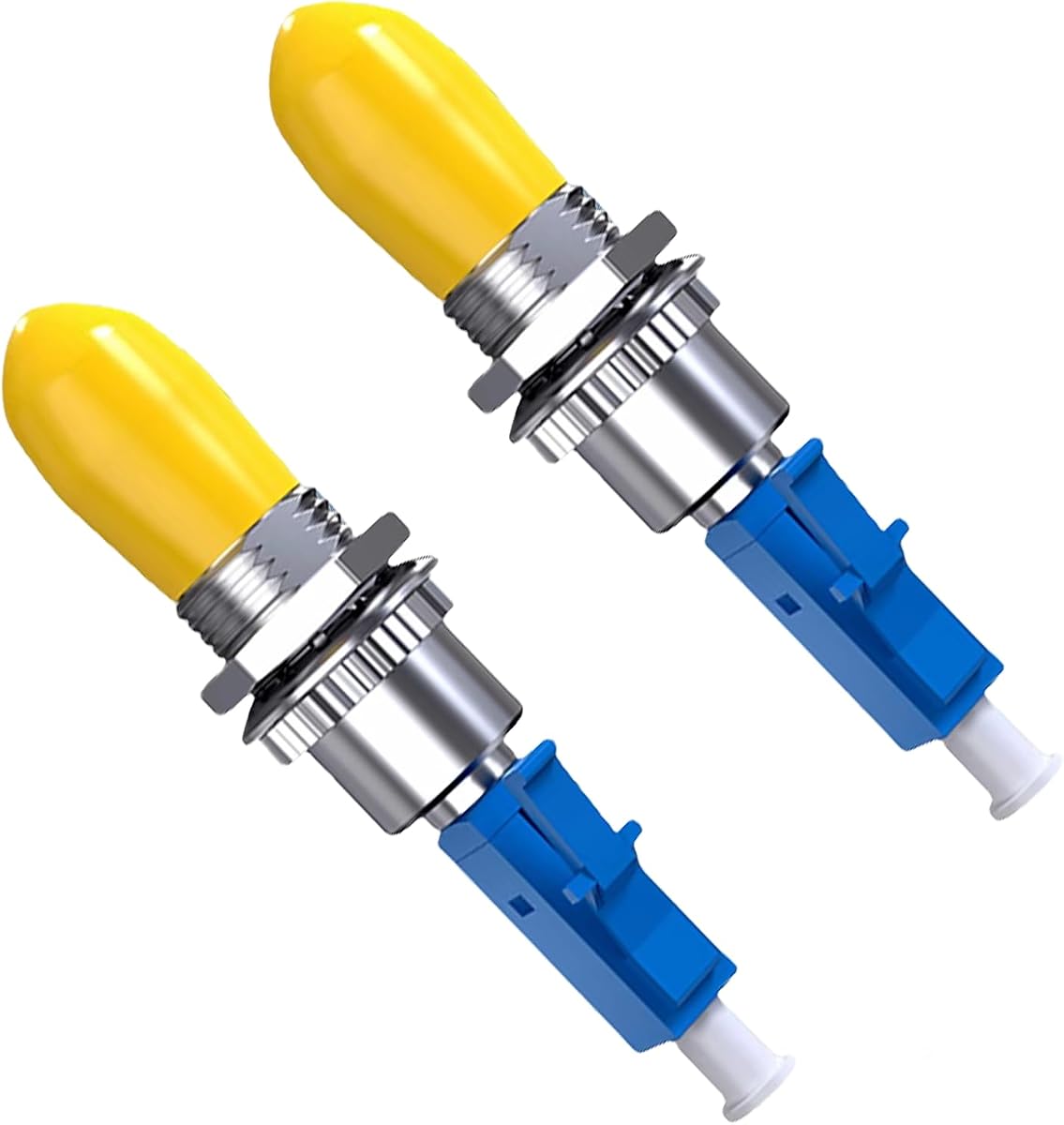
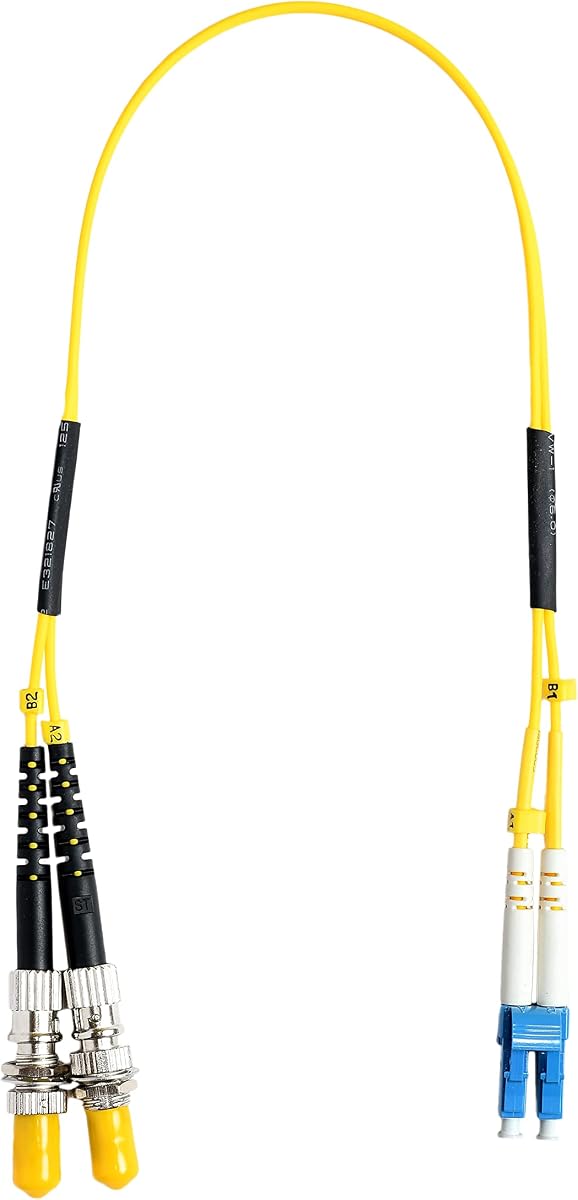


The Poyiccot 3-Pack ST to LC Adapter stands out as a top choice for professionals needing reliable hybrid connections. With a strong rating of 4.8 stars, this adapter ensures low insertion loss and high return loss across standard wavelengths. It is designed for single-mode networks requiring precise signal transmission.
We may earn a commission when you buy through this link, at no additional cost to you.
Its performance shines with insertion loss under 0.2dB at 1310nm and 1550nm wavelengths. The ceramic and metal sleeve material provides durability, supporting over 1000 plug insertion cycles. This adapter is ideal for optical power meters and visual fault locators.
While highly effective, it is limited to single-mode fiber, which may not suit multimode projects. Additionally, protective caps are not included in the package, requiring separate purchase to protect connectors when not in use. However, its performance justifies the investment.
Network engineers and technicians upgrading legacy systems will find this adapter indispensable. It bridges ST and LC interfaces seamlessly, ensuring stable connections in telecom and CATV environments. We recommend it for any project prioritizing signal integrity and durability.
Precision ceramic sleeves ensure minimal signal loss and high return loss, maintaining data integrity across long-distance fiber runs.
High impact strength and flame retardancy make this adapter suitable for demanding industrial environments with frequent usage.
We may earn a commission when you buy through this link, at no additional cost to you.
This adapter offers a flawless 5.0 rating, demonstrating exceptional performance in connecting LC and ST fibers. It is engineered for single-mode networks with insertion loss under 0.2dB and return loss exceeding 50dB. Users appreciate its reliability for checking fiber continuity.
We may earn a commission when you buy through this link, at no additional cost to you.
Key strengths include its ability to handle high plug insertion frequency over 1000 times without degradation. The lightweight design makes it easy to carry for field tests, and it supports standard wavelengths effectively. It is ideal for maintenance and engineering tasks.
The 2-pack count may require multiple purchases for larger projects, and it is not suitable for multimode fiber. Despite these minor limitations, the adapter's precision and durability make it a trusted tool for optical network maintenance and CATV engineering.
We recommend this adapter for technicians who need quick, accurate connections during network testing. Its compatibility with visual fault locators ensures you can troubleshoot issues efficiently. This product is a solid choice for professionals prioritizing quality.
Use with visual fault locators and optical power meters to ensure fiber patch cables are functioning correctly before deployment.
Ceramic sleeves and metal housing provide resistance against temperature changes and physical impact in challenging environments.
We may earn a commission when you buy through this link, at no additional cost to you.
This adapter cable provides a ready-to-use duplex solution for connecting LC to ST interfaces. It features singlemode fiber with a tight buffered zip cord design, ensuring durability and ease of handling. The LSZH jacket adds safety by reducing smoke and halogens.
We may earn a commission when you buy through this link, at no additional cost to you.
Factory termination and 100% testing for link loss and return loss ensure the cable meets strict performance standards. The 0.3 meter length is perfect for short-distance patching between equipment or patch panels. It supports 1310nm wavelengths effectively.
The short length limits its use to nearby connections, and the lack of a published rating makes long-term performance harder to verify. However, the duplex format allows simultaneous transmit and receive, which is crucial for full-duplex networks.
We suggest this cable for data centers or labs where short, reliable links are needed. The LSZH jacket is ideal for environments with strict safety codes. This is a practical choice for quick setup and minimal downtime.
Low Smoke Zero Halogen material reduces toxic emissions in case of fire, protecting equipment and personnel in confined spaces.
Pre-testing guarantees link loss meets specifications, saving time on field diagnostics and ensuring network reliability from day one.
We may earn a commission when you buy through this link, at no additional cost to you.
Ultra Spec Cables offers a high-rated multimode adapter cable ideal for local area networks. This 1ft duplex cable connects LC male to ST female, supporting 62.5/125 core sizes. It performs well at 850 nm, suitable for short-range data transmission.
We may earn a commission when you buy through this link, at no additional cost to you.
The standard zip cord duplex jacket provides flexibility for routing in racks or behind walls. With a 4.8 rating, users trust its durability and consistent signal quality. It is a cost-effective option for upgrading legacy multimode systems.
Its fixed length may limit reach beyond adjacent ports, and multimode compatibility excludes single-mode fiber applications. However, for local network maintenance or testing, it delivers excellent value. The dual strand design ensures efficient data flow.
We recommend this cable for businesses with existing multimode infrastructure needing quick connectivity. It is perfect for connecting switches or routers that require LC to ST adaptation. This adapter simplifies network expansions without requiring custom cabling.
Designed for 62.5/125 fiber, this cable works seamlessly with legacy multimode hardware in office and campus networks.
Zip cord duplex construction allows easy bending and management in tight spaces without compromising signal integrity.
We may earn a commission when you buy through this link, at no additional cost to you.
Sabary Fiber Optic Adapter stands out as a versatile toolkit for network professionals. With five interchangeable connectors covering FC, SC, ST, and LC, it eliminates the need for separate purchases. It is rated 5.0, highlighting exceptional reliability.
We may earn a commission when you buy through this link, at no additional cost to you.
The metal housings offer structural stability and corrosion resistance, ensuring long-term use in harsh environments. Insertion loss is under 0.2DB with return loss over 45DB, maintaining signal accuracy for OTDRs and power meters. This kit is a comprehensive solution.
While more expensive than single adapters, the versatility saves money on multiple adapters. It supports both single and multimode fibers, making it flexible. The only downside is the initial investment for a full toolkit.
We recommend this kit for field technicians managing diverse network types. It simplifies testing and deployment across different fiber infrastructures. This is an investment in efficiency and adaptability for any professional fiber optic team.
Interchangeable adapters allow quick switching between LC, SC, ST, and FC connectors, saving time during complex setups.
Metal housings ensure durability against daily wear and tear, providing confidence during critical installation and repair tasks.
We may earn a commission when you buy through this link, at no additional cost to you.
This adapter delivers exceptional value with a perfect 5.0 rating and budget-friendly pricing. Designed for single-mode networks, it enables reliable conversion between classic ST and modern LC connectors. It is ideal for integrating legacy equipment into new systems.
We may earn a commission when you buy through this link, at no additional cost to you.
Features include precision ceramic sleeves and a robust metal housing for low insertion loss. The threaded ST coupling ensures secure, vibration-resistant connections in demanding environments. Its compact design optimizes space in high-density patch panels and wall outlets.
While limited to single-mode, it fully meets telecom standards for interoperability. The push-pull LC and bayonet ST connections allow tool-free installation, reducing downtime. It is a trusted solution for network upgrades and mixed-infrastructure deployments.
We recommend this for organizations upgrading networks without compromising performance. It offers a reliable way to extend network lifespan while maintaining signal integrity. This is a top pick for cost-conscious professionals needing high-quality adapters.
Threaded ST coupling prevents accidental disconnections, ensuring stable data transmission in high-traffic network environments.
Compact design fits standard panels, making it easy to manage dense cable arrangements without clutter or signal interference.
We may earn a commission when you buy through this link, at no additional cost to you.
This cable offers a reverse polarity option with LC female to ST male connections for multimode networks. It features duplex 62.5/125 fiber suitable for 850 nm wavelengths. With a strong 4.9 rating, it is reliable for local area networks.
We may earn a commission when you buy through this link, at no additional cost to you.
The standard zip cord duplex jacket ensures flexibility in routing. The 1ft length is perfect for short-distance connections between adjacent ports or equipment. It is well-suited for testing and patching in controlled environments.
It is limited to multimode and a specific directionality, which may not fit all setups. However, for its intended purpose, performance is excellent. The high rating reflects user trust in its quality and functionality.
We recommend this for technicians needing reliable multimode patch solutions. It simplifies connections in networks where LC female interfaces are present. This adapter supports efficient network maintenance and quick troubleshooting.
LC Female to ST Male configuration provides essential flexibility for networks using specific equipment port standards.
High rating ensures consistent signal quality, minimizing errors during data transmission in office environments.
We may earn a commission when you buy through this link, at no additional cost to you.
This adapter cable supports singlemode networks with 9/125 duplex fiber and LC male to ST female connectors. It operates at 1310 nm, ideal for long-distance or specific telecom applications. The 1ft length is suited for direct patching tasks.
We may earn a commission when you buy through this link, at no additional cost to you.
While it has a 4.3 rating, which is lower than others, it still offers functionality for specific uses. The standard zip cord duplex jacket allows for flexible installation in racks. It is designed for singlemode requirements.
Lower ratings may suggest variability in build quality compared to competitors. However, for budget-conscious buyers needing specific singlemode lengths, it provides a solution. The short length keeps it manageable and simple for close-up setups.
We recommend this for projects requiring a short singlemode connection. Verify current stock and reviews before purchasing to ensure it meets your quality expectations. It is a functional option for targeted network setups.
1310 nm support enables long-distance data transmission suitable for telecom infrastructure and wide area networks.
1ft length ensures neat cable management, preventing clutter around switches and routers in dense network panels.
We may earn a commission when you buy through this link, at no additional cost to you.
This adapter is designed for precision, boasting an insertion loss as low as 0.04dB at 1550nm. It uses UPC contacts to reduce back reflection and ensure clear signal transmission. It is highly rated for use with red light pens and power meters.
We may earn a commission when you buy through this link, at no additional cost to you.
The ST/UPC male to LC/UPC female design suits singlemode fiber networks with 9/125μm cores. Its high return loss performance ensures minimal interference. This adapter is ideal for FTTH and CATV broadband applications.
Specialized for singlemode, it may not fit multimode projects. The high precision justifies its cost for testing and maintenance tasks. It connects with patch cords and pigtails, ensuring reliability.
We recommend this for professionals needing high accuracy in optical measurements. Its performance ensures you get reliable results during network diagnostics. This adapter is a strong choice for technical teams prioritizing precision.
Exceptionally low insertion loss maintains strong signal integrity, crucial for high-performance fiber optic data transmission.
UPC contact finish reduces back reflection, minimizing noise and ensuring cleaner data streams across your network.
We may earn a commission when you buy through this link, at no additional cost to you.
This cable offers a singlemode solution with LC female to ST male connectivity for precise network setups. It is duplex with 9/125 fiber supporting 1310 nm wavelengths. It is rated 4.6, ensuring solid performance for telecom and data applications.
We may earn a commission when you buy through this link, at no additional cost to you.
The standard zip cord duplex jacket allows flexibility and durability during installation. It is built for direct connections where short reach is required. Users appreciate its reliability in consistent signal transmission across networks.
Fixed length limits longer cable runs. However, for specific short connections, it is a trusted choice. The duplex design supports simultaneous data flow, essential for modern network systems.
We recommend this for professionals needing reliable singlemode patch cables. It is suitable for connecting routers or switches requiring this connector polarity. This cable supports efficient network management and maintenance tasks.
Designed for 1310 nm, it meets industry standards for singlemode data transmission in professional environments.
Short 1ft length keeps connections neat and organized, reducing clutter in critical network rack areas.
We may earn a commission when you buy through this link, at no additional cost to you.
Selecting the right adapter involves understanding key technical factors that affect performance and reliability.
Ensure the adapter matches your equipment connectors. LC and ST adapters can be male-to-female or vice versa. Confirm your existing patch cables use UPC or APC polish to avoid signal loss.
Always verify connector genders and polish types before purchase to prevent installation issues and ensure proper connections.
Singlemode adapters support 9/125um fibers for long-distance data transmission. Multimode adapters suit 62.5/125 or 50/125um fibers for shorter runs. Using the wrong type can cause signal attenuation or total loss.
Choose singlemode for telecom and multimode for local networks to match your infrastructure requirements effectively.
Insertion loss measures signal power reduction through the adapter. Lower is better. Return loss measures reflected signal; higher is better. Look for insertion loss under 0.2dB and return loss over 50dB for high performance.
Prioritize adapters with low loss ratings to maintain data integrity and reduce troubleshooting downtime.
Ceramic sleeves ensure precise alignment of fiber cores. Metal housings protect connectors from impact and environmental damage. High-quality materials extend adapter lifespan and maintain consistent performance.
Inspect product specs for ceramic and metal construction to ensure durability in demanding environments.
Check operating temperature ranges. Good adapters work between -40°C and +95°C. Flame retardant materials add safety in indoor installations. UV-resistant jackets help with outdoor exposure.
Select adapters rated for your specific environment to ensure stable operation in all conditions.
Adapters must support your network wavelengths. Most support 1310nm and 1550nm for singlemode or 850nm for multimode. Verify compatibility with your optical equipment specifications before buying.
Match the adapter to your network wavelength to guarantee full performance and compatibility with existing hardware.
Buying packs saves money compared to single units. Ensure the number of adapters matches your needs. Kits with multiple connector types provide flexibility for diverse network setups.
Consider purchasing packs or kits to reduce costs and prepare for multiple connection points across projects.
Factory testing ensures adapters meet performance standards. Look for units with link loss and return loss testing certification. Trusted brands provide quality control records for your records.
Prioritize factory-tested products to ensure reliable performance and reduce risk of faulty components in your network.
Clean fiber end faces before inserting cables to avoid debris that causes signal loss. Use a lint-free wipe and optical cleaning solution to remove dust and oils effectively.
Insert cables gently and firmly. LC connectors use a push-pull mechanism; ST connectors use a bayonet twist. Listen for clicks to confirm secure locking positions.
Store adapters in protective cases when not in use to prevent damage. Avoid excessive bending of cables near connectors. Regularly inspect for wear and replace if performance drops.
ST connectors use a bayonet style coupling and are larger than LC connectors. LC adapters are smaller and use a push-pull latch mechanism. Both serve to connect fiber cables but differ in size and retention method.
Yes if the adapter is designed for multimode fiber with 62.5/125 or 50/125um cores. Always check the adapter specifications to confirm multimode compatibility before purchase to avoid mismatches.
Insertion loss is the signal power reduction measured in decibels when passing through the adapter. Lower values mean better performance. Ideal adapters have insertion loss below 0.2dB to minimize signal degradation.
Yes. Dust and dirt cause poor connections and signal loss. A cleaning kit with wipes and solution is essential. Regular cleaning extends adapter life and maintains consistent network performance.
Check the patch cables you are using. Male connectors have a tip; female connectors have a socket. Match the adapter to the cable connectors to allow proper insertion and secure connection.
Only if they are rated for environmental protection. Look for UV-resistant and wide temperature range adapters. Most indoor adapters may degrade in harsh outdoor conditions.
They usually do not get hot unless there is a signal reflection issue. Excess heat may indicate a mismatch or damage. Check connections and replace if overheating occurs.
Quality adapters can last years with proper care. Durability depends on material quality and insertion cycles. Regular cleaning and avoiding forced connections extend their lifespan significantly.
We reviewed ten top LC to ST fiber optic adapters to help you find reliable options for your network needs. The Poyiccot 3-Pack offers high performance, while the Sabary kit provides maximum versatility.
Prioritize insertion loss ratings and material quality when selecting adapters. Choose between singlemode and multimode based on your fiber type. Ensure connector genders match your existing cables for seamless integration.
Prices and availability fluctuate regularly. Always check current listings and user reviews before purchasing. Our guide remains updated to help you make informed decisions for modern fiber optic infrastructure.