
Acxico 3Pcs Mini Micro N20 Gear Motor
4.6Editor score
3V to 6V voltage range
Full metal gearbox construction
D-type shaft design
Compare the top DC motors for robots including torque and speed specs to find the right gear motor for your DIY automation and smart car project build.
Finding the right DC motors for robots is crucial for successful automation projects. Whether you are building a smart car or a complex robotic arm, selecting the correct motor ensures reliable movement and performance for your specific application needs.
This guide compares ten top-rated DC gear motors based on torque, speed, voltage compatibility, and build quality. We analyzed real user feedback and technical specifications to help you choose the best motor for your unique robotics DIY project requirements.
Each pick shows detailed specifications and ideal use cases to simplify your decision process. Prices change frequently so always check the current listing before purchasing to ensure you get the best value for your robotics hardware budget today.
4.6Editor score

4.7Editor score

4.6Editor score
The following table provides a side-by-side comparison of all ten selected DC motors for robots. Review the key specifications including voltage, torque, and gear type to identify the best match for your robotics build requirements.


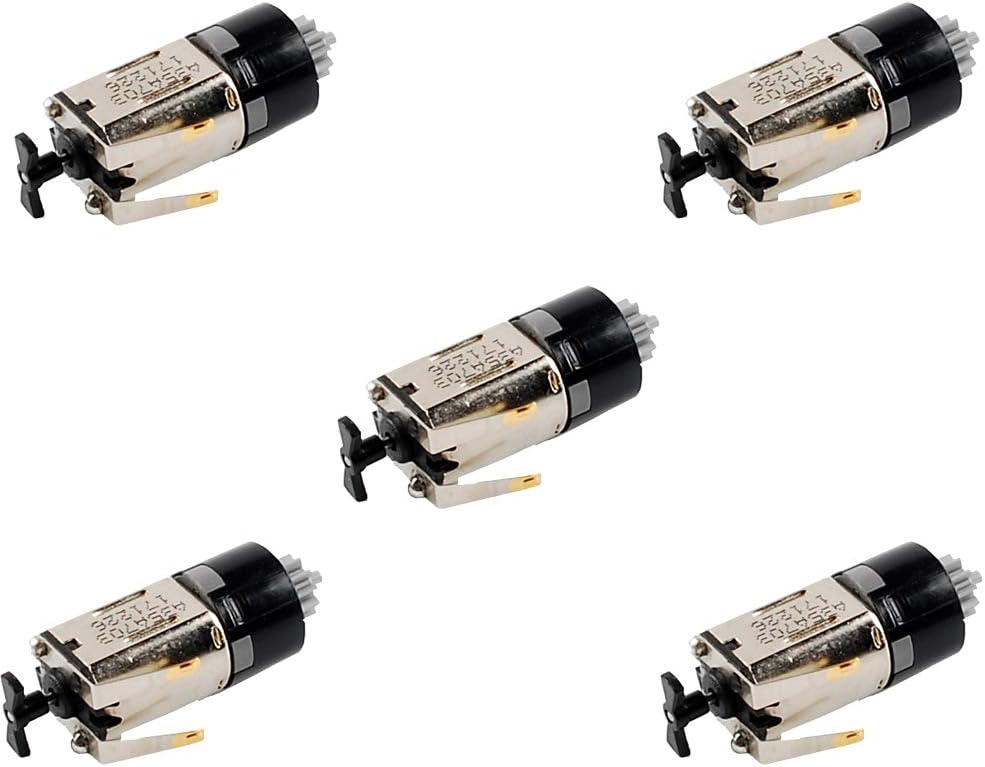

The Acxico 3Pcs Mini Micro N20 Gear Motor offers a budget-friendly entry into robotics. With a 4.6 rating, it is reliable for light-duty projects. Its metal gearbox ensures longevity despite the low cost.
We may earn a commission when you buy through this link, at no additional cost to you.
This motor features a full metal gearbox which provides better durability compared to plastic alternatives. The D-type shaft helps prevent wheel slippage during operation. It is designed for 3V to 6V applications making it compatible with common battery packs.
While it lacks high torque it delivers consistent slow speed which is useful for precise movements in small robots. The packaging includes three motors allowing for multi-wheel robot builds without extra purchase.
Buy this if you need multiple motors for educational projects or prototypes. It is an excellent choice for hobbyists looking to minimize costs while maintaining functional performance in smart car or robot designs.
The full metal gearbox handles mechanical stress better than plastic options extending the motor service life.
The simple wiring and standard shaft size make it easy to integrate into basic DIY robot car projects.
We may earn a commission when you buy through this link, at no additional cost to you.
The 6-22v 200W DC Planet Gear Motor stands out for high torque requirements. Rated at 4.6 it handles heavy loads effectively. The planetary design provides smooth power transmission for complex robotics.
We may earn a commission when you buy through this link, at no additional cost to you.
With 90kg.cm torque this motor is built for demanding applications like rotating tables or door locks. The 6V to 22V range allows flexible power supply options. It features an 8mm D-shaft for secure mechanical coupling.
The planetary gear system reduces noise and improves efficiency under load. While the price is higher the performance justifies the cost for professional or heavy-duty DIY projects. It is robust and reliable for industrial automation tasks.
Choose this for projects needing significant torque or variable voltage input. It is ideal for robotics that require lifting capabilities or precise control over heavy mechanical components in automation setups.
The 90kg.cm torque rating allows this motor to drive heavy loads without stalling during operation.
Operating across 6V to 22V gives system designers flexibility in power supply selection for different applications.
We may earn a commission when you buy through this link, at no additional cost to you.
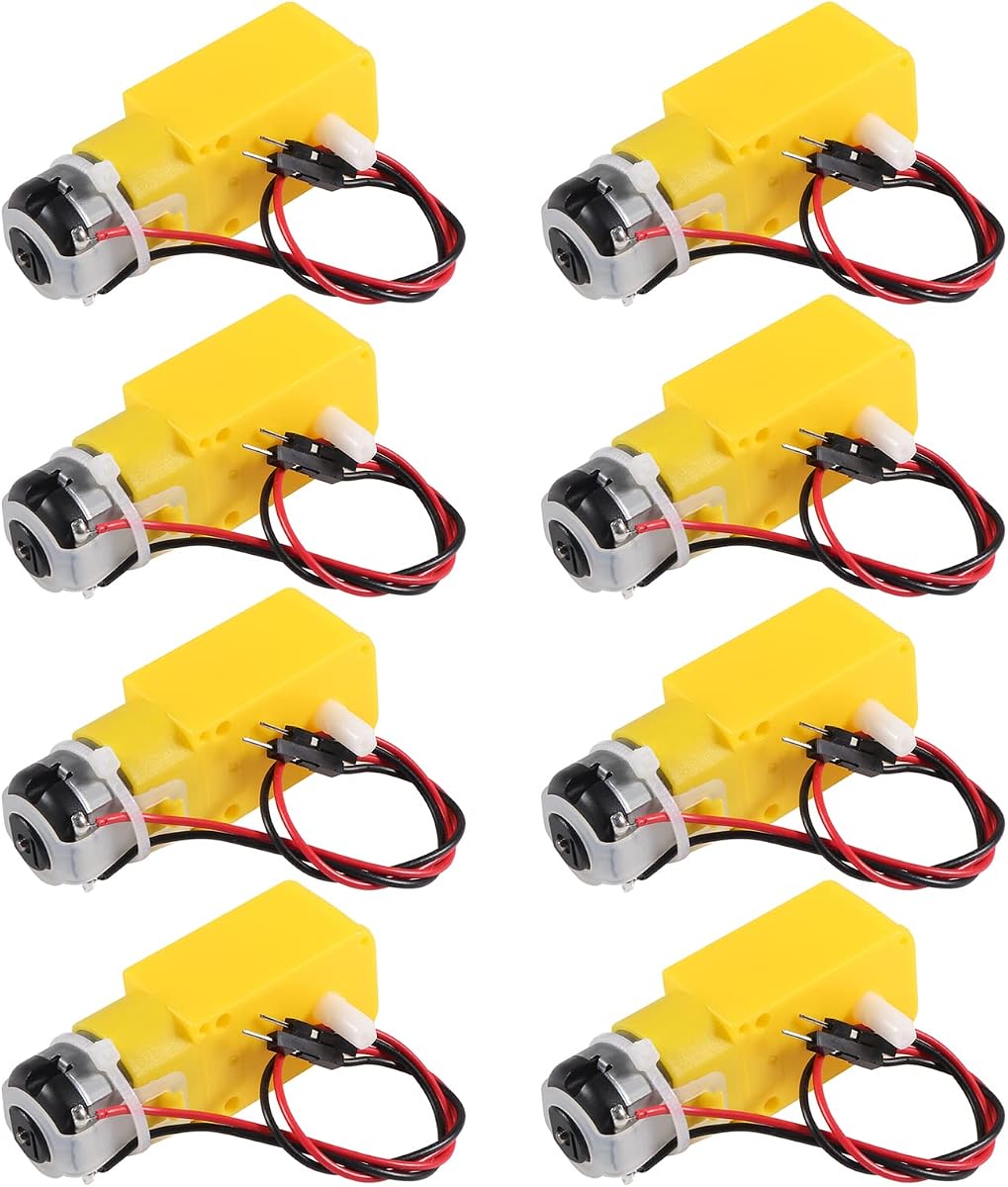
The 8pcs TT Motor Dual DC 3-6V Gearbox Motor provides great value for multi-robot projects. With a 4.5 rating it is popular for educational builds. The package includes wheels making it a complete solution for car robots.
We may earn a commission when you buy through this link, at no additional cost to you.
These motors feature a 1:48 gear ratio for steady speed around 200RPM. The 2.54mm wires fit directly into breadboards simplifying circuit design. The set is made of premium eco-friendly materials for durability.
Each motor offers 0.8kg.cm stall torque which is sufficient for small smart cars. The plug-and-play design reduces assembly time significantly. It is optimized for velocity and distance measurement tasks in competitions.
Select this for classroom use or bulk projects where quantity matters. It is perfect for learning motor control and building standard smart robot cars without complex wiring or custom mounting solutions.
The package includes four wheels alongside eight motors saving you from sourcing compatible wheel components separately.
The 2.54mm connectors allow easy integration into prototyping boards without soldering or extra adapters.
We may earn a commission when you buy through this link, at no additional cost to you.
The DC 12V Encoder Gear Motor simplifies robot chassis setup. It comes with a rubber tire wheel kit and mounting bracket. With a 4.4 rating it offers good performance for 12V systems.
We may earn a commission when you buy through this link, at no additional cost to you.
Featuring a 500 RPM full metal gear reduction this motor provides smooth rotation. The enclosed structure reduces weight while maintaining high-strength magnetic shoes. Pure copper coils ensure low heat generation and high power efficiency.
The encoder allows precise speed measurement which is vital for advanced robotics control. Full metal gears reduce noise and extend motor life. The design is compact enough for smart cars yet robust for model DIY builds.
Buy this if you need a complete drive solution with encoders. It suits projects requiring feedback control like smart balance cars or precision model robots needing reliable 12V power output.
The integrated encoder provides data for accurate speed and position control in closed-loop robotics systems.
Pure copper coils reduce resistance ensuring stable performance and minimizing heat build up during operation.
We may earn a commission when you buy through this link, at no additional cost to you.
The 2Pack TT Motor with Encoder combines high torque with precision control. Rated 4.7 it excels in advanced smart car builds. The all-metal gearbox supports heavy loads and ensures longevity.
We may earn a commission when you buy through this link, at no additional cost to you.
With a 1:90 ratio and 12PPR Hall encoder you get precise speed and position data. The motor handles 3 to 12V efficiently. The PH2.0 interface simplifies integration into your circuit designs.
The upgraded metal shaft and gears offer superior strength compared to standard TT motors. A high no-load speed of 10000 RPM before reduction ensures responsive performance. An LED indicator helps monitor working status easily.
Choose this for serious robotics projects needing feedback and power. It is ideal for smart vehicles requiring accurate motion control and robust mechanical components for durable operation over time.
The AB-Phase Hall encoder outputs quadrature waves enabling accurate real-time measurement of speed and position.
Upgraded all-metal gears and shaft provide strength and longevity for demanding robotic applications.
We may earn a commission when you buy through this link, at no additional cost to you.
The CQRobot 70:1 Metal DC Gearmotor offers high torque in a small form factor. With a 4.6 rating it is well-regarded for smart balance cars. It operates at 6V or 12V with a 70:1 reduction ratio.
We may earn a commission when you buy through this link, at no additional cost to you.
It delivers 15 kg.cm stall torque at 6V making it powerful for its size. The D-shaped output shaft ensures reliable power transfer. The metal mounting bracket kit simplifies installation on robot chassis frames.
Designed for projects like medical equipment and smart home appliances it provides reliable performance. The 37Dx54.8L dimensions fit into tight spaces. The 10W power at 12V supports consistent operation under load.
Select this when space is limited but torque is critical. It fits well in custom servo builds or smart balance cars needing a compact and robust motor solution for reliable movement.
The compact 37D diameter allows integration into small chassis without sacrificing power output.
The metal bracket kit simplifies secure attachment to robot frames saving time on custom mounting solutions.
We may earn a commission when you buy through this link, at no additional cost to you.
The 2Pcs 12V DC Motor boasts a 5.0 rating for high torque performance. It is perfect for RC Car DIY projects. The all-metal gears resist heat and wear ensuring long-lasting strength for heavy use.
We may earn a commission when you buy through this link, at no additional cost to you.
This motor delivers 350 RPM at 6-12V with low noise operation. The pure copper rotor increases conductivity and torque efficiency. A D-shaped shaft prevents slipping for stable connection to wheels or gears.
The double-shaft design allows flexibility for connecting components on both ends. It is compact with a 25mm diameter fitting various mounting options. It is suitable for games, toys and electronic projects.
Use this for RC vehicles requiring strong power. The reliable performance and secure shaft make it a solid choice for hobbyists upgrading small electric drills or custom motorized builds.
The pure copper rotor enhances conductivity and torque by thirty percent for reliable performance in tasks.
The D-shaped steel shaft prevents slipping ensuring secure mounting and stability during high torque operation.
We may earn a commission when you buy through this link, at no additional cost to you.
The Gikfun 1.5V-6V Type 130 Miniature DC Motors are ideal for small scale robotics. With a 4.2 rating they offer high speed at 16000 RPM. Each unit comes with wire leads for easy connection.
We may earn a commission when you buy through this link, at no additional cost to you.
These motors are compact at 15 x 20 mm with a 2.0mm shaft diameter. They run on 1.5V to 6V making them perfect for battery-powered cars. The case pack of six provides ample spares for multiple builds.
They are great for brush-bots or fans where gear reduction is not needed. The 0.35-0.4A current requirement is manageable for small controllers. It is a classic choice for solar powered hobby projects.
Choose this for projects requiring high speed and low voltage. It is perfect for brush bots or educational projects where compact motors and easy wiring are priorities for simple automation tasks.
Six inch wire leads are pre-attached allowing for immediate connection to breadboards without soldering.
Operating at 16000 RPM at 3V these motors provide fast movement for lightweight projects like fans.
We may earn a commission when you buy through this link, at no additional cost to you.
The NW 5pcs 3V Micro Planetary Reducer Motor provides high torque for tiny robots. With a 4.4 rating it runs smoothly at low speeds. The planetary reducer design fits into very small spaces.
We may earn a commission when you buy through this link, at no additional cost to you.
At 3V it delivers 110 rpm which is ideal for slow precise movement. The micro size allows integration into constrained designs. It is a good choice for small robot gearbox applications needing reduction.
The 5-pack ensures you have replacements or enough motors for multiple wheels. It works well with coin cell batteries for portable devices. The compact nature makes it suitable for wearable robotics.
Select this for miniature robotics or battery-powered projects. It is ideal where space and low voltage are key constraints but torque and precision matter more than speed.
The planetary reducer allows high torque output in a small package ideal for space constrained designs.
Operating at 3V makes these motors compatible with common coin cell batteries for portable small devices.
We may earn a commission when you buy through this link, at no additional cost to you.
The 12V DC Motor is a practical replacement for RC Cars. With a 4.4 rating it supports 6 to 12V applications. It is designed for hobby repair work and small electric drills.
We may earn a commission when you buy through this link, at no additional cost to you.
It features a 2.3mm shaft compatible with many DIY gears. The motor provides high torque and high speed up to 12000 RPM. It is low noise and efficient for small power wheels.
Check the original size before ordering as it fits specific Traxxas models. The compact size allows for custom motorized builds in tight spaces. It is reliable for science experiments and PCB projects.
Choose this if you need a direct replacement motor. It is perfect for hobbyists repairing Power Wheels or needing a small general-purpose motor for custom DIY mechanical assemblies.
This motor fits many popular RC models making it an easy upgrade for broken units.
The small footprint and 2.3mm shaft allow easy integration into tight spaces for DIY projects.
We may earn a commission when you buy through this link, at no additional cost to you.
Selecting the right DC motor for robots requires understanding voltage torque and gear types. This guide breaks down the essential factors to ensure your robot performs reliably.
Voltage determines which power source you can use. Match the motor rating to your battery pack to avoid damage or underperformance. Common ranges are 3V 6V and 12V. Ensure your controller supports this voltage.
Always verify voltage ratings before purchasing to prevent overheating or insufficient power delivery to your motor.
Torque is the force the motor exerts to move your robot. Heavier robots need higher torque to move effectively. Low torque motors may stall under load. Check stall torque values in the product specs.
Prioritize high torque if your robot carries weight or climbs slopes to ensure reliable movement.
Gearboxes reduce speed and increase torque. Metal gears last longer than plastic ones under heavy stress. Planetary gearboxes offer compact high torque. Straight gearboxes are cheaper but louder. Choose based on your durability needs.
Invest in metal gearboxes for long-lasting performance in demanding robotics applications.
Encoders provide feedback on speed and position. This is vital for balance robots and precise control. Without encoders you rely on open-loop control. Decide if your project needs this precision.
Use encoder motors when precise motion control and stability are required.
Mounting brackets and shaft shapes vary. D-shafts prevent wheel slippage. Ensure brackets match your chassis holes. Poor mounting leads to vibration and mechanical failure. Check dimensions carefully.
Confirm shaft type and bracket compatibility before buying to simplify assembly.
Robotics often have limited space. Compact motors like Type 130 or N20 fit better. Measure your chassis before buying. Larger motors offer more power but may not fit. Balance size with capability.
Select a motor that fits your design physically without compromising needed performance.
Current draw affects battery life. High power motors drain batteries faster. Check stall current to estimate consumption. Use larger batteries for longer runtimes. Efficient motors save energy.
Evaluate current specs to plan battery capacity appropriately for your run times.
Different robots need different motors. Cars need wheel-friendly shafts. Arms need high torque. Small bots need tiny motors. Match the motor to the specific task. General motors might not suffice.
Choose a motor specifically optimized for your project type to avoid functional issues.
Install motors securely using brackets or adhesives. Ensure wheels are aligned properly to reduce friction and strain on the motor shaft. Proper mounting prevents vibrations that can damage internal gears over time.
Connect wiring according to polarity standards. Reverse connections will change rotation direction. Use heat shrink tubing for loose wire connections to prevent short circuits during operation. Secure cables to avoid snagging during movement.
Avoid overloading the motor beyond its torque limit. If it stalls or gets hot reduce the weight or load. Regular lubrication of external mechanical parts helps maintain smooth operation and extends motor life significantly.
For beginners 6V to 12V is typically ideal as it balances power and safety. These voltages work with common battery packs and controllers. Always check motor specifications to ensure compatibility with your power source.
Yes metal gears generally offer superior durability and can handle higher torque. Plastic gears may be quieter but can wear down faster under heavy loads. Choose metal gears if your robot will carry weight or operate frequently.
Encoders are essential if you require precise speed control or balance. For simple line following or basic driving they are optional. Consider your project complexity and control needs before deciding to add encoders.
You can use a gear reduction kit to increase output torque at the expense of speed. This allows a single motor to perform more demanding tasks effectively. Ensure the gear ratio matches your speed needs.
No connecting a 3V motor to 12V will likely burn it out. Motors are designed for specific voltages. Using excessive voltage causes overheating and permanent failure. Match voltage ratings to your battery to ensure safe operation.
A D-shaped shaft has one flat side to prevent wheels from slipping. This ensures the wheel rotates with the motor. It is more secure than a round shaft for DIY car builds. Use it for stable wheel connections.
Use a motor driver module to connect motors to Arduino. Direct connection can damage the board due to high current draw. Motor drivers manage power separately and allow software control of speed and direction easily.
Keep the motor free from dust and debris regularly. Ensure gears are lubricated if accessible. Check wiring connections for wear and tear. Proper care extends life and ensures consistent performance during long projects.
The 10 Best DC Motors for Robots provide options for every need from budget to premium. Whether you need torque or feedback encoders this guide covers the essentials for your next build.
Prioritize voltage compatibility and torque requirements first. Selecting the right motor saves time and frustration during assembly. Match the motor to your project goals for success.
Prices change frequently so verify current listings before finalizing your purchase. Check stock availability and user feedback to ensure the best value for your budget today.