
FLASHFORGE Creator 5 Pro
4.4Editor score
Four independent extruders
Sixty five C active chamber
Heuristic thirteen air filtration
Compare the top 3D printers for high temperature filaments like ABS and PC. This guide reviews speed, chamber heating, and nozzle limits for engineering prints.
Finding the right 3D printer for high temperature filaments requires careful evaluation of chamber heating, nozzle capabilities, and structural stability. Engineers and makers need machines that handle materials like ABS, ASA, and Polycarbonate without warping or clogging during complex projects.
We compared ten leading models based on their maximum nozzle temperatures, enclosed chamber designs, and motion system stability. Our analysis focuses on real-world performance with engineering-grade materials while considering ease of use and calibration features for reliable results.
Each pick showcases specific strengths in handling heat-resistant plastics and abrasive composites. Please note that pricing and availability change frequently so verify current offers before purchasing to ensure you get the best value for your specific printing requirements today.
4.4Editor score

4.7Editor score

4.4Editor score
This side-by-side comparison highlights the key specifications and capabilities of each printer selected for handling high temperature filaments. Review the table to understand how nozzle limits, chamber heating, and build volumes differ across these engineering-focused machines.



The Bambu Lab P2S Combo stands out as the top choice for high temperature filament printing. It combines speed with precision and delivers a consistent chamber environment essential for engineering materials.
We may earn a commission when you buy through this link, at no additional cost to you.
Its Adaptive Airflow System balances cooling and heat retention to maintain a stable fifty degree Celsius chamber for materials like ABS and ASA. The PMSM Servo Extruder ensures accurate flow control while the AMS 2 Pro keeps filaments dry and ready.
The system requires a significant investment and multi-color printing only works with the combo version. These trade-offs are acceptable given the reliability and speed offered for professional-grade functional parts.
Engineers and serious hobbyists should buy this model for its ability to handle advanced polymers without warping. It is the best recommendation for those needing dependable high temperature performance.
The enclosed design maintains a stable temperature that minimizes warping and ensures strong layer adhesion for advanced filaments.
The AMS 2 Pro includes built-in drying to prevent moisture-related defects and supports multi-color workflows seamlessly.
We may earn a commission when you buy through this link, at no additional cost to you.
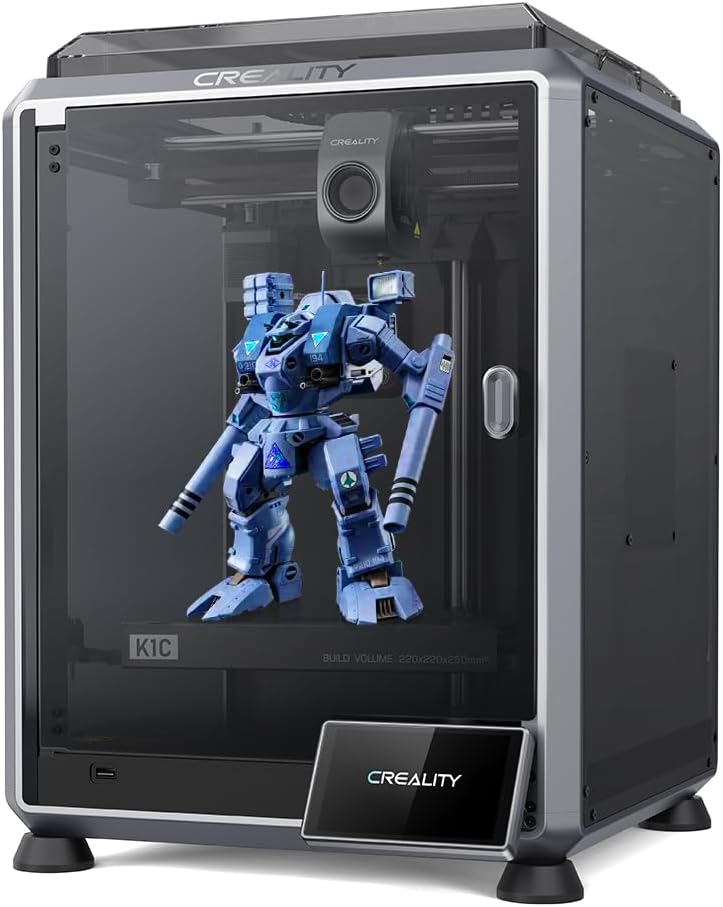
The Creality K1C is designed specifically to handle carbon fiber and other abrasive filaments. It offers fast printing speeds and includes a robust direct extruder system for reliable high temperature operation.
We may earn a commission when you buy through this link, at no additional cost to you.
Its direct extruder uses a steel-tipped copper nozzle and titanium alloy heatbreak to prevent heat creep while handling high temperature printing up to three hundred degrees. The AI camera monitors for failures and the machine is ready to print in minutes.
Lack of an active heated chamber may limit performance with certain ABS variants. However the hardened nozzle makes it ideal for reinforced materials that would damage standard machines.
Users working with carbon fiber should choose this printer for its durability and speed. It is a strong value for those needing abrasive-resistant components.
The steel-tipped copper nozzle resists wear from carbon fiber and glass filaments better than standard brass options.
Auto leveling and input shaping save setup time and ensure consistent results without manual adjustments.
We may earn a commission when you buy through this link, at no additional cost to you.
The FLASHFORGE Creator 5 Pro is built for industrial-grade production of multi-color and high temperature parts. It features a sealed chamber and active heating to manage challenging materials effectively.
We may earn a commission when you buy through this link, at no additional cost to you.
Its four independent extruders allow true multi-color printing without purging waste. The active chamber maintains sixty five degrees for ABS and PC while the HEPA13 filtration ensures a clean safe environment.
High cost and large size make this impractical for small home setups. Yet it delivers unmatched efficiency for offices needing robust engineering-grade prints.
Professional workshops should invest in this printer for its production capabilities. It is the top pick for multi-material industrial requirements.
Four independent toolheads eliminate color mixing and purging waste during multi-color and multi-material prints.
The fully sealed enclosure and HEPA13 filter capture fumes and odors for safe indoor operation.
We may earn a commission when you buy through this link, at no additional cost to you.
The Bambu Lab P1S offers a balanced solution for high temperature filaments with its enclosed design and speed. It supports materials like ABS and ASA with reliable results.
We may earn a commission when you buy through this link, at no additional cost to you.
Its fully enclosed body improves print performance for advanced filaments while automatic bed leveling ensures high-quality prints. The machine sets up quickly and works well with the optional AMS for multi-color needs.
It lacks active heating and requires separate purchases for multi-color capabilities. These are reasonable trade-offs given the price and performance balance.
Users wanting speed and enclosure stability should choose this model. It is excellent for hobbyists stepping into engineering materials.
The enclosed design reduces drafts and helps maintain temperature stability for ABS and ASA prints.
Automatic calibration and quick assembly get you printing in minutes without complex tuning.
We may earn a commission when you buy through this link, at no additional cost to you.
The Bambu Lab A1 is designed for ease of use with strong calibration features. It is ideal for users new to high temperature printing but still needs quality.
We may earn a commission when you buy through this link, at no additional cost to you.
Full-auto calibration and active flow rate compensation ensure smooth prints. The quiet mode and simple interface make it user-friendly for home offices.
Lack of enclosure limits performance with high temperature materials like ABS. It works best for lower temp materials unless used in a controlled environment.
Beginners should buy this for its reliability and ease of use. It is a great entry point for future engineering projects.
The machine handles all calibration steps automatically so you can start printing right away.
Active motor noise canceling keeps the environment peaceful during long print sessions.
We may earn a commission when you buy through this link, at no additional cost to you.
The Flashforge AD5X offers an accessible entry into high temperature printing at a budget-friendly price. It supports ABS and similar materials with a capable nozzle.
We may earn a commission when you buy through this link, at no additional cost to you.
Its high-temperature nozzle reaches three hundred degrees Celsius and supports a wide range of filaments. Fully automatic leveling ensures consistent quality while IFS allows multi-color printing with minimal setup.
Active heating requires an optional kit and build volume is modest for large prints. These limits are acceptable for users focused on cost-effective prototyping.
Hobbyists seeking an affordable high temp option should choose this model. It delivers strong value for budget-conscious engineering prints.
The three hundred degree nozzle enables ABS and engineering filament use without expensive upgrades.
Consistent bed leveling reduces failed prints and ensures reliable first layers every time.
We may earn a commission when you buy through this link, at no additional cost to you.
The Anycubic Kobra S1 Max excels for large-scale high temperature projects with its massive build volume. It handles advanced materials with precision and stability.
We may earn a commission when you buy through this link, at no additional cost to you.
Equipped with a three hundred fifty degree hotend and sixty five degree chamber it manages PC and reinforced filaments. The CoreXY system ensures stability during fast prints of large parts.
Its size demands space and setup time. These are acceptable for users needing large prototypes or end-use parts.
Users needing large high temp prints should buy this model. It is the best choice for oversized engineering components.
The 350mm build volume enables printing large functional prototypes and parts in one go.
CoreXY design with vibration compensation ensures precision even at high speeds.
We may earn a commission when you buy through this link, at no additional cost to you.
The Flashforge AD5X provides excellent value for those needing multi-color and high temperature capabilities. It balances price with robust features.
We may earn a commission when you buy through this link, at no additional cost to you.
Its all-metal hotend handles three hundred degrees for advanced filaments. The IFS allows direct 4-color printing while magnetic PEI plate ensures adhesion.
Enclosure kit is extra for ABS and specs are limited compared to higher models. Still it is a great value for small shops.
Users wanting multi-color on a budget should choose this. It delivers versatility without high cost.
The IFS system swaps filaments automatically for vibrant prints without manual intervention.
Wi-Fi monitoring lets you track progress remotely for better workflow integration.
We may earn a commission when you buy through this link, at no additional cost to you.
The Snapmaker U1 offers unique multi-material capabilities with near-zero waste multi-color printing. It excels for complex prototypes with rigid and flexible parts.
We may earn a commission when you buy through this link, at no additional cost to you.
Its four toolheads swap in five seconds to reduce waste and speed. The system supports mixed materials for functional parts with varied properties.
Cost and complexity are higher than basic models. Yet it saves material over time for complex prints.
Professionals needing mixed-material prints should buy this. It is the best for functional prototypes.
Tool swapping instead of purging reduces filament waste by up to five times.
Vibration compensation and offset calibration ensure dimensionally accurate results with minimal input.
We may earn a commission when you buy through this link, at no additional cost to you.
This model of the Creator 5 Pro focuses on production efficiency with near-zero waste and active heating. It delivers robust performance for small batch runs.
We may earn a commission when you buy through this link, at no additional cost to you.
Its four independent heads allow fast swapping and active chamber supports advanced filaments. Remote monitoring and dual filtration make it safe for offices.
High price makes it less ideal for home use. Yet it saves material over time for complex prints.
Small businesses needing efficient production should choose this. It is great for scalable manufacturing.
The FlashSwap changer switches nozzles without flushing filament to eliminate purge waste.
The sixty five degree chamber prevents warping for consistent ABS and PC prints.
We may earn a commission when you buy through this link, at no additional cost to you.
Selecting a printer for high temperature filaments requires balancing technical specs with your budget and workspace. Use these factors to find the right machine.
The maximum nozzle temperature determines which materials you can print. High temperature filaments like Polycarbonate require at least three hundred degrees Celsius.
Choose a printer with a nozzle capable of reaching three hundred degrees or higher for reliable engineering prints.
An active heated chamber maintains a stable internal temperature to prevent warping of ABS and ASA.
Look for models with active heating up to sixty five degrees to ensure consistent results without drafts.
The build volume must accommodate your largest intended projects. Some printers offer large volumes while others are compact.
Select a size that matches your typical part dimensions to avoid unnecessary cuts or waste.
High-speed printing requires a stable motion system to prevent artifacts. CoreXY systems generally offer better stability at speed.
Prioritize printers with rigid frames and CoreXY designs for accurate high-temp prints.
Abrasive filaments require direct extruders with hardened nozzles to prevent wear. Bowden setups may struggle with reinforced materials.
Ensure your printer has a direct drive system with hardened nozzles for carbon fiber or glass filaments.
Moisture ruins high temperature prints. Dryers or AMS systems help keep filament ready.
Choose printers with integrated drying or AMS for better filament handling and reduced defects.
A fully enclosed design reduces drafts and improves safety. It helps retain heat for ABS.
Prioritize printers with sealed enclosures for consistent high temperature results.
High temperature printing releases fumes. HEPA and carbon filters keep the workspace safe.
Look for models with dual filtration systems for office or home environments.
First, calibrate your machine with the recommended nozzle temperatures and bed settings for high temp filaments. This prevents adhesion issues and warping during the first layers.
Second, store your filaments in dry boxes with desiccants to maintain quality. Moisture absorption can cause clogs or poor surface finishes on prints.
Third, clean your nozzle regularly with appropriate tools to remove residue. Abrasive filaments may require hardened nozzles for long-term reliability.
ABS and ASA are common high temperature options with lower toxicity. Always use a well-ventilated area or enclosed printer with filtration. Avoid printing PC without proper safety measures.
No only models with direct extruders and hardened nozzles handle carbon fiber well. Check the nozzle material before printing with abrasive composites to avoid wear.
The ideal chamber temperature for ABS is around fifty to sixty five degrees. This minimizes warping and improves layer adhesion for consistent results.
You can add enclosures and heaters to open frame printers. However active heating is complex and often cheaper to buy a dedicated model.
Replace nozzles after heavy use with abrasive filaments. Inspect for wear if you notice inconsistent flow or clogs.
Yes a heated bed is necessary for ABS and ASA. It prevents warping and improves adhesion for high temperature materials.
This guide highlights top options like the Bambu Lab P2S Combo and FLASHFORGE Creator 5 Pro for high performance. Each model balances speed stability and temperature control differently.
Prioritize features like active chamber heating and nozzle limits based on your specific material needs. Safety and filament management should also influence your decision.
Always check current pricing and availability before purchase since offers change frequently. Choosing the right printer now ensures long-term reliability for your engineering projects.