
FLASHFORGE Creator 5 Pro
4.0Editor score
Four independent toolheads
65°C active heated chamber
Near-zero waste system
This guide compares the top 3D printers for small business owners, evaluating speed, reliability, and multi-color capabilities to help you choose the right
Finding the right 3D printer for small business operations requires balancing speed, reliability, and material versatility. Modern machines now offer rapid prototyping and batch production capabilities that were once reserved for industrial facilities. Choosing wisely ensures your workshop remains competitive while maintaining consistent output quality.
We evaluated ten leading models based on printing speed, build volume, multi-color support, and ease of use. Our analysis focuses on features that directly impact productivity, such as auto-leveling, enclosed chambers, and advanced filament systems. Each selection targets specific business needs from rapid iteration to end-use part manufacturing.
Every pick highlights key strengths and potential trade-offs to help you align features with your operational goals. While performance metrics vary, all options support reliable workflows for professional environments. Keep in mind that pricing and availability fluctuate, so verify current details before making a final decision.
4.0Editor score

4.2Editor score

4.7Editor score
The following comparison outlines key specifications across all ten selected models. Review build volume, speed, material support, and special features to identify which machine aligns best with your production requirements and workspace constraints.




The Bambu Lab P1S Combo stands out as a leading solution for small businesses needing speed and color versatility. With a 4.2 rating, it delivers reliable performance for intricate designs and functional parts alike. Its enclosed structure supports advanced filaments while auto leveling ensures consistent results.
We may earn a commission when you buy through this link, at no additional cost to you.
Key strengths include its 500mm/s printing speed and acceleration up to 20000mm/s², which drastically reduces production times. The AMS system enables up to 16 colors without manual swaps, perfect for branding or complex prototypes. The 15-minute setup gets teams printing immediately without extensive training.
Trade-offs involve the requirement for the AMS module to access multi-color features, adding to the initial investment. Also, carbon fiber filaments are not recommended, limiting some high-strength applications. However, for most small business needs, these limits are acceptable given the speed gains.
This printer suits businesses prioritizing rapid prototyping and color variety in a compact footprint. Its user-friendly design makes it ideal for teams with varying skill levels. If you value efficiency and visual impact, this model is a strong recommendation for your workflow.
The high-speed core allows teams to meet tight deadlines by reducing wait times between batches. Acceleration ensures quality remains high even at peak performance levels.
Multi-color capability lets businesses produce branded items directly without post-processing. This saves labor and increases revenue potential per print.
We may earn a commission when you buy through this link, at no additional cost to you.
The Creator 5 Pro targets industrial-grade small businesses needing robust material handling. Its 4.0 rating reflects reliability in demanding environments. Four toolheads allow seamless switching without flushing, slashing waste and costs. The 65°C chamber prevents warping on ABS and PC.
We may earn a commission when you buy through this link, at no additional cost to you.
Strengths center on operational efficiency and safety. The near-zero waste system saves material costs, while the CoreXY structure ensures accuracy at 600mm/s. Dual HEPA filters keep the workspace clean, critical for health and compliance. Remote monitoring via HD camera aids quality control.
Trade-offs include a higher price tag and the complexity of managing four toolheads compared to simpler setups. Beginners may find the calibration steps demanding. Yet for high-volume or engineering parts, the material savings and print quality justify the investment.
This machine fits businesses producing functional industrial components or large batches. Its safety features and material versatility make it a powerhouse for serious makers. If you need durability and waste reduction, the Creator 5 Pro delivers outstanding value.
Eliminating purge waste means less material cost per job and faster changeovers between colors. This directly boosts profit margins for small operations.
The heated chamber enables printing with ABS and PC without warping. This unlocks stronger parts for engineering and mechanical use.
We may earn a commission when you buy through this link, at no additional cost to you.
The A1 offers high performance at an accessible entry point for small businesses. With a 4.7 rating, it is praised for ease of use and precision. Full-auto calibration removes tedious setup, letting you focus on design. Multi-color printing is ready with AMS lite.
We may earn a commission when you buy through this link, at no additional cost to you.
Key strengths include active flow rate compensation and high acceleration for consistent quality. The 1-Clip quick swap nozzle simplifies maintenance, while the interface is intuitive for beginners. Quiet operation ensures it fits in office or home workshop settings without disturbance.
Trade-offs involve buying AMS lite separately for colors and a smaller build volume than industrial models. This limits large-part production. However, for prototyping and small batch runs, the speed and reliability make it an efficient tool with minimal overhead.
This printer suits startups or small teams needing reliable quality without complex training. Its balance of cost and performance is unmatched in the budget tier. If you value simplicity and precision, the A1 is a smart starting choice.
Auto calibration saves time and reduces errors for new operators. The learning curve is steep, allowing faster production starts.
Noise canceling keeps the workspace calm, ideal for shared offices. This reduces distractions and improves employee focus during print jobs.
We may earn a commission when you buy through this link, at no additional cost to you.
Snapmaker U1 delivers true multi-material capability through its robust SnapSwap system. A 4.5 rating highlights reliability for functional parts and prototypes. The 4-toolhead setup allows rigid and flexible prints in one job. Automated tool changes reduce manual intervention significantly.
We may earn a commission when you buy through this link, at no additional cost to you.
Strengths include the 5-second tool changer and minimal waste during color shifts. Smart calibration ensures smooth results with vibration compensation. The Orca software and touchscreen streamline workflows, while AI monitoring adds safety for unattended runs. This setup supports complex designs efficiently.
Trade-offs involve the higher cost and the learning curve for managing four toolheads. Locking mechanisms are robust but require attention. For simple tasks, it may be overkill. However, for businesses needing mixed materials like TPU supports, it saves post-processing time.
This printer suits creative shops or engineers needing end-use parts. Its versatility in handling various polymers in one print is unmatched. If you prioritize design freedom and speed, the U1 is a powerful ally.
Reduced waste lowers material costs and environmental impact. This improves sustainability metrics for businesses focused on green production.
Mixed-material printing allows for articulated models and soluble supports. This expands the types of parts you can offer to customers.
We may earn a commission when you buy through this link, at no additional cost to you.
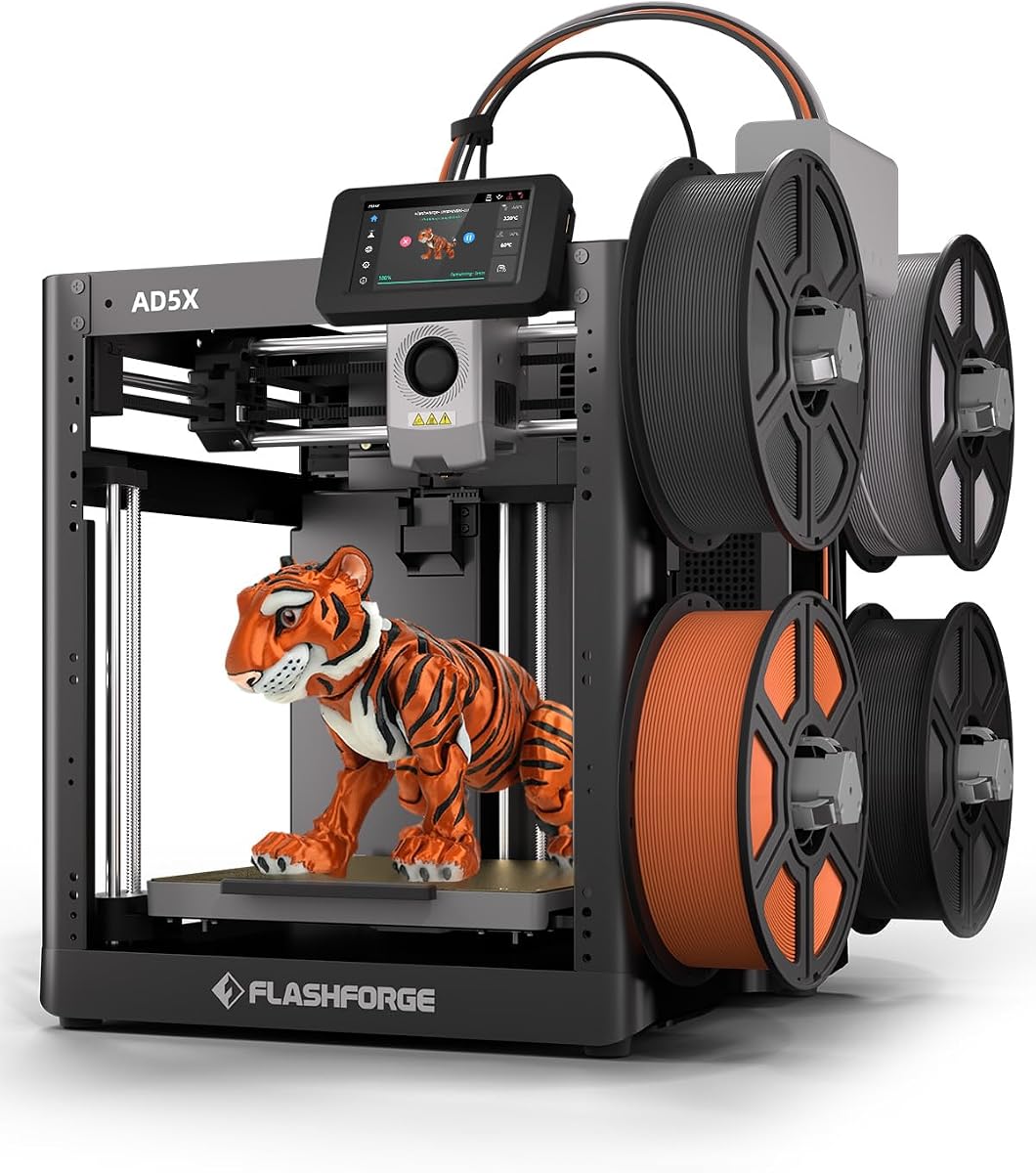
The AD5X balances speed and color for efficient small business workflows. With a 3.9 rating, it is noted for high-speed performance and auto leveling. The 300°C extruder handles diverse materials. Four colors enable creative outputs without manual swaps.
We may earn a commission when you buy through this link, at no additional cost to you.
Strengths include 12X faster printing and vibration compensation for clean results. The resume function prevents loss from power outages. Remote monitoring via the Flash Maker app offers convenience. This model suits rapid prototyping where time and cost are critical.
Trade-offs include a smaller build volume than larger competitors. The rating suggests occasional calibration needed. For simple tasks, the trade-off is worth the speed. Businesses focusing on detailed miniatures will find this unit efficient for batch runs.
This printer is ideal for small shops prioritizing throughput. Its features reduce manual steps and keep production flowing. If you need a fast, reliable machine for precision work, the AD5X delivers solid performance.
Fast speeds allow quick iteration on designs. This accelerates feedback loops and shortens time to market for new products.
The 300°C extruder supports engineering filaments. This opens doors to functional parts that withstand heat and stress.
We may earn a commission when you buy through this link, at no additional cost to you.
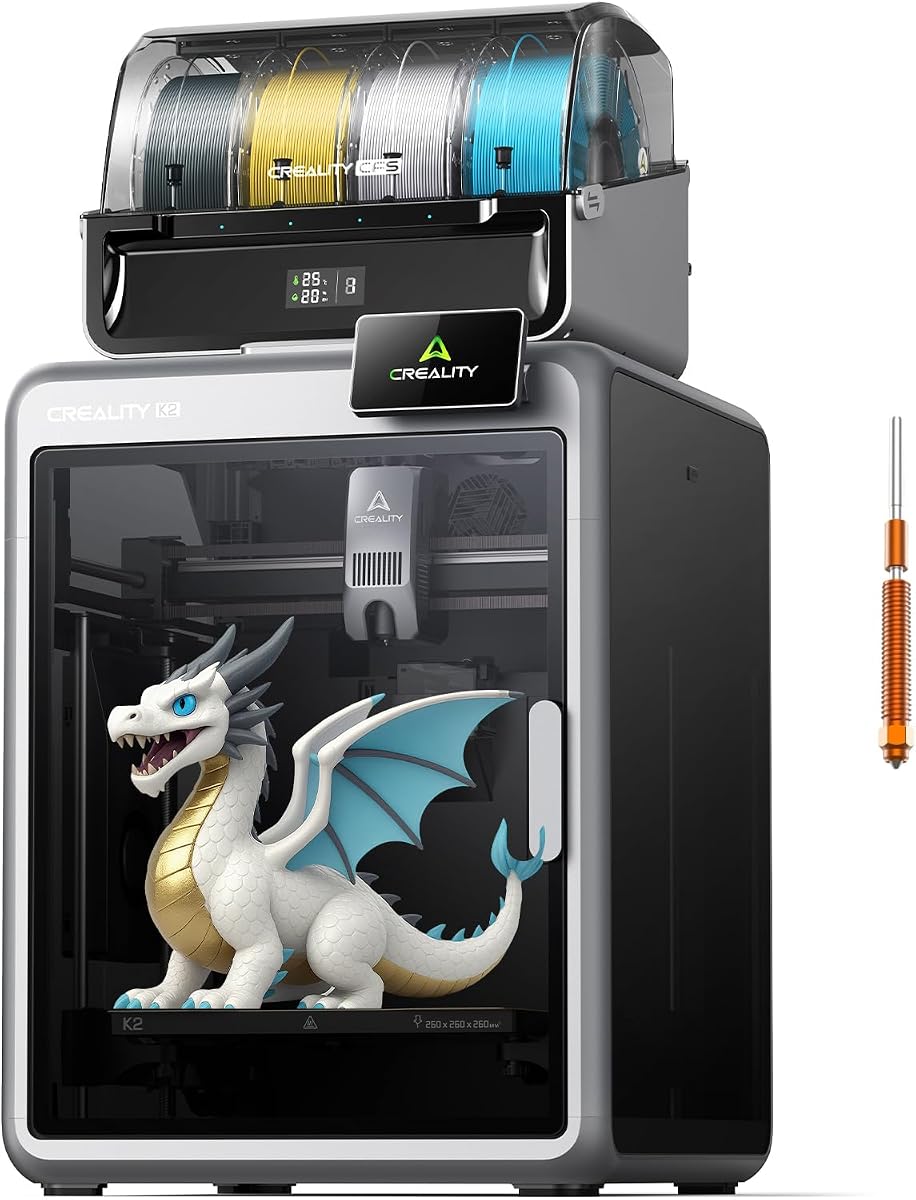
The K2 Combo offers an out-of-the-box experience with 95% pre-assembly. A 4.0 rating reflects ease of setup and solid performance. Its CFS system supports up to 16 colors. Step-servo motors ensure smooth movement and quiet operation.
We may earn a commission when you buy through this link, at no additional cost to you.
Strengths include the AI camera for monitoring and smart auto leveling that targets the print area. The frame is sturdy with dynamic balance. This reduces downtime and user error. Businesses can rely on consistent quality even with varied users.
Trade-offs involve buying extra CFS units for full color ranges. The initial kit includes one unit. For small batches, this suffices. For larger needs, the expansion cost adds up. Still, the ease of use remains a key advantage.
This printer suits businesses needing quick deployment and flexibility. The quiet mode allows office use. If you value plug-and-play reliability and smart features, the K2 Combo is a practical choice.
AI camera detects failures early saving material and time. This allows teams to focus on other tasks while prints run.
Quiet printing ensures minimal disruption to the office. This supports open workspace environments without distractions.
We may earn a commission when you buy through this link, at no additional cost to you.
The K2 Plus Combo offers a massive 350x350x350mm build for large parts. A 4.0 rating highlights its stability and speed. The Matrix frame ensures rigidity. Dual AI cameras monitor flow and failures. It supports high-temp materials with 60°C chamber.
We may earn a commission when you buy through this link, at no additional cost to you.
Strengths include 600mm/s speed with 30000mm/s² acceleration. The frame reduces resonance. This maintains accuracy even on large prints. Auto-bed tilt and leveling optimize success. Businesses producing bulky items gain efficiency from this scale.
Trade-offs involve a larger footprint and higher cost. It requires significant space and budget. However, the capacity to print large objects without partitioning justifies the size. For scaling production, this model offers unmatched flexibility.
This printer suits businesses needing large-format printing. Its features support professional-grade output. If you require volume and reliability, the K2 Plus is an exceptional investment.
The large bed accommodates full parts without slicing. This reduces assembly time and improves structural integrity of final products.
Constant temperature support for ASA and PPA. This enables durable parts for automotive or outdoor applications.
We may earn a commission when you buy through this link, at no additional cost to you.
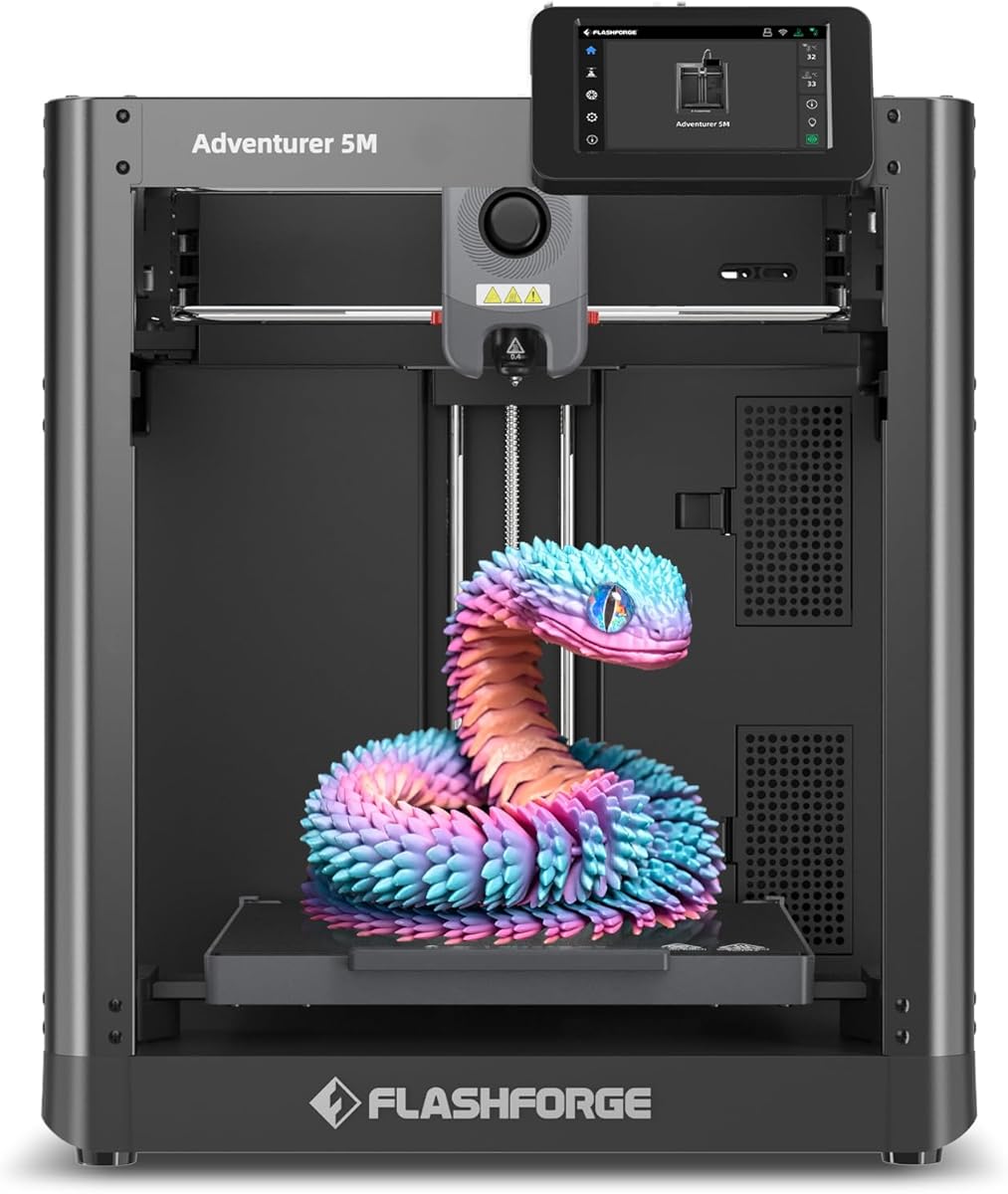
The Adventurer 5M emphasizes speed and ease of maintenance. With a 3.9 rating, it offers reliable CoreXY performance. The 3-second nozzle changes reduce downtime. Auto leveling ensures consistent first layers. It features a robust all-metal structure.
We may earn a commission when you buy through this link, at no additional cost to you.
Strengths include real-time app control and smart alerts. The dual PEI platform allows easy part removal. Vibration compensation maintains quality at 600mm/s. This model suits small businesses needing quick turnaround and flexible maintenance routines.
Trade-offs involve a smaller build volume. The learning curve for fine-tuning may challenge beginners. Yet the speed and app features add significant value for rapid prototyping. It balances simplicity and performance well for its class.
This printer suits makers needing fast cycles. The detachable nozzle simplifies swaps. If you value quick adjustments and remote management, the Adventurer 5M is a practical tool.
App monitoring lets teams manage prints remotely. This increases flexibility and responsiveness during work hours.
Fast nozzle swaps minimize idle time. This keeps production moving smoothly without long breaks for adjustments.
We may earn a commission when you buy through this link, at no additional cost to you.
The K2 Combo provides a robust multicolor workflow with CFS integration. A 4.0 rating highlights performance and ease. The RFID system reads filament info automatically. Dual Z-axis ensures smooth movement. Air purifier filters VOCs for safety.
We may earn a commission when you buy through this link, at no additional cost to you.
Strengths include dry storage and auto relay. This reduces waste and maintenance. The frame is sturdy with steel rails. Vibration-free design ensures quality. For businesses needing color parts, this streamlines the process significantly.
Trade-offs involve cost for expanding the CFS system. Setup requires understanding of the workflow. Still, the efficiency gains and print quality justify the effort. It suits businesses focused on high-value colored prints.
This printer suits teams needing reliable color output. The smart features reduce human error. If you prioritize color accuracy and filament management, the K2 Combo is a solid choice.
Auto relay and RFID save time on material changes. This ensures consistent runs without manual swapping interruptions.
Air purifier protects users from fumes. This supports safe office environments and meets health standards.
We may earn a commission when you buy through this link, at no additional cost to you.
The P1S delivers reliability for daily business needs. A 4.5 rating reflects strong build quality and speed. Its enclosed body improves advanced filament performance. Auto leveling ensures success every time. The setup is quick for all skill levels.
We may earn a commission when you buy through this link, at no additional cost to you.
Strengths include high-speed printing and support for ABS and ASA. The design simplifies operations. Teams get consistent results without constant tweaks. It supports multi-color via AMS, expanding creative options for marketing products.
Trade-offs include smaller size and need for AMS for colors. For large jobs, scaling requires multiple units. Still, its simplicity and speed make it ideal for startups. The reliability is worth the initial setup cost.
This printer suits small businesses needing consistent results. Its design reduces failure rates. If you prioritize quality and ease, the P1S is a reliable choice for daily use.
Enclosed body reduces environmental issues like warping. This increases print success rates and reduces wasted materials.
User-friendly design ensures anyone can operate it. This lowers training costs and boosts team productivity quickly.
We may earn a commission when you buy through this link, at no additional cost to you.
Selecting the right machine requires understanding specific business needs and workflows. Consider factors like build volume, speed, and material support to ensure the printer matches your production demands.
Build volume determines the maximum size of parts you can produce without splitting. Larger volumes allow for single-piece prototypes or functional parts that require fewer assembly steps. Check dimensions against your typical project sizes to avoid wasted cycles.
Ensure the machine fits your workspace while offering enough space for your needs.
High-speed printers reduce production time, allowing more batches per day. Look for acceleration and max speed ratings to gauge efficiency. Faster machines help meet tight deadlines and improve overall throughput in your workflow.
Prioritize speed when rapid prototyping or batch production is key to your business model.
Multi-color systems enable branding and complex designs without post-processing. Systems like AMS or CFS allow swapping colors automatically. This feature saves labor and enhances product value by offering custom-colored outputs directly from the printer.
Choose a system that integrates seamlessly with your design workflow for best results.
Advanced materials like ABS, ASA, and engineering-grade filaments require heated chambers and high-temperature extruders. Ensure the machine supports these materials if you plan on making durable parts. Versatility in filament types expands your product range significantly.
Verify supported materials against your business goals before purchasing any model.
Auto-leveling and calibration features reduce manual intervention and human error. These systems allow teams to focus on design rather than machine adjustments. User-friendly interfaces streamline workflows and shorten the learning curve for new staff.
Look for automation features that simplify daily operations for your team.
Near-zero waste systems minimize filament loss during color changes. Efficient designs save material costs and reduce downtime. This factor is crucial for businesses aiming to optimize margins and sustainability across production cycles.
Efficiency directly impacts profitability and resource management in small operations.
Safety features like HEPA filters and AI cameras protect users and detect failures. These tools maintain a clean workspace and prevent costly print issues. Remote monitoring allows oversight without constant physical presence.
Safety and reliability ensure uninterrupted production and employee protection.
Expandable systems allow adding toolheads or units as needs grow. Modular designs protect your investment by adapting to future requirements. This flexibility prevents the need to replace hardware as your business scales.
Choose a machine that allows upgrades without replacing the entire system.
Begin by leveling the bed and calibrating the extruder. These steps ensure adhesion and accurate first layers. Most modern printers automate these tasks, but verify settings before starting any print.
Maintain the machine by cleaning the nozzle and checking belts regularly. Replace worn parts to prevent failures and downtime. Keep the workspace clean to avoid dust affecting print quality.
Use monitoring tools to track progress and catch errors early. Regular firmware updates improve performance. Schedule maintenance weekly to keep operations smooth and efficient.
The best models include the Bambu Lab P1S Combo for speed, the Creator 5 Pro for industrial multi-material, and the Bambu Lab A1 for budget-friendly entry. Each offers distinct strengths for different business needs.
A heated chamber is essential if you print advanced materials like ABS or ASA. It prevents warping and ensures dimensional accuracy. For basic PLA prints, it may not be necessary but helps with consistency.
Many models like Bambu Lab, Creality K2, and Snapmaker support multi-color via add-ons like AMS or CFS. These allow automatic filament swapping for up to 16 colors without manual intervention.
Choose based on your largest part size. Larger volumes allow single-piece prints and reduce assembly needs. However, ensure the machine fits your workspace budget. Balance size with operational requirements.
Models like the Creator 5 Pro and AD5X offer speeds up to 600mm/s. High acceleration reduces production time significantly. Speed alone isn't everything; quality and stability also matter for reliable results.
Yes, auto-leveling ensures consistent first layers and reduces setup time. It minimizes failures and human error. For small business teams with varying skill levels, this feature saves time and improves reliability.
Each of the ten printers reviewed offers distinct strengths for small business needs. From speed to material support, these models cover diverse requirements efficiently.
Prioritize features like build volume, multi-color capability, and speed based on your production goals. The right choice reduces costs and increases workflow efficiency.
Always check current pricing and availability before purchasing to get the best deal.