
Behringer RHYTHM DESIGNER RD-8 Classic Analog Drum Machine
4.6Editor score
Authentic analog sound engine
Sixty four step sequencer
Eleven independent analog outputs
Discover the top 808 drum machines for beatmakers. This guide compares features, sound engines, and sequencing options to help you find the perfect rhythmic
Finding the right rhythm tool can transform your music production workflow entirely. A quality 808 drum machine offers authentic analog tones combined with modern sequencing capabilities for endless creativity.
We evaluated ten leading models based on sound accuracy, interface usability, and connectivity options. Our analysis focuses on how each unit handles classic patterns while supporting contemporary production needs effectively.
Each selection highlights specific strengths tailored to different budget levels and workflow preferences. Please note that pricing fluctuates frequently so verify current costs before making your final purchasing decision today.
4.6Editor score

4.6Editor score
5.0Editor score
This side by side comparison highlights key specifications across all ten selected drum machines to help you quickly identify which model fits your specific production needs and budget requirements.



The Roland TR-08 stands out as a faithful reproduction of the legendary drum machine that defined entire genres. With a 4.6 rating from users, it delivers the sonic signature producers crave in a modern format.
We may earn a commission when you buy through this link, at no additional cost to you.
Its core strength lies in retaining the original sound and user interface while adding contemporary features like gain and pan controls. The ultra compact design ensures it fits easily on any studio desk without sacrificing tactile control.
While it focuses strictly on the TR-808 experience, some users may find the eight track limit restrictive for complex arrangements. However, the depth of sound shaping available through the hands on controls compensates for this limitation effectively.
This model is ideal for producers seeking a dedicated drum tool that captures vintage warmth without the maintenance of obsolete hardware. If authenticity is your priority, this unit delivers unmatched performance in its class.
The circuit modeling ensures every kick and snare retains the punch and warmth of the original analog source.
Added compressor and gain controls allow for dynamic shaping that the classic unit lacked.
We may earn a commission when you buy through this link, at no additional cost to you.
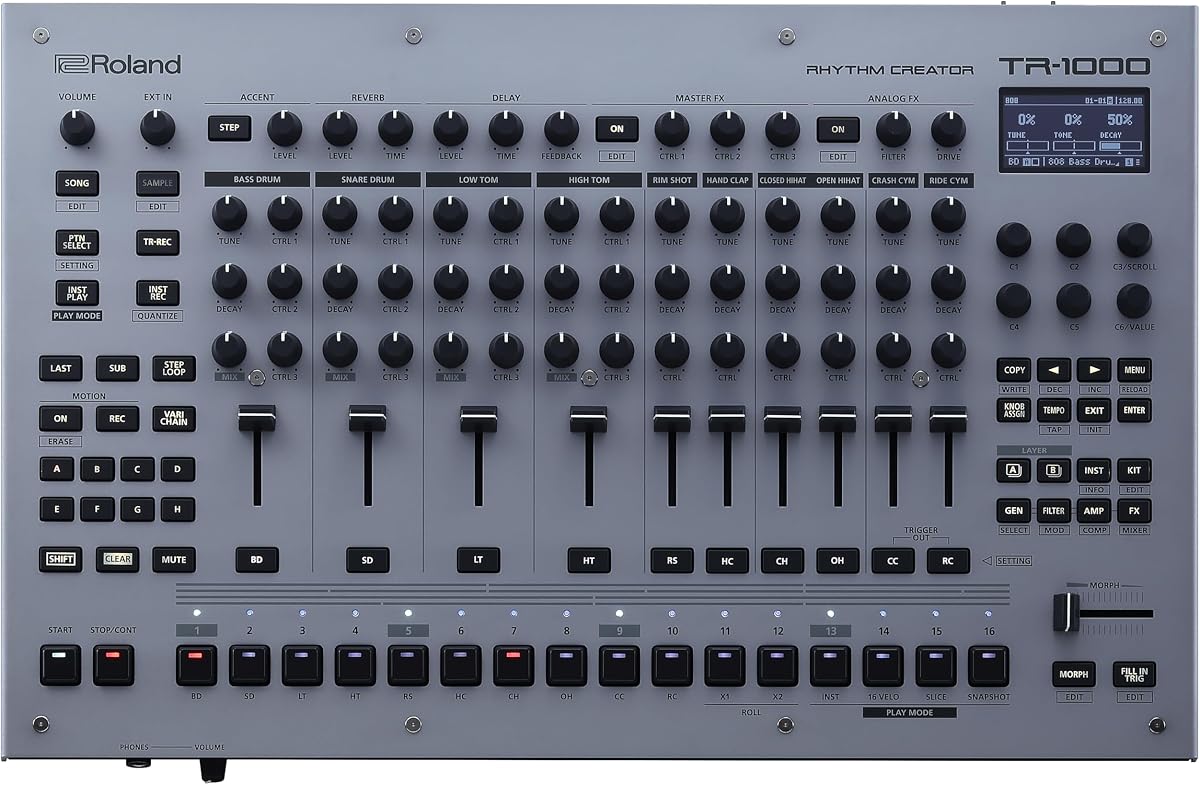
The TR-1000 represents the pinnacle of drum machine technology with its robust design and extensive sound library. Boasting a perfect 5.0 rating, it combines vintage analog warmth with modern digital flexibility seamlessly.
We may earn a commission when you buy through this link, at no additional cost to you.
Its newly developed analog engine paired with the ACB modeling engine offers classic sounds alongside wild digital textures. The advanced sampler provides massive memory for user samples making it a standalone powerhouse for serious producers.
The sheer number of features means new users might feel overwhelmed at first. However, the intuitive controls and comprehensive manual ensure that mastering its full potential becomes achievable over time.
For professionals needing a central production hub that handles everything from beat creation to full arrangement, this is the ultimate choice. It justifies its premium price with capabilities that no other machine in this list offers.
With over 2,000 onboard sounds and sampling capability you can create entirely unique textures.
The next generation step sequencer offers off grid control and motion recording for dynamic patterns.
We may earn a commission when you buy through this link, at no additional cost to you.
The Behringer RD-8 delivers authentic analog sound at a price point that welcomes beginners and hobbyists alike. Its 4.6 rating reflects strong performance in recreating classic drum tones without breaking the bank.
We may earn a commission when you buy through this link, at no additional cost to you.
At the core of its sound engine lies the reproduction of the legendary 662 OTA chip. This ensures ultimate sound authenticity while offering modern features like a powerful 64-step sequencer and wave designer for shaping tones.
Users may find the interface dense compared to simpler units but the flexibility it offers is worth the learning curve. The inclusion of eleven independent analog outputs allows for detailed external processing and recording workflows.
If you want the feel of a classic analog machine with modern routing capabilities on a budget, this is the top contender. It provides exceptional value for those prioritizing sound quality over extra features.
The chip reproduction ensures the kick and bass tones match the warmth of vintage gear.
Individual outputs allow you to process each drum sound through external effects chains easily.
We may earn a commission when you buy through this link, at no additional cost to you.
The Roland TR-6S brings iconic TR sounds into a compact battery powered box that fits anywhere. With a 4.6 rating, it is highly praised for portability and ease of use on the go.
We may earn a commission when you buy through this link, at no additional cost to you.
Based on the TR-8S it offers six tracks of advanced sequencing and a diverse sound library including TR-808 and TR-909 models. The FM engine adds futuristic tones while custom user samples expand creativity further.
While the track count is limited compared to larger units, it is perfect for sketching ideas quickly. The battery operation ensures you can compose without hunting for a power outlet in any environment.
For producers who travel or need a backup rhythm unit that does not rely on a studio setup, this is excellent. It balances classic character with modern connectivity in a package that is easy to carry.
Battery power means you can create beats on a plane or in a park without adapters.
The large preset library combined with custom sample support offers endless sonic possibilities.
We may earn a commission when you buy through this link, at no additional cost to you.
The Behringer LM offers a hybrid sampling approach that blends analog warmth with digital versatility. Its 4.4 rating suggests strong performance for users exploring beyond traditional drum sounds.
We may earn a commission when you buy through this link, at no additional cost to you.
This unit combines the familiarity of classic drum machine layouts with modern sampling capabilities. It allows for detailed sound design through wave shaping and extensive pattern editing tools.
Some users note a learning curve when transitioning to its hybrid workflow. However once mastered the flexibility it provides for creating unique textures is substantial and rewarding for experimental producers.
If you seek a machine that bridges the gap between vintage analog and modern digital production this is a strong candidate. It provides the tools needed for fresh sounds while keeping the workflow grounded.
By mixing sampling with analog synthesis you can create textures not possible with traditional gear.
The connectivity options ensure it fits smoothly into both analog and digital studio setups.
We may earn a commission when you buy through this link, at no additional cost to you.
The Behringer BMX focuses on live performance with twenty four pads and hybrid sampling capabilities. With a 2.0 rating users should test it carefully before purchase to ensure it meets their specific needs.
We may earn a commission when you buy through this link, at no additional cost to you.
Its eight voice hybrid engine supports sample recording and dual mode filtering for sound sculpting. The 64-step sequencer offers detailed control over patterns while the pads allow for expressive playing.
Reliability can vary with this unit so checking current reviews is essential. The features are compelling for live performers but quality control may not match higher end competitors in all cases.
If you need a pad heavy controller with sampling functions at an accessible price point it warrants consideration. Just be prepared to test the pads thoroughly to ensure they respond to your playing style.
The twenty four pad layout allows for complex finger drumming and live triggering of samples.
Sample recording and wave designer features let you shape sounds directly on the unit.
We may earn a commission when you buy through this link, at no additional cost to you.
The Behringer LmDrum impresses with a massive library of one hundred nine sounds and a perfect 5.0 rating. It provides a robust hybrid sampling experience suitable for detailed beat creation workflows.
We may earn a commission when you buy through this link, at no additional cost to you.
The 64-step sequencer and dual mode filter allow for deep sound sculpting and complex pattern arrangement. Wave designer tools ensure you can tweak each hit to fit your track perfectly without external plugins.
While the menu navigation can be complex initially the sheer variety of included sounds makes it worth the effort. It is an excellent choice for those who want extensive sonic variety without additional purchases.
If you prioritize a wide range of built-in sounds and high user satisfaction this machine is a top pick. It delivers professional results and remains accessible for producers at various skill levels.
With over one hundred sounds you can switch genres quickly without needing to load new samples.
The dual mode filter provides classic analog warmth or modern sharp cuts depending on your track.
We may earn a commission when you buy through this link, at no additional cost to you.
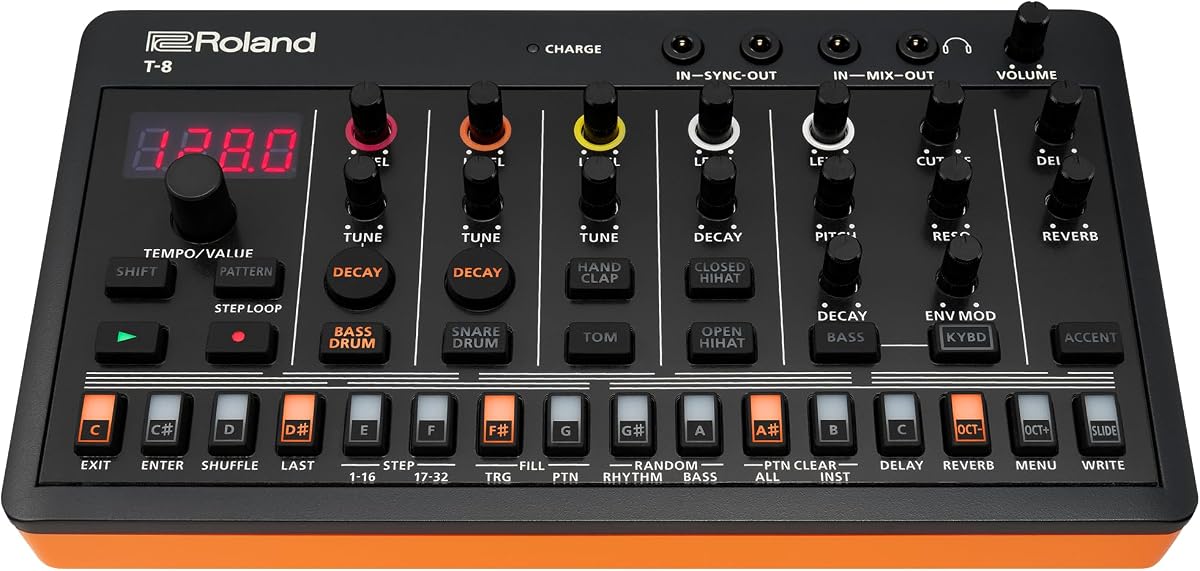
The Roland T-8 packs legendary creative magic into a miniature rhythm factory that fits in any pocket. Rated 4.5 by users it brings authentic TR-808 and TB-303 tones to small production spaces effectively.
We may earn a commission when you buy through this link, at no additional cost to you.
Its intuitive 16-step sequencer and TR-REC pattern features make jamming easy without complex menus. Built-in effects like delay and reverb let you process sounds on the fly without external processing units.
While the size is a major benefit the small footprint means some knobs are shared or hidden. This can slow down workflow for users who need quick access to multiple parameters simultaneously.
For travel production or quick sketching sessions this compact unit is unmatched in value. It keeps the classic workflow alive in a tiny package that encourages constant creativity on the move.
Its tiny size ensures it fits in any bag so you never have to leave creativity behind.
The TR-REC sequencer mirrors the familiar step entry style that generations of producers know.
We may earn a commission when you buy through this link, at no additional cost to you.
The Behringer RD-9 is a dedicated homage to the TR-909 delivering its punchy analog signature affordably. With a 4.5 rating it satisfies producers looking specifically for that iconic techno and house rhythm sound.
We may earn a commission when you buy through this link, at no additional cost to you.
It features eleven sounds with analog filter wave designer capabilities that add modern flexibility to the classic engine. Ten individual outputs allow for extensive routing which is rare at this price point in the market.
While it excels in sound quality some users find the power cable too short for studio rack setups. The limited modern features compared to sampling models may not suit those needing versatility beyond drum tracks.
If your primary goal is capturing the exact feel of a TR-909 without spending a fortune this is the ideal choice. It offers pure analog character with just enough modern tools to enhance the sound.
Every snare and kick replicates the raw analog power that made the 909 a staple in dance music.
Ten individual outputs mean you can route every drum to its own mixer channel or processor.
We may earn a commission when you buy through this link, at no additional cost to you.
The Akai MPC XL stands as a standalone powerhouse designed for producers who need a full music production center without a computer. Its 4.9 rating confirms high satisfaction among professionals seeking deep workflow capabilities.
We may earn a commission when you buy through this link, at no additional cost to you.
With a 10.1-inch HD touchscreen and 16 expressive 3D-sensing pads you can control every aspect of your track intuitively. The internal SSD and powerful processor support complex plugin use and large sample libraries seamlessly.
Its size and cost make it more suited to a fixed studio than travel. The learning curve is steep but the resulting workflow improvements and flexibility justify the investment for serious artists and producers.
If you want the ultimate all-in-one production tool that combines sampling sequencing and mixing this is the choice. It delivers professional results and offers room to grow your craft indefinitely without extra hardware.
Every component from sampling to mixing is integrated into one unit removing the need for a laptop.
The 3D-sensing pads offer velocity and pressure sensitivity that adds human feel to programmed beats.
We may earn a commission when you buy through this link, at no additional cost to you.
Selecting the right drum machine involves evaluating sound engines connectivity and workflow features to match your production style.
Sound engine type determines whether you get vintage analog warmth or modern digital flexibility. Analog models replicate classic circuitry for organic tone while hybrid units combine sampling with synthesis for broader creative options.
Choose analog if you want authentic vintage character or hybrid if you need variety and modern features.
Sequencing capabilities dictate how you program beats and patterns on the unit. Look for step sequencers with substeps probability and motion recording to add dynamic variation to your loops effectively.
Ensure the sequencer supports complex time signatures if you plan to explore genres beyond standard four on the floor beats.
Output options determine how you route drum sounds to mixers or effects processors. Individual outputs allow each drum to have its own space in the mix while stereo outputs simplify connection but limit control.
If you want detailed mixing flexibility choose a unit with multiple individual outputs for every instrument track.
Connectivity standards include MIDI USB and sync inputs that let the machine communicate with other gear. USB audio interfaces are valuable for plug-and-play computer integration without needing extra hardware interfaces.
Confirm that the unit supports your existing software or hardware ecosystem to avoid compatibility issues later.
Portability needs vary from desktop studio units to battery powered handhelds. Compact models with battery support allow for on-the-go creation while heavier units focus on robust design and larger controls.
Prioritize lightweight and battery features if you travel frequently or need to jam in multiple locations.
Sample storage capacity defines how many custom sounds you can load into the machine. Units with SD slots or internal memory let you import personal samples for unique textures beyond the included presets.
Look for high capacity storage if you plan to use custom drums or field recordings in your tracks.
Budget constraints affect whether you choose entry-level or professional gear. Affordable models offer great value with classic sounds while premium options provide advanced sequencing and mixing capabilities.
Set a clear budget before comparing to ensure you get the best features available within your financial range.
User interface design impacts how fast you can work and create ideas. Touchscreens and dedicated knobs speed up workflow while menus and shared functions can slow down performance during critical creative moments.
Test the interface if possible to ensure controls feel intuitive and match your preferred way of working.
Begin by connecting the machine to your audio system using the appropriate cable type. Use MIDI or USB connections to sync patterns with your software sequencer for precise timing.
Program beats using the step sequencer starting with a simple four-bar pattern. Use accent and velocity controls to add dynamics and human feel to your programmed rhythms effectively.
Keep the unit clean by wiping dust from the surface and keeping connectors covered when not in use. Store it in a cool dry place to prevent electronic damage and ensure consistent performance for years.
TR-808 sounds are known for deep booming kicks and crisp sizzle snares. TR-909 features tighter kick drums and more metallic hi-hats suited for techno. Most units include modeling options to switch between these classic tones.
Many modern machines support SD cards or USB storage for custom samples. Check the specs for sample limits and formats before purchasing. Units like the TR-1000 and MPC XL offer extensive custom loading capabilities.
Standalone machines provide tactile control and do not rely on computer resources. Software offers more effects and editing options. Your choice depends on whether you prioritize workflow or flexibility in production.
Some models like the TR-6S run on batteries for mobility. Most units need wall adapters for stable power. Check if your chosen model supports batteries or if you need an external power supply.
Connect via USB for audio and MIDI or use MIDI cables for control. Configure the software to recognize the unit as an audio interface. This allows you to record drum tracks directly into your session.
Yes especially units with pattern storage and live triggers. Models with pads allow for expressive playing on stage. Ensure you can access sounds and patterns quickly without deep menus during a performance.
We reviewed ten top models ranging from the Behringer RD-8 to the Akai MPC XL. Each offers unique strengths whether you seek analog warmth portable power or a full production studio in one box.
Prioritize sound engine type and sequencing features that match your workflow goals. If portability matters choose a compact model. If studio depth matters invest in a standalone powerhouse with extensive connectivity.
Prices fluctuate regularly so verify current costs before finalizing your purchase decision. Visit product pages to ensure you are getting the latest version and warranty terms for your chosen unit today.