
Light Meter Digital Illuminance Meter
4.4Editor score
Wide lux range
Color LCD screen
Compact lightweight design
This guide compares the top analog light meter options for photographers and cinematographers, focusing on accuracy, durability, and ease of use for precise
Choosing the right analog light meter is essential for capturing perfectly exposed images in any lighting condition. These devices measure light intensity without relying on digital screens, offering a tactile experience that many professionals prefer for its reliability and simplicity.
We evaluated ten leading models based on their sensor accuracy, build quality, and feature sets. Our analysis covers incident and reflected light capabilities, battery requirements, and the ease of reading exposure values in various environments from studios to outdoor locations.
Each pick highlights specific strengths like swivel heads or dial readouts to help you decide. Note that product availability and pricing can change frequently, so verify current details before making your final purchase decision for your specific photography needs.
4.4Editor score

4.6Editor score
5.0Editor score
The following table provides a side-by-side comparison of all ten selected light meters. It highlights key specifications and unique features to help you quickly identify which model aligns best with your specific workflow and measurement requirements.
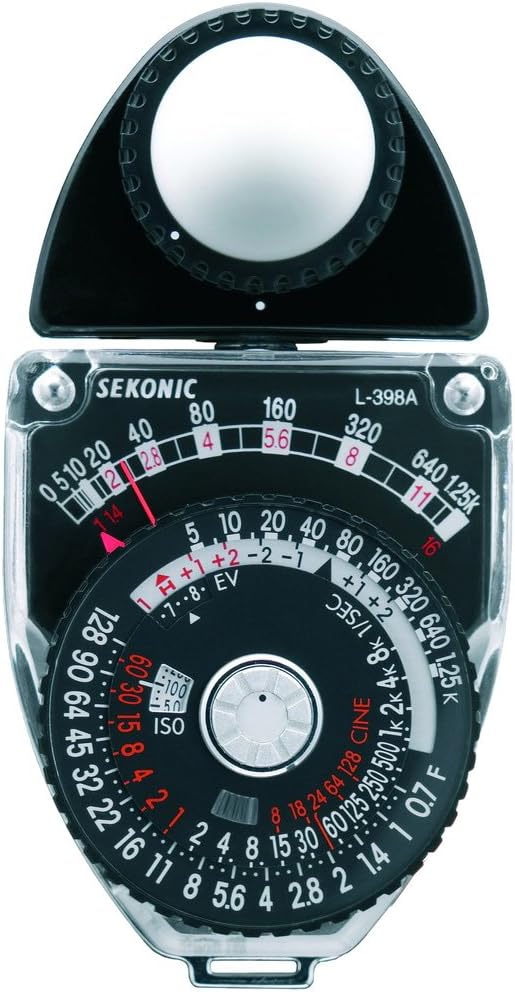


The Sekonic L-398A Studio Deluxe III stands out as a top-tier choice for photographers who value reliability over digital features. With a high rating of 4.6 stars, it is praised for its battery-free operation and robust build quality that withstands rigorous use.
We may earn a commission when you buy through this link, at no additional cost to you.
Its integrated amorphous photocell generates power from ambient light, ensuring you never miss a shot due to dead batteries. The full dial readout allows for quick visual confirmation of aperture and shutter speed combinations without digging through menus.
While it lacks digital memory or wireless connectivity, these omissions contribute to its simplicity and longevity. The swivel head design enhances usability during complex setups by allowing you to position the meter while still reading the display clearly.
This model is ideal for studio photographers and cinematographers who need consistent incident and reflected light measurements. It represents a classic approach to exposure control that prioritizes function and durability in any lighting environment.
The amorphous photocell converts light into power, eliminating the need for batteries and ensuring the meter works whenever you need it.
Switch between incident and reflected modes easily using the included lumisphere and lumidisc accessories for precise readings.
We may earn a commission when you buy through this link, at no additional cost to you.
For those seeking an affordable entry point into light measurement, this digital illuminance meter offers excellent value. With a 4.4 rating, it delivers solid performance for general applications like home, office, or factory environments without breaking the bank.
We may earn a commission when you buy through this link, at no additional cost to you.
It measures luminosity from 0 to 200,000 Lux and includes ambient temperature readings, making it a versatile tool beyond just photography. The color LCD screen ensures readings are clear even in dimly lit conditions.
While it may not match the precision of high-end models, its accuracy is sufficient for most non-critical tasks. The auto power off feature helps conserve battery life, and the low battery indication keeps you prepared for future use.
This meter is best suited for hobbyists or professionals needing a secondary backup tool for quick checks. Its compact size and simple interface make it a practical addition to any basic equipment kit.
Handle environments from very dark to extremely bright with a measurement range up to 200,000 Lux for various scenarios.
Measure ambient temperature alongside light levels for a comprehensive environmental check in workshops or greenhouses.
We may earn a commission when you buy through this link, at no additional cost to you.
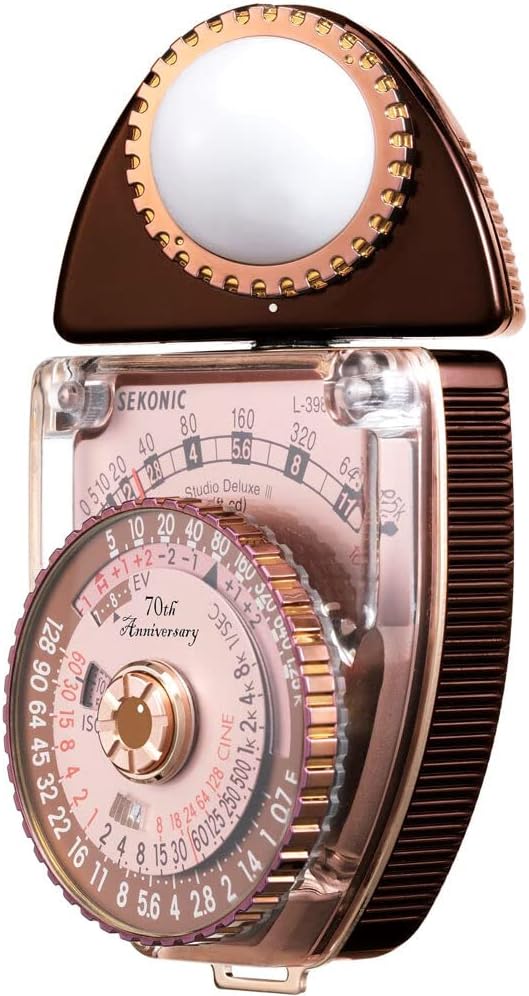
This anniversary edition model represents the pinnacle of analog light metering technology with a perfect 5.0 rating. It is designed for professionals who demand absolute precision and want a unique tool that honors the heritage of light measurement.
We may earn a commission when you buy through this link, at no additional cost to you.
Key features include instant reading of the full range of aperture and shutter combinations, streamlining the workflow significantly. The build quality is exceptional, ensuring longevity and consistent performance in the most demanding studio environments.
While the price is higher than standard models, the accuracy and reliability justify the investment for serious filmmakers and photographers. It also serves as a collectible item for enthusiasts who appreciate the history and evolution of photographic tools.
If budget is not a constraint and you need the best possible performance, this is the definitive choice. It combines classic analog design with modern calibration standards to deliver flawless exposure data every time.
Calibrated to the highest standards to ensure your exposures are accurate down to the last detail.
See all possible settings at once, allowing you to make creative decisions instantly without calculation delays.
We may earn a commission when you buy through this link, at no additional cost to you.
A favorite among cinematographers, this version of the L-398A offers the same trusted performance with added convenience accessories. It provides a rating of 4.4 stars for its ability to measure both incident and reflected light with high consistency.
We may earn a commission when you buy through this link, at no additional cost to you.
The swivel head allows you to walk the set and check light levels without constantly adjusting your grip. This flexibility is crucial in dynamic environments where lighting conditions can shift rapidly during a shoot.
Included accessories like the lumidisc and high slide expand its utility for selective area readings. The carrying case ensures the meter is protected during transport, which is essential for field work outside the studio.
It is an excellent choice for users who prefer the tactile feel of analog dials. The lack of battery requirements means it is always ready to go, making it a dependable companion for any professional production.
The swivel head design lets you hold the meter button while adjusting the head for optimal readings.
Comes with necessary accessories like straps and cases to start using it immediately upon purchase.
We may earn a commission when you buy through this link, at no additional cost to you.
This model stands out for its rapid refresh rate, capturing even subtle light changes in just 0.5 seconds. It has earned a 4.6 rating for its high precision and ability to handle demanding measurement tasks efficiently.
We may earn a commission when you buy through this link, at no additional cost to you.
The split sensor design enables simultaneous measurement while keeping the main unit secure, which is useful for remote monitoring. You can toggle between Lux and Foot Candles effortlessly, catering to different professional standards.
The switchable backlight ensures visibility in dark environments or direct sunlight, adding to its versatility. Despite its features, it remains compact and durable, weighing just 188 grams for easy carrying during field inspections.
Ideal for industrial or environmental monitoring, it delivers accurate data for safe lighting conditions. The high-visibility screen and quick response time make it a reliable tool for maintaining consistent exposure levels.
Keep measurement integrity while allowing flexible positioning of the probe for complex setups.
Readings remain clear in total darkness or bright sunlight thanks to the ultra-bright backlit display.
We may earn a commission when you buy through this link, at no additional cost to you.
Known for its high precision and fast response, this meter delivers data twice per second to ensure accuracy. It holds a 4.5 rating for its performance in creating ideal environments for plants or general lighting checks.
We may earn a commission when you buy through this link, at no additional cost to you.
The ability to convert between FC and LUX makes it adaptable to different user preferences without needing complex calculations. A single press of the PEAK button locks in the highest light pulse value, which is perfect for brief high-intensity sources.
It is designed for a wide range of settings including homes, offices, and factories. The low battery alert keeps you informed when it is time to replace the battery, ensuring uninterrupted operation throughout your tasks.
This meter is best for users who need quick and reliable data without advanced photography features. Its simplicity and speed make it a practical choice for maintaining optimal light conditions in various indoor spaces.
Lock and display the highest light value instantly to capture momentary spikes in intensity.
Toggle between measurement units to suit your specific needs without any confusion.
We may earn a commission when you buy through this link, at no additional cost to you.
This light meter is designed for professional environments where remote sensing is necessary for accurate data. It offers a 4.3 rating for its ability to capture reliable readings up to 40,000 lux with a high-performance sensor.
We may earn a commission when you buy through this link, at no additional cost to you.
The large backlit LCD display makes it easy to view readings in dim areas, while one-handed operation ensures comfort. Built-in functions like Min/Max and data hold allow you to log and compare readings easily.
The cosine and color-corrected sensor provides accurate measurements across different lighting types including natural daylight. This accuracy makes it perfect for ensuring safe and efficient lighting in workplaces, studios, and labs.
Its lightweight and durable design with a protective sensor cover makes it ideal for on-the-go inspections. It is a solid choice for facility managers or safety officers who need to monitor lighting conditions regularly.
Use Min/Max and zero adjustment functions to stabilize and compare readings for better decisions.
Lightweight yet durable construction allows you to take it anywhere for inspections on the go.
We may earn a commission when you buy through this link, at no additional cost to you.
A classic model in the industry, this meter measures both ambient and flash light with digital EV readout. It has a rating of 3.7 stars for its traditional approach and specialized functions for professional photographers.
We may earn a commission when you buy through this link, at no additional cost to you.
The digital readout is easily transferred to a setting ring, allowing you to read shutter speed and f-stop combinations at a glance. Additional features like a clock, alarm, and temperature readout add utility beyond just light measurement.
While it may feel dated compared to modern digital models, it remains a trusted tool for those accustomed to its workflow. The ability to handle both incident and reflected readings makes it versatile for various shooting scenarios.
It is best suited for photographers who value specific legacy features and prefer a dedicated flashmeter. The robust construction ensures it can handle the rigors of professional studio work for many years.
Digital EV values are easily transferred to the setting ring for quick aperture and shutter adjustments.
Includes timer and clock functions for added utility during planning and shoot organization.
We may earn a commission when you buy through this link, at no additional cost to you.
Known for its robust construction, this meter is a staple in industrial and professional testing environments. With a 4.8 rating, it is trusted for its accuracy and durability in measuring illuminance accurately and efficiently.
We may earn a commission when you buy through this link, at no additional cost to you.
Fluke is a brand associated with high-quality electronic testers, ensuring that this device meets rigorous standards. It simplifies the process of verifying light levels for safety and compliance across various facilities.
The design focuses on ease of use and reliability, making it suitable for technicians who need quick and dependable results. It does not offer photography-specific features but excels in its primary role as an illuminance tester.
This model is ideal for facility managers or safety professionals who require a tool they can rely on daily. Its reputation for quality ensures it will last through years of demanding field work.
Built to the high standards expected from the Fluke brand for long-term professional use.
Designed specifically to measure illuminance with high accuracy for industrial applications.
We may earn a commission when you buy through this link, at no additional cost to you.
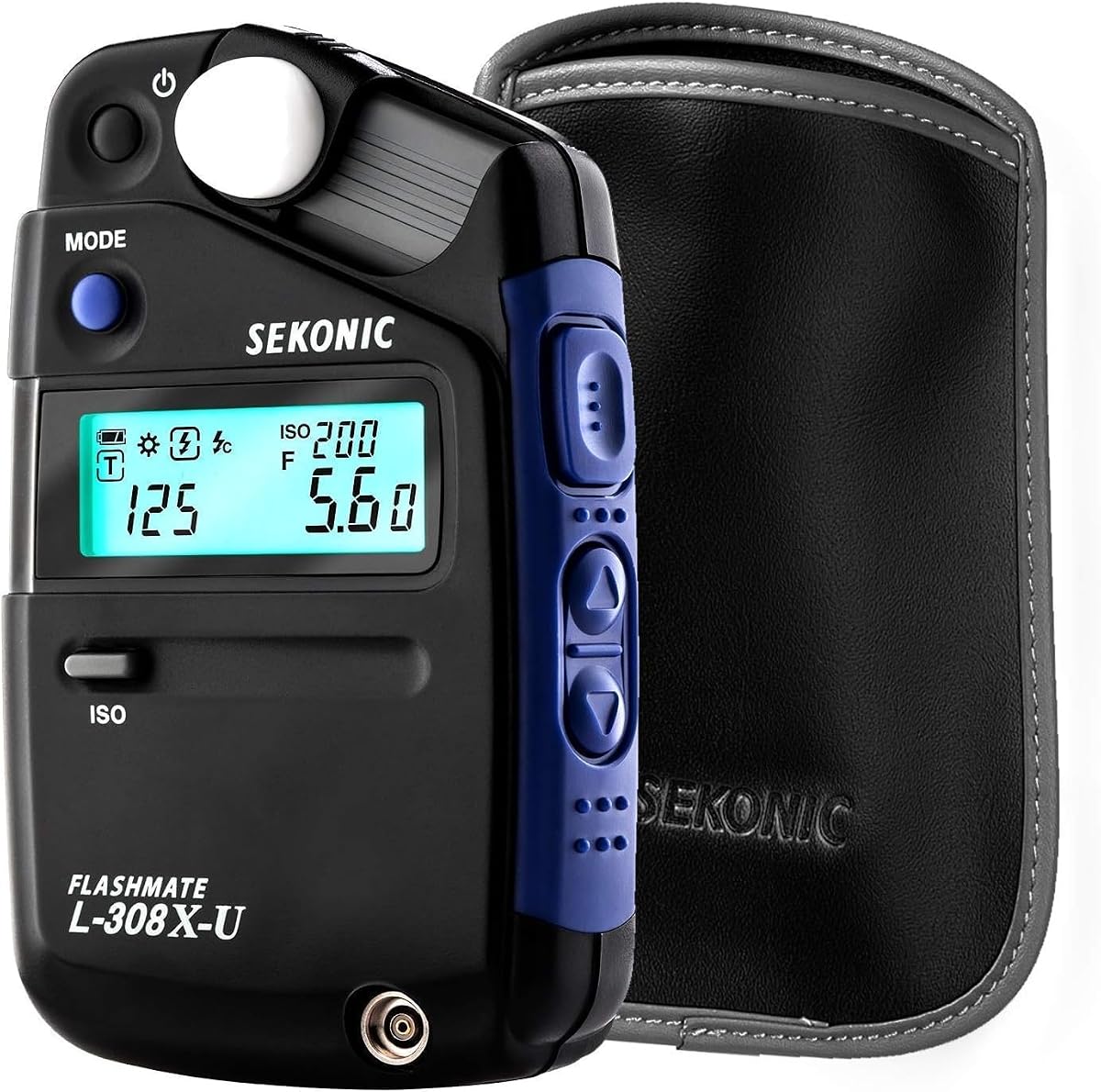
This compact digital meter offers professional accuracy in a pocket-sized design for maximum portability. It earns a 4.7 rating for its versatile modes including Photo, Cine, and HD Cine options tailored for modern workflows.
We may earn a commission when you buy through this link, at no additional cost to you.
Accurate exposures down to a tenth of a stop are available for both ambient and electronic flash readings. The HD Cine mode is perfect for videographers who need precise control over frame rates and shutter angles.
Features like LCD auto backlight ensure readability in various lighting conditions without manual input. The small size makes it easy to carry everywhere, ensuring you always have a reliable meter on hand.
Ideal for both still image photographers and videographers, it bridges the gap between classic and digital tools. It is a great choice for professionals who value speed and convenience in their daily workflow.
Select frame rates and shutter angles accurately for cinematic control of lighting.
Compact design allows you to take precise measurements anywhere without bulky equipment.
We may earn a commission when you buy through this link, at no additional cost to you.
Selecting the right analog light meter involves considering factors like measurement modes, sensor technology, and durability to match your specific professional needs.
Analog light meters typically offer incident and reflected measurement modes. Incident light measures the light falling on a subject, while reflected light measures the light bouncing off the subject.
Choose a model that supports the mode most relevant to your photography style or ensure it has accessories for both.
The sensor is the heart of any light meter. Amorphous photocells are common in battery-free models, while other sensors require power to operate.
Evaluate the sensor's accuracy and speed to ensure it can handle the lighting conditions you typically encounter.
Many analog meters are designed to be battery-free, operating solely on the energy generated from ambient light.
If you prefer digital readouts, check the battery life and availability of replacements to avoid interruptions in your workflow.
Analog meters use dials, while digital ones use LCD screens. Ensure the display is easy to read in different lighting conditions.
A clear display helps you make quick adjustments without straining your eyes during critical shooting moments.
Professional meters are often built with durable materials to withstand drops and harsh environments.
Look for models with robust housings and protective cases to ensure longevity during field work.
Many meters come with accessories like lumisphere domes, lumidiscs, and carrying cases.
These accessories expand the versatility of the meter and protect it during transport, so check what is included.
If you travel often, a lightweight and compact design is crucial for carrying the meter everywhere.
Pocket-sized options exist for those who prioritize convenience over large display screens.
Accuracy is paramount for professional photography. Look for meters with high precision ratings and reliable calibration.
Higher precision ensures your exposures are correct, reducing the need for post-processing adjustments.
To use an analog light meter, position the sensor towards the light source while standing at the subject's location. Hold the meter steady and press the button to get a reading on the dial or screen.
For incident readings, use the dome attachment to capture light from all directions. For reflected readings, remove the dome and point directly at the subject to measure the light coming off it.
Store your meter in a protective case when not in use to prevent dust accumulation and physical damage. Regularly check battery levels if applicable and keep the sensor window clean for optimal performance.
Incident meters measure light falling on the subject, providing consistent exposure regardless of subject brightness. Reflected meters measure light bouncing off the subject, which can vary based on colors. Both are useful depending on your needs.
Many analog light meters are battery-free and generate power from the ambient light they measure. However, some digital models require batteries for the display. Check the specific model details for power requirements.
Yes, many meters support flash measurements in addition to ambient light. Ensure the model you choose has specific flash modes for this capability.
High-quality analog meters are generally just as accurate as digital models. The difference lies in the readout style rather than the sensor performance itself.
A swivel head allows you to position the sensor independently of the display. This makes it easier to get accurate readings without blocking the view of the dial while shooting.
Most professional meters do not require user calibration as they are factory calibrated. However, you can check accuracy by comparing readings against a trusted reference under controlled lighting.
We have reviewed ten top-rated analog light meters ranging from affordable options to premium professional models. Each offers unique features that cater to different photography and cinematography requirements.
Prioritize accuracy and build quality when making your decision. Whether you need battery-free operation or specific digital modes, there is a model to fit your workflow.
Remember to verify current availability and pricing before purchasing. Prices may change over time so always check the latest listings for the most accurate information.