
Donner EQ Pedal
4.4Editor score
Ten Band Graphic Equalizer
True Bypass Circuit
Aluminum Alloy Construction
This guide compares the top ten bass equalizer pedal options available in 2026, analyzing sound shaping capabilities, build quality, and value for money.
Finding the right bass equalizer pedal can transform your low end from muddy to articulate. Whether you play in a dense metal mix or a sparse jazz quartet, precise frequency control is essential for cutting through the mix without overpowering other instruments.
We have evaluated ten leading models based on frequency range, build quality, and tonal flexibility. This list covers everything from compact five-band units to ten-band graphic equalizers, ensuring you find a solution that fits your specific tone shaping needs and pedalboard space.
Each pick highlights key strengths and potential limitations to help you make an informed decision. Please note that prices fluctuate frequently on Amazon, so check the current listings before making your final purchase to ensure you get the best value available today.
4.4Editor score

4.6Editor score

4.6Editor score
This side-by-side comparison highlights the key specifications and features of the top ten bass equalizer pedals to help you quickly identify the right tool for your signal chain.




The BOSS GEB-7 stands out as a top choice for bassists seeking reliable tone shaping. With a 4.6 rating from numerous users, it offers a full range response that accommodates extended range instruments like five and six string basses. Its design ensures that even when you are using lower strings, the pedal remains transparent and effective.
We may earn a commission when you buy through this link, at no additional cost to you.
This pedal features seven frequency bands that allow for precise adjustments to your low end. The level control knob is particularly useful as it can function as a boost or cut pedal, giving you flexibility in how you shape your output volume. The true bypass circuit ensures that when the pedal is off, your signal remains clean without coloration.
While the GEB-7 is highly regarded, it does come at a higher price point than many generic options. Additionally, while it is designed for bass, some users prefer pedals specifically tuned to bass frequencies rather than a general graphic equalizer. However, these trade-offs are acceptable for the build quality and sonic integrity provided.
If you are a professional or serious amateur looking for a dependable EQ, this is an excellent pick. It fits well into any pedalboard and delivers consistent performance. We recommend it for anyone who values brand reputation and durability in their tone shaping tools.
The full range response ensures that low B and high C strings are reproduced accurately without distortion or loss of detail.
True bypass technology guarantees that your natural tone passes through untouched when the pedal is not active, preserving your core sound.
We may earn a commission when you buy through this link, at no additional cost to you.
The Donner EQ Pedal offers a compelling entry point for musicians wanting detailed tone shaping. With a 4.4 rating, it delivers a fully functional ten-band graphic equalizer that works well for both guitar and bass. The compact size makes it easy to integrate into any pedalboard layout without taking up excessive space.
We may earn a commission when you buy through this link, at no additional cost to you.
Its aluminum-alloy design ensures durability and a sturdy feel. The sliders allow for precise adjustments across a 15dB range, giving you the ability to boost or cut frequencies as needed. The true bypass feature ensures that the signal remains intact without noise or loss when the pedal is disengaged.
However, the materials may not match the longevity of more expensive models. Some users report that the sliders can feel slightly less refined over time. These issues are generally acceptable given the low cost, making it a great choice for budget-conscious players or beginners.
We recommend this pedal for students or hobbyists looking for high value. It provides the necessary tools to refine your tone without breaking the bank. If you need an affordable, reliable EQ, the Donner EQ Seeker is a smart purchase.
You get ten bands of adjustment at a fraction of the cost of premium units, making professional tone shaping accessible.
Designed to work with any instrument, this pedal adapts well to different musical styles and setups.
We may earn a commission when you buy through this link, at no additional cost to you.
The MXR Ten Band EQ is a premium option for those who demand the best in tone shaping. With a 4.6 rating, it offers ten bands of frequency control allowing you to cut or boost up to 12dB per band. The high visibility LEDs ensure you can see your settings clearly even under bright stage lights.
We may earn a commission when you buy through this link, at no additional cost to you.
One of its standout features is the 18-volt operation which increases headroom. This means your signal stays clean even at high volumes. Additionally, it includes two outputs allowing you to run two separate signal chains simultaneously, which is ideal for complex studio setups.
Despite its high cost, the performance is exceptional. The unit is heavier than compact pedals, but this adds to its durability. While there are cheaper options, the MXR provides a level of control and reliability that justifies the expense for serious musicians.
We recommend this for professionals who need consistent, high-fidelity sound. It handles complex frequency adjustments with ease. If you are building a high-end pedalboard and want maximum control, this is the top choice.
Running at 18 volts allows the pedal to handle stronger signals without clipping, preserving clarity at high volumes.
Dual outputs give you the ability to split your signal for parallel processing or sending different tones to separate amps.
We may earn a commission when you buy through this link, at no additional cost to you.
The SONICAKE EQ Pedal focuses on classic analog design. It features a 100% analog 10-band equalizer which ensures a warm and natural sound. The adjustable gain range of 15dB allows for significant shaping of your tone, making it suitable for both bass and guitar applications.
We may earn a commission when you buy through this link, at no additional cost to you.
It comes with 11 sliders that allow you to shape your tone quickly. The true bypass circuit ensures a clean signal path when the pedal is off. This is crucial for maintaining your original tone. The compact dimensions make it easy to fit on a crowded board.
One consideration is that it does not include a power supply. You will need to buy a separate 9V adapter. Additionally, the sliders can be sensitive to touch. However, the analog sound quality and precision are strong positives for this price point.
We recommend this pedal for those who prefer analog warmth. It offers a great balance of price and performance. If you are looking for a reliable analog EQ without digital complexity, this is a solid option.
Being 100% analog ensures that your tone retains its natural warmth and character without digital conversion artifacts.
The 11 sliders give you detailed control over every frequency band allowing for surgical adjustments to your sound.
We may earn a commission when you buy through this link, at no additional cost to you.
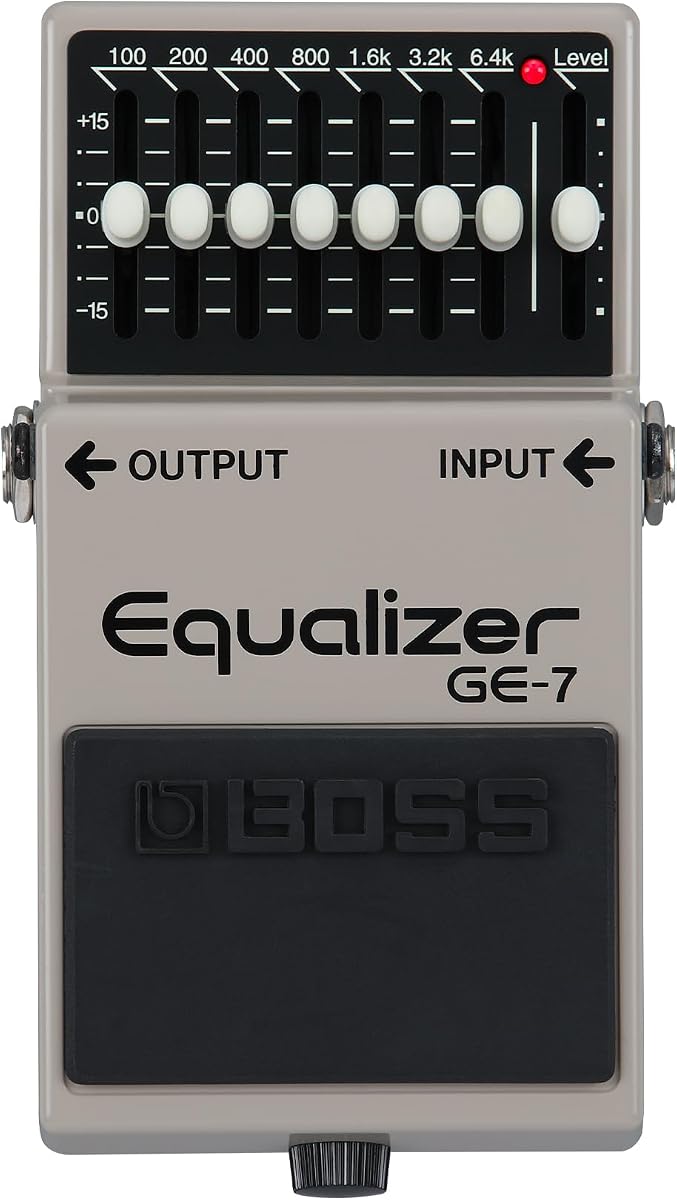
The BOSS GE-7 Equalizer is a compact pedal with seven bands of EQ sliders. It holds an impressive 4.8 rating. Although tailored for guitarists, many bassists use it to shape mids and highs. The level slider helps in balancing overall volume or boosting your sound effectively.
We may earn a commission when you buy through this link, at no additional cost to you.
It features guitar-optimized frequencies which might limit low-end control for bass players. However, the build quality is excellent with a five-year warranty. The maximum tonal flexibility allows for significant adjustments. It is a reliable unit for general tone shaping.
If you are looking for a compact solution this is a strong contender. The frequency range might not be ideal for bass specific low-end tightening but for mid control it works well. The brand reputation ensures durability and reliability.
We recommend this for guitarists or bassists who need a compact unit. It offers great value and performance. If space is a premium on your board this pedal delivers quality without taking up too much room.
The five year warranty provides peace of mind knowing that your investment is protected against defects.
The dedicated level slider allows you to adjust output volume independently of EQ settings for precise mix balance.
We may earn a commission when you buy through this link, at no additional cost to you.
The STRICH 10-Band EQ Pedal is designed for portability. It features a balanced weight distribution which makes it easy to carry. The ten independent bands allow for diverse tonal needs. It is suitable for both electronic instruments and diverse musical styles.
We may earn a commission when you buy through this link, at no additional cost to you.
The sliders glide effortlessly allowing for nuanced adjustments. True bypass design ensures signal integrity without loss of intensity. The aluminum alloy construction ensures it remains intact even after accidental drops. This makes it a great choice for traveling musicians.
One drawback is that the DC adapter is not included. You will need to purchase one separately. Additionally some units may have slider consistency issues. However the price and functionality make it a worthwhile option.
We recommend this for those who travel frequently. It provides a good balance of weight and control. If you need a reliable EQ that is easy to transport this is a great choice.
The ideal weight and size make this pedal perfect for musicians who move equipment between venues often.
True bypass ensures that no noise or intensity loss occurs when the pedal is disengaged.
We may earn a commission when you buy through this link, at no additional cost to you.
This pedal is one of the smallest bass graphic equalizer pedals available. It features dedicated frequency centers that are specifically chosen for bass tone shaping. The metal shell ensures long-lasting durability. True bypass switching preserves the natural bass signal.
We may earn a commission when you buy through this link, at no additional cost to you.
Each band offers up to 18dB boost or cut. This allows you to tighten low-end response or boost mids for better mix presence. The compact design is perfect for saving space on a crowded pedalboard. It is ideal for live performance and multiple genres.
The lack of reviews makes it harder to verify quality. Additionally five bands offer less control than ten. However for those needing simple tone shaping this unit is effective. The build quality is solid enough for regular use.
We recommend this for bassists needing a compact unit. It is perfect for rock, metal, and jazz. If space is at a premium this pedal delivers the necessary control without bulk.
Designed to be one of the smallest pedals available this unit saves valuable real estate on your pedalboard.
The rugged metal housing ensures that the internal components are protected during transport and live shows.
We may earn a commission when you buy through this link, at no additional cost to you.
This pedal offers a straightforward five-band graphic EQ with master level control. The frequencies are tuned to work with bass guitars. True bypass design ensures transparent tone. The full metal shell provides a sturdy construction.
We may earn a commission when you buy through this link, at no additional cost to you.
The master level slider controls output by 18dB. This is useful for boosting your signal. Indicator lights show working states clearly. It is a solid unit for simple tone adjustments without complexity.
User ratings are lower than competitors which may indicate quality issues. Also power adapter is not included. However for the price it is a functional unit. It is a good choice for beginners or backup setups.
We recommend this for those needing a basic EQ. It handles the basics well. If you want simplicity and a sturdy shell this pedal meets the needs.
With only five bands this pedal removes complexity allowing for quick and intuitive tone adjustments.
True bypass ensures that your original bass tone passes through the pedal unchanged when it is turned off.
We may earn a commission when you buy through this link, at no additional cost to you.
The EROK EQ Pedal combines a ten-band graphic equalizer with a standalone boost function. It covers 31.25Hz to 16kHz with 15dB range. Independent footswitches allow for flexible modes like EQ only or combined. This makes it versatile for different performance needs.
We may earn a commission when you buy through this link, at no additional cost to you.
The boost circuit enhances input without coloration. This is great for solos. LED indicators on sliders make it easy to see settings. True bypass ensures low noise. The aluminum construction ensures durability.
Power adapter is not included. Also the size is slightly larger than single function units. But the functionality is unmatched at this price. It saves space on your board by replacing two pedals.
We recommend this for musicians needing versatility. It is ideal for live gigs. If you want EQ and boost in one pedal this is a strong pick.
Separate footswitches allow you to use the boost or EQ independently or together giving you maximum control.
LED indicators on the sliders help you see your settings quickly even in dark stages.
We may earn a commission when you buy through this link, at no additional cost to you.
The Rowin Bass Equalize Pedal is the smallest bass EQ available. It features a five-band graphic EQ with master volume. The range is wide at 18dB. True bypass keeps the signal clear. It is small and sturdy.
We may earn a commission when you buy through this link, at no additional cost to you.
The 62.5Hz to 4kHz frequency range covers essential bass tones. This allows for shaping low end and presence. The master knob is useful for overall level. It is a compact unit for tight boards.
With only five bands it may lack control compared to ten-band units. Also build quality can vary. However the small size is a major plus. It is great for those who prioritize space.
We recommend this for compact pedalboards. It fits easily without clutter. If you need a basic EQ that is small this is a good option.
The tiny design allows this pedal to fit into even the most crowded setups without taking up extra room.
A dedicated master volume knob lets you control the overall output level independent of EQ settings.
We may earn a commission when you buy through this link, at no additional cost to you.
Selecting the right bass equalizer pedal involves considering several technical aspects to ensure it meets your tonal needs.
The number of frequency bands determines how precise your tone shaping can be. Five-band units are great for general adjustments while ten-band units offer detailed control over specific frequencies. More bands allow you to surgically remove problem frequencies without affecting others.
Choose a band count based on how much detail you need. Beginners may prefer simple five-band models while professionals might opt for ten-band options for precise adjustments.
Ensure the pedal covers the necessary frequencies for your instrument. Bass pedals often focus on low-end frequencies like 62Hz to 4kHz. A wider range ensures you can shape both the deep low-end and the high mids for clarity.
Look for a pedal that covers the essential range of your bass. If you play 5 or 6 string basses check that the low-end response is adequate.
True bypass ensures that your signal remains clean when the pedal is off. Without this your tone may suffer from coloration or noise. It keeps the original signal path intact without interference.
Prioritize pedals with true bypass circuits. This feature is crucial for maintaining the natural sound of your instrument when the EQ is not active.
The gain range tells you how much you can boost or cut a frequency. A 15dB or 18dB range allows for significant tonal adjustments. If you need to boost your signal for soloing look for a unit with a dedicated boost feature.
Check the boost and cut capabilities before buying. A wider range provides more flexibility in shaping your tone to fit any mix.
Durability is key for gear that sees frequent use. Look for aluminum or metal shells that can withstand transport. High-quality switches and sliders ensure long-term reliability.
Invest in a sturdy pedal to avoid maintenance issues. A solid build ensures your EQ lasts through tours and regular rehearsals.
Most pedals require a 9V power supply but some do not include it. Ensure you have the correct adapter to avoid connectivity issues. A clean power supply is also essential to avoid hum and noise.
Verify if a power adapter is included or if you need to purchase one separately. This avoids unexpected costs and delays in your setup.
Pedalboard space is often limited. Compact designs save space while larger units may offer more controls. Check the dimensions to ensure it fits your board comfortably.
Measure your available space before choosing. A compact unit may be better if you have many other pedals.
Additional features like LED indicators or dual outputs can add value. An LED makes it easy to see settings on stage. Dual outputs allow for flexible signal routing.
Consider what extra features will improve your workflow. These small details can make a big difference in performance.
Start by connecting the pedal between your bass and amplifier. Plug in your instrument cable to the input jack and run another cable to the output jack. Ensure all connections are secure to avoid signal loss.
Use the sliders to adjust your frequencies. Start with all sliders at zero for a flat response. Boost frequencies where you need more presence or cut where you need to reduce muddiness.
Care for your pedal by storing it in a protective case when not in use. Keep it dry and clean. Use a soft cloth to wipe down the surface and avoid exposing it to extreme temperatures.
Bass EQ pedals typically focus on lower frequencies to handle extended range basses. Guitar EQs target mid and high frequencies. A bass EQ will maintain low-end clarity better than a standard guitar unit.
True bypass is recommended to ensure your tone remains clean when the pedal is off. Without it your signal may suffer from noise or coloration. It preserves the original sound of your instrument.
Beginners may find five bands sufficient for general tone shaping. Professionals often prefer ten bands for detailed control. More bands allow for precise adjustments without affecting other frequencies.
Most pedals require a 9V DC power supply with center negative polarity. Check the manual for specific requirements. Using the wrong power supply can damage your pedal.
You can use a guitar EQ for bass but it may not handle low frequencies well. Bass EQ pedals are optimized for extended low-end response. For best results choose a pedal designed for bass.
Boost increases the level of a specific frequency while cut decreases it. This allows you to shape your tone by emphasizing or reducing certain frequencies. It is essential for fitting your sound into a mix.
We reviewed ten top options from budget-friendly models to premium units. The BOSS GEB-7 offers great reliability while the Donner EQ Pedal provides excellent value. The MXR Ten Band EQ is ideal for those needing professional features.
Consider your budget and needs when choosing. If space is limited look for compact designs. If you need precise control opt for more bands. Ensure the unit matches your instrument requirements.
Always check current prices before buying as they fluctuate frequently. A good pedal can transform your sound so choose wisely. With the right EQ you can achieve the clarity and presence you need.