
Pyle Hydra Marine 400W 4-Channel Waterproof Amplifier – PLMRA402
4.0Editor score
Waterproof IPX1 rating
Dual MOSFET power
RCA and high-level inputs
Discover the top 10 boat amplifiers for 2026. Our expert guide compares marine-grade audio systems for durability, power, and sound quality on the water.
Choosing the right boat amplifier is crucial for enjoying crisp audio while cruising. Marine environments demand rugged hardware that resists salt, moisture, and UV rays. A quality amp ensures your speakers perform reliably without distortion even under harsh conditions.
We evaluated ten leading models based on power output, durability ratings, and feature sets. Our analysis covers Class A/B and Class D options ranging from budget-friendly picks to high-performance units. Each entry includes real-world specs and user feedback for informed decisions.
Every product listing highlights key strengths, potential drawbacks, and ideal use cases. Note that availability and pricing may fluctuate due to market demand. Always verify compatibility with your existing head unit before purchasing to ensure seamless integration.
4.0Editor score

4.8Editor score

4.4Editor score
The following table provides a side-by-side view of specifications and key attributes for each model. Use this comparison to quickly identify power ratings, channel counts, and special features that match your boating needs.
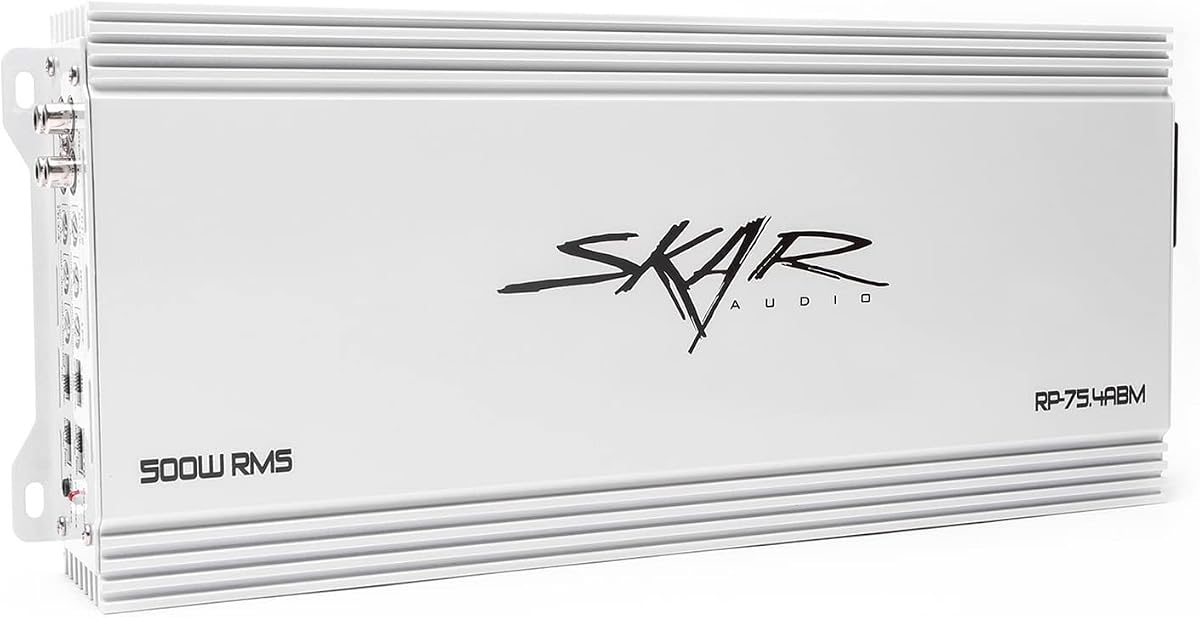


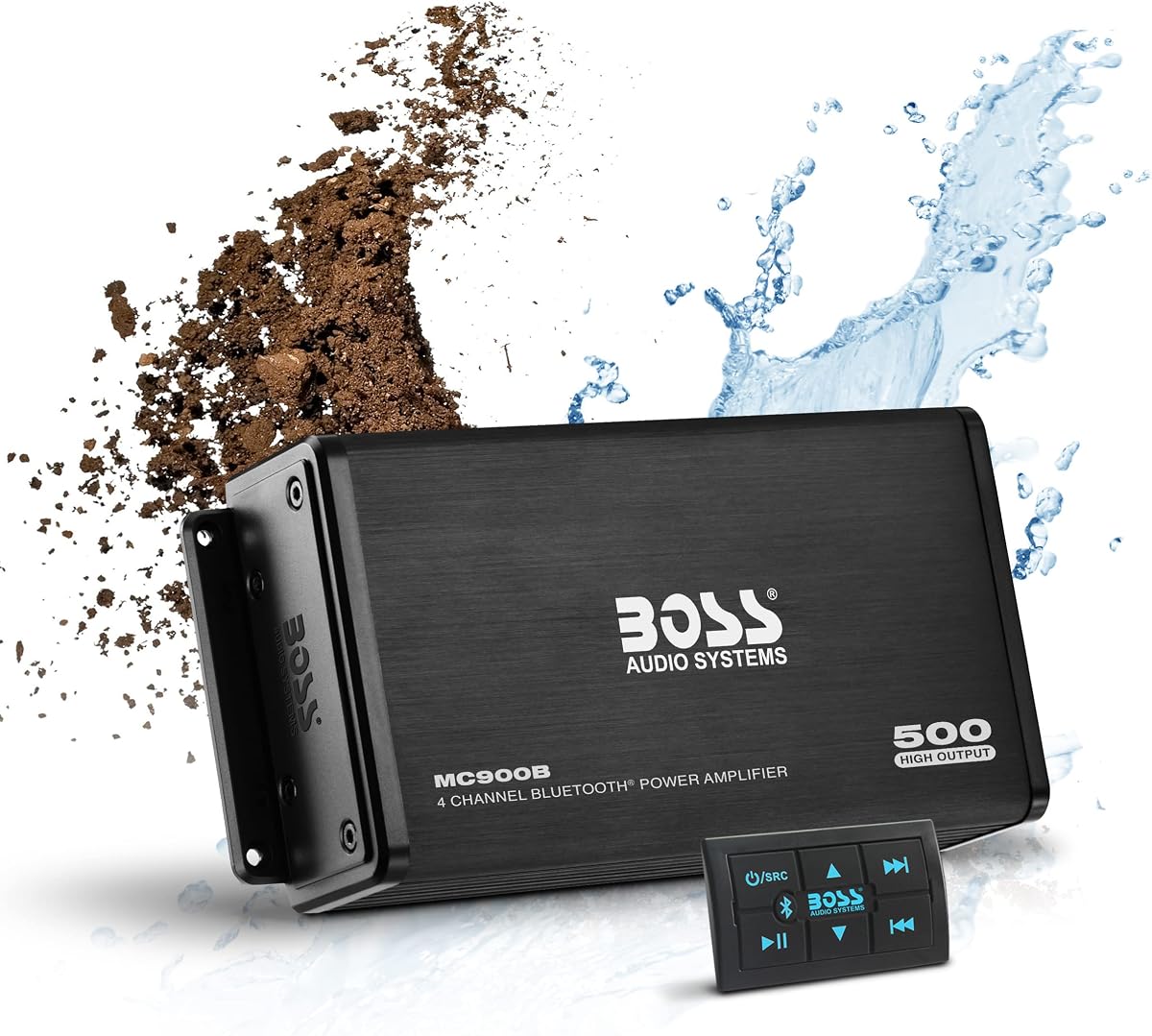


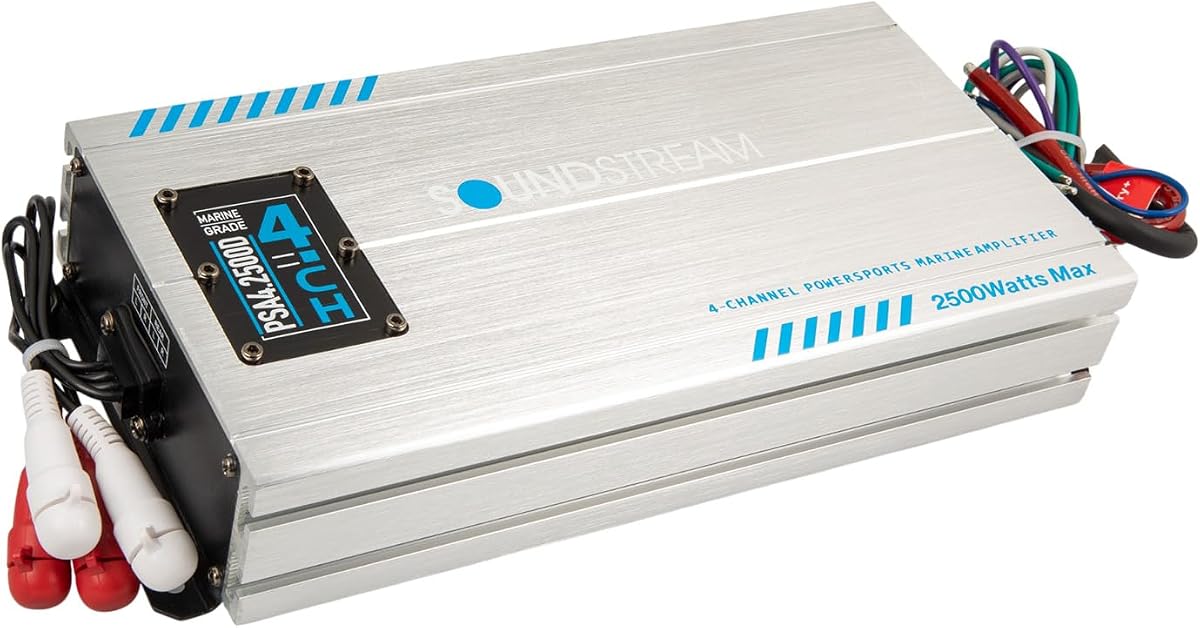
This unit stands out as the top recommendation due to its exceptional build quality and sound performance. With a high rating from users, it delivers reliable audio that withstands tough marine conditions. Its six-channel design offers flexibility for complex speaker setups.
We may earn a commission when you buy through this link, at no additional cost to you.
The conformal-coated circuit boards effectively repel moisture, preventing short circuits and corrosion over time. Stainless steel hardware ensures terminals stay secure despite exposure to salt spray. Variable crossovers allow precise tuning for full-range speakers, optimizing clarity across all frequencies.
While the price is higher than budget models, the durability justifies the investment for serious boaters. Some users may find channel bridging options limited compared to other amps. However, the superior sound quality and weather resistance outweigh these minor constraints for most installations.
Buy this if you need a premium amplifier that combines power with long-term reliability. It suits owners of sailboats or yachts who demand high fidelity and robust construction. For those prioritizing performance over cost, this model delivers unmatched value on the water.
The conformal coating on the PCB acts as a shield against moisture and salt. This ensures internal electronics remain safe even in humid or splashed environments.
Built-in variable crossovers let you adjust frequency ranges easily. This helps match the amp output to your specific speaker characteristics for best audio.
We may earn a commission when you buy through this link, at no additional cost to you.
This amplifier offers an entry-level solution for those seeking decent sound without a large investment. It delivers 400 watts of peak power suitable for smaller boat setups. The marine-grade construction ensures it survives typical water exposure without failure.
We may earn a commission when you buy through this link, at no additional cost to you.
Its waterproof rating and aluminum alloy heatsink protect against thermal overload and moisture damage. Users appreciate the flexibility of RCA and high-level inputs which simplify connections. Short protection mechanisms safeguard both the amp and vessel electrical systems from spikes.
The power output is modest compared to high-end models, limiting its use for large speaker arrays. Features like Bluetooth or remote controls are absent, requiring external head units for control. Despite this, it remains a solid choice for basic audio upgrades on budget.
Ideal for small runabouts or fishing boats where budget constraints are primary concerns. Buyers should ensure their speakers match the 4 or 8 ohm impedance for optimal performance. This model provides reliable functionality for casual listeners who do not need advanced tuning.
High-level terminals allow connection even without RCA outputs. This makes it compatible with older marine receivers lacking modern preamp jacks.
Short circuit and thermal overload protection prevent hardware damage. LED indicators help users quickly identify issues during operation on the boat.
We may earn a commission when you buy through this link, at no additional cost to you.
This model brings premium performance to the table with nearly 1000 watts of RMS power. Its five-channel layout separates subwoofer duties from full-range speakers effectively. The IPX6 rating ensures protection against heavy water spray common in marine settings.
We may earn a commission when you buy through this link, at no additional cost to you.
The included PA microphone allows announcements during navigation or docking. Crossover controls support bandpass, high-pass, and low-pass configurations for detailed tuning. Users report that the sound clarity is exceptional even at higher volumes without significant distortion.
Installation may require more space due to the unit's dimensions. The complexity of settings could overwhelm casual users unfamiliar with audio tuning. However, enthusiasts will appreciate the ability to tailor sound profiles for specific environmental conditions.
Purchase this for larger vessels needing robust bass and clear announcements. It is best suited for owners who prioritize audio quality and versatility over compactness. Professional installation is recommended to maximize the benefits of its advanced features and power.
Remote subwoofer control allows bass adjustments from the helm. PA inputs provide clear voice communication during critical boating maneuvers.
Class D sub channel reduces battery drain while delivering punchy bass. This efficiency extends runtime for longer trips without power concerns.
We may earn a commission when you buy through this link, at no additional cost to you.
The eight-channel design supports extensive speaker arrays across different zones. It delivers 880 watts of RMS power distributed efficiently. Bluetooth auto-pairing simplifies streaming from devices without additional cables or adapters.
We may earn a commission when you buy through this link, at no additional cost to you.
Independent crossovers allow distinct tuning for different speaker groups. The slim chassis fits under seats or in tight compartments easily. Conformal coating and stainless hardware protect against rust and moisture damage over time.
Each channel offers moderate power which might not drive subwoofers alone. Managing eight channels requires careful planning to avoid impedance mismatches. Users need to understand basic audio routing to utilize the full potential.
This amp is ideal for boats requiring multi-zone audio coverage. It fits well in installations where space is limited but speaker count is high. For owners seeking flexibility in audio zones, this model provides a versatile and modern solution.
Auto-pairing removes the hassle of manual Bluetooth setup. Users can start playing music instantly after turning on the unit.
Compact dimensions allow mounting in confined areas. This ensures better utilization of limited storage or engine spaces on boats.
We may earn a commission when you buy through this link, at no additional cost to you.
This amplifier brings a stylish white finish that matches bright marine interiors. It delivers 750 watts RMS across eight channels for balanced sound. The design supports various wiring setups including bridging options for subwoofers.
We may earn a commission when you buy through this link, at no additional cost to you.
Class D efficiency minimizes heat generation during operation. Conformal-coated circuitry resists corrosion from saltwater environments. RCA line outputs allow easy expansion to additional components or processors later.
The bridge mode offers more power for dedicated bass channels. Some users may find the crossover controls less granular than higher-end units. The color choice is specific to those wanting to blend aesthetics with performance.
Buy this if you need an aesthetic match for light-colored boat components. It is suitable for users who prioritize design alongside standard marine durability. For clean installations in modern boats, this model offers a great visual and functional balance.
The white casing reduces visual clutter in white interiors. It helps hide the equipment when mounted under light-colored seating or panels.
Class D tech keeps internal temperatures lower during use. This reduces stress on electronics and extends overall lifespan in warm engines.
We may earn a commission when you buy through this link, at no additional cost to you.
This unit works without a head unit due to built-in Bluetooth streaming. It supports apps like Spotify directly from mobile devices. The included remote simplifies volume control and pairing while on deck.
We may earn a commission when you buy through this link, at no additional cost to you.
USB charging allows users to charge phones directly from the amp. The auxiliary input adds compatibility for older MP3 players or devices. Its compact size ensures it fits in tight spaces under seats or consoles.
Audio tuning is minimal compared to professional-grade amplifiers. The power output is modest and suitable only for standard speakers. Users focused on simplicity will prefer its plug-and-play operation over complex settings.
Choose this for small boats where adding a new head unit is too costly. It serves well as a standalone solution for casual listening. The USB feature adds practical value for keeping devices powered during day trips.
USB port provides charging without extra cables. This keeps navigation tools and music devices powered during long hours on water.
Direct Bluetooth connectivity removes need for preamps. Users can start streaming music immediately after powering the unit on.
We may earn a commission when you buy through this link, at no additional cost to you.
This amplifier excels in environments where communication is essential. The PA microphone allows clear instructions to passengers. Auto-volume circuitry lowers music volume when announcements are made.
We may earn a commission when you buy through this link, at no additional cost to you.
Six channels support complex speaker setups including wakeboard towers. Stainless screws and conformal PCB ensure resistance against moisture. The turn-on feature integrates seamlessly with ignition systems for automatic operation.
The microphone needs secure mounting to avoid feedback or noise. Users may find tone controls limited compared to digital processors. Despite this, the utility of onboard comms makes it a valuable tool.
Select this for charter boats or family vessels needing clear announcements. It ensures safety messages are heard over loud engine noise. For those prioritizing crew coordination, this model delivers practical functionality.
Music volume drops automatically when mic is used. This ensures announcements are clear without needing manual dimming of audio.
Supports 6 4 or 3 channel setups easily. Users can adapt wiring based on available speakers without extra parts.
We may earn a commission when you buy through this link, at no additional cost to you.
This model combines PA functionality with a four-channel layout. It delivers substantial peak power suitable for full-range speakers. The bridge mode allows higher output for subwoofers when needed.
We may earn a commission when you buy through this link, at no additional cost to you.
High-level inputs mean no RCA preamp output is required. The unit stays cool thanks to efficient power design. Microphone use helps communicate with guests without stopping music playback.
Those needing more than four channels might need two units. Microphone control is straightforward but lacks advanced audio routing. Overall, it balances power and utility well for mid-sized boats.
Buy this if you need PA support in a small footprint. It fits under seats better than larger units while delivering robust performance. For compact cabins needing clear announcements, this provides a reliable solution.
Bridging capability allows higher wattage for subs. This helps drive low frequencies with authority on larger speakers.
High-level inputs simplify connection to stock radios. Users avoid needing external converters to connect speakers directly.
We may earn a commission when you buy through this link, at no additional cost to you.
This unit is built for extreme conditions with an IP66 rating. It handles salt spray and mud better than standard marine amps. The Class D design keeps temperatures low during extended use.
We may earn a commission when you buy through this link, at no additional cost to you.
Subsonic crossovers filter out damaging low frequencies effectively. PWM MOSFET power supply ensures clean energy delivery to speakers. The chassis is sealed to prevent water from reaching internal circuitry.
It lacks specific voice announcement features found in other models. Wiring may require attention to voltage stability for high power. Users seeking raw power and durability will find it robust.
Ideal for jet skis or offshore boats exposed to harsh elements. It provides confidence that audio will work after heavy exposure to weather. For those needing tough protection, this amp offers unmatched resilience.
Sealed PCB prevents shorting from water ingress. This ensures longevity even when mounted in splash zones.
Class D reduces battery load compared to older amps. This helps preserve vessel power for navigation systems and electronics.
We may earn a commission when you buy through this link, at no additional cost to you.
This amplifier delivers warm sound typical of Class A/B designs. The 500-watt output suits most standard marine speaker setups. Waterproof coating protects the board from humidity and splashes.
We may earn a commission when you buy through this link, at no additional cost to you.
Adjustable high pass and low pass filters help tune speaker output. The signal to noise ratio is strong for clear audio playback. 4 gauge terminals ensure sufficient current flows for stability.
It runs hotter than Class D models during high volume sessions. Users need to ensure adequate ventilation around the mounting area. For those preferring analog warmth over efficiency, it is a solid pick.
Select this for mid-size boats wanting classic audio quality. It serves well where sound purity is valued over maximum efficiency. For traditionalists looking for reliability and smooth sound, this is a trusted option.
Class A/B topology reduces distortion on mids and highs. This provides a richer listening experience compared to digital amps.
Large input terminals allow better power delivery. This prevents voltage drops during peak music demands.
We may earn a commission when you buy through this link, at no additional cost to you.
Selecting the right marine amplifier involves balancing power, durability, and features. This section outlines key factors to evaluate for a reliable upgrade.
Power output determines how loud and clear your system can play. RMS ratings indicate continuous power while peak numbers are temporary spikes. Always match RMS to speaker ratings to avoid damage or weak audio.
Prioritize RMS values over peak wattage when comparing units. This ensures consistent performance without distortion or thermal shutdowns.
Marine electronics must resist moisture and salt corrosion. Look for IPX ratings like IPX1 or IPX6 depending on your environment. Conformal-coated PCBs and stainless hardware are essential indicators of quality.
Choose units with robust sealing if mounted near water or in open areas. This prevents electrical failures and extends the lifespan of your investment.
Channel count dictates how many speakers you can power directly. Four-channel amps work well for full-range setups while multi-channel units allow zone control. Consider bridging options for subwoofer integration.
Ensure the number of channels matches your speaker layout. Overloading channels can reduce sound quality and risk equipment failure.
Features like Bluetooth, USB, or PA inputs add convenience. Modern amps often include wireless streaming to remove cable clutter. Check for compatible inputs if your head unit is older or limited.
Assess which features you truly need to avoid unnecessary complexity. Simple setups often require fewer controls and easier wiring.
Efficiency impacts battery usage and heat production. Class D amps run cooler and draw less power than Class A/B. Proper ventilation is vital to prevent thermal overload during long trips.
Ensure your mount location allows airflow around the heatsink. This keeps the amp stable even in high temperatures.
Dimensions matter in boats where space is scarce. Slim profiles allow mounting under seats or in tight corners. Verify terminal locations align with your wiring route.
Measure your available space before purchasing to avoid fit issues. A compact unit can make installation significantly easier for DIY owners.
Marine amps range from budget to premium price points. Higher cost often correlates with better materials and protection. Check warranty terms to understand repair or replacement policies.
Investing slightly more can prevent premature replacement costs. Ensure the warranty covers corrosion as this is a common issue.
Crossovers help split frequencies for specific speaker types. Adjustable HPF and LPF allow precise tailoring of sound. Bass boost and EQ options enhance specific audio frequencies.
Select amps with flexible controls if you plan to tune the system later. These tools help achieve balanced sound across all frequencies.
Begin by verifying all connections are secure before powering on. Ensure the ground wire attaches to a clean metal surface on the boat. Proper grounding prevents interference and ensures stable operation.
Use a marine-grade fuse on the power wire to protect against shorts. This safeguards your boat's electrical system from potential hazards. Always check the fuse if the unit fails to power up.
Rinse the unit with fresh water if exposed to salt spray regularly. Avoid directing high-pressure hoses directly at the terminals. Cover the unit when not in use during heavy storms to extend its life.
Yes, marine amplifiers are built to resist humidity and corrosion. Standard units may fail quickly in salty environments. Investing in a marine-grade amp ensures reliable performance for years.
Many marine amps include high-level inputs for speaker wire. This allows direct connection to the head unit. You can also use a line-out converter if needed.
Use the fuse rating specified by the manufacturer on the unit. A common rule is to match the total RMS wattage. Ensure the wire gauge supports the current draw.
Yes many amplifiers support bridging for higher output. Check your manual to confirm which channels can be bridged. Ensure your speakers match the new impedance after bridging.
Overheating or low voltage often causes cut-outs. Ensure proper ventilation and a solid ground connection. Check that your battery voltage stays above 11.5 volts.
Rinse with fresh water after every saltwater outing. This prevents corrosion buildup on terminals and the case. Regular maintenance keeps the unit working longer.
Class D offers higher efficiency and less heat. Class A/B delivers warmer sound quality. Choose based on your priority between performance and thermal management.
PA inputs let you make announcements over music. This is useful for crew communication. It allows volume control to prioritize voice over audio.
We reviewed ten top models ranging from budget to premium. The Kicker KMA600.6 offers superior build quality while the Pyle PLMRA402 provides value.
Prioritize durability and power output to match your boat's needs. Ensure compatibility with your speakers and head unit before buying.
Prices and availability fluctuate so check current deals on Amazon. Verify specifications one last time to confirm fit and performance needs.