
DAE DDM730 KIT
5.0Editor score
Internal CT design
Din rail mounting
Cloud metering ready
This guide compares the top electric sub meter options for landlords and solar users, covering accuracy, installation, and communication features to help you
Electric sub meters are essential tools for tracking energy consumption across separate units or circuits. They allow landlords, solar owners, and workshop managers to monitor usage accurately and bill tenants fairly. Choosing the right model ensures reliable data without complicating your electrical setup.
We evaluated ten top-rated sub meters based on accuracy, ease of installation, and communication capabilities. Our analysis considers voltage compatibility, load ratings, and features like RS485 or Modbus support. This list covers options for residential, commercial, and renewable energy applications.
Each pick highlights specific strengths such as cloud integration, revenue-grade accuracy, or compact design. We included detailed specs and real-world use cases to guide your decision. Note that product availability and pricing may vary over time, so verify details before purchasing.
5.0Editor score
4.5Editor score
4.5Editor score
The following table provides a side-by-side comparison of all ten electric sub meters evaluated in this guide. It highlights key specifications such as voltage range, amperage capacity, communication protocols, and unique features to help you quickly identify the best fit for your needs.


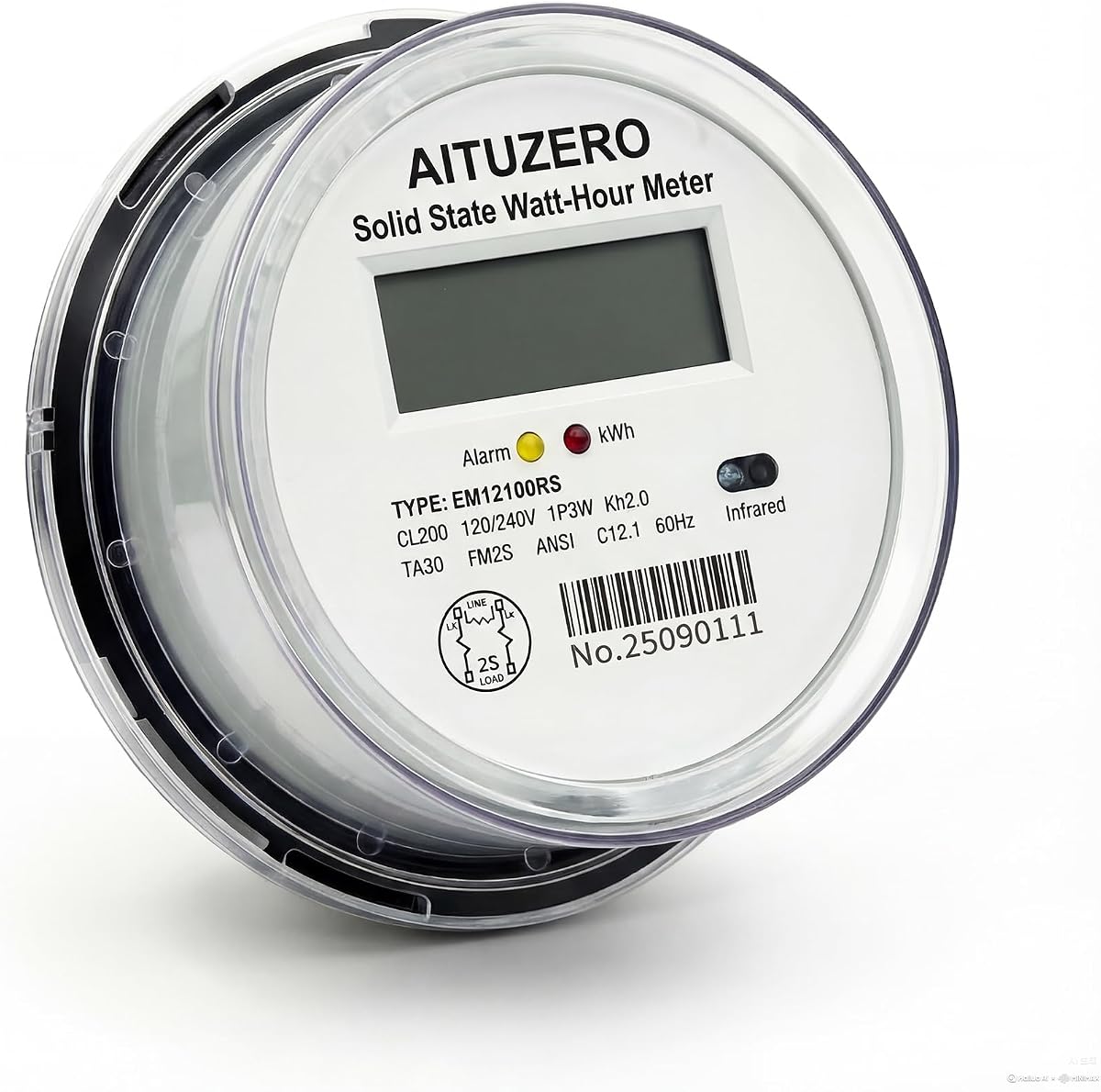
This digital electric sub meter ranks as the top overall choice due to its versatility and ease of use. It is designed for landlords and workshop owners who need accurate kWh tracking across multiple units. The bright LCD display ensures you can read energy data instantly without guesswork.
We may earn a commission when you buy through this link, at no additional cost to you.
Its ANSI Form 2S compatibility simplifies installation in standard meter sockets, making it perfect for DIY upgrades. The built-in pulse and Modbus outputs allow seamless integration with larger monitoring systems. This makes it highly suitable for solar setups or multi-tenant billing scenarios.
While it relies on specific socket bases which may limit retrofitting in older homes, the solid-state design offers long-term stability. The reverse-flow LED helps quickly detect solar backfeed or wiring issues, adding a layer of safety for complex installations.
If you manage rental properties or need reliable energy monitoring for workshops, this meter offers the best balance of features and usability. Its clear data output supports fair billing and energy efficiency planning.
The labeled terminals and snap-in design let you connect line and load wires rapidly without specialized tools.
Real-time solar output trends and reverse-flow LEDs help verify inverter behavior and system safety instantly.
We may earn a commission when you buy through this link, at no additional cost to you.
This CL200 sub meter stands out for its advanced data integration capabilities, making it ideal for technical users. It supports RS485 Modbus communication which allows multiple meters to connect to a central system for consolidated monitoring.
We may earn a commission when you buy through this link, at no additional cost to you.
The import and export energy measurement is a key feature for solar applications, tracking power flow in both directions. Users can see voltage, current, and power factor simultaneously on the backlit LCD display which cycles automatically.
Non-volatile EEPROM memory ensures usage data persists through power interruptions, maintaining reliable logs. However, setting up the Modbus network may require additional gateways or software, which could deter less experienced installers.
Choose this meter if you need detailed energy analytics and plan to scale your monitoring across several circuits or buildings.
RS485 Modbus support enables centralized data collection for professional energy management systems.
Track imported and exported energy to understand balance in solar or backup power setups.
We may earn a commission when you buy through this link, at no additional cost to you.
The Series 2000 is built for robust performance in commercial settings where high amperage loads are common. Its durable enclosure is rated for outdoor installations which protects the meter from harsh weather conditions.
We may earn a commission when you buy through this link, at no additional cost to you.
It supports 200 amp ratings and multiple voltage configurations allowing flexibility across different electrical systems. The compact design saves space while maintaining clear labeling for safe maintenance.
While it lacks smart communication features like Modbus or cloud integration it remains a solid choice for basic metering. The lower user rating suggests potential reliability issues or simpler features compared to modern competitors.
This unit is best suited for industrial or commercial applications where high capacity and ruggedness are priorities over connectivity.
Durable outdoor-rated enclosure protects internal components from moisture and temperature extremes.
200 amp rating ensures reliable monitoring for large motors and industrial machinery.
We may earn a commission when you buy through this link, at no additional cost to you.
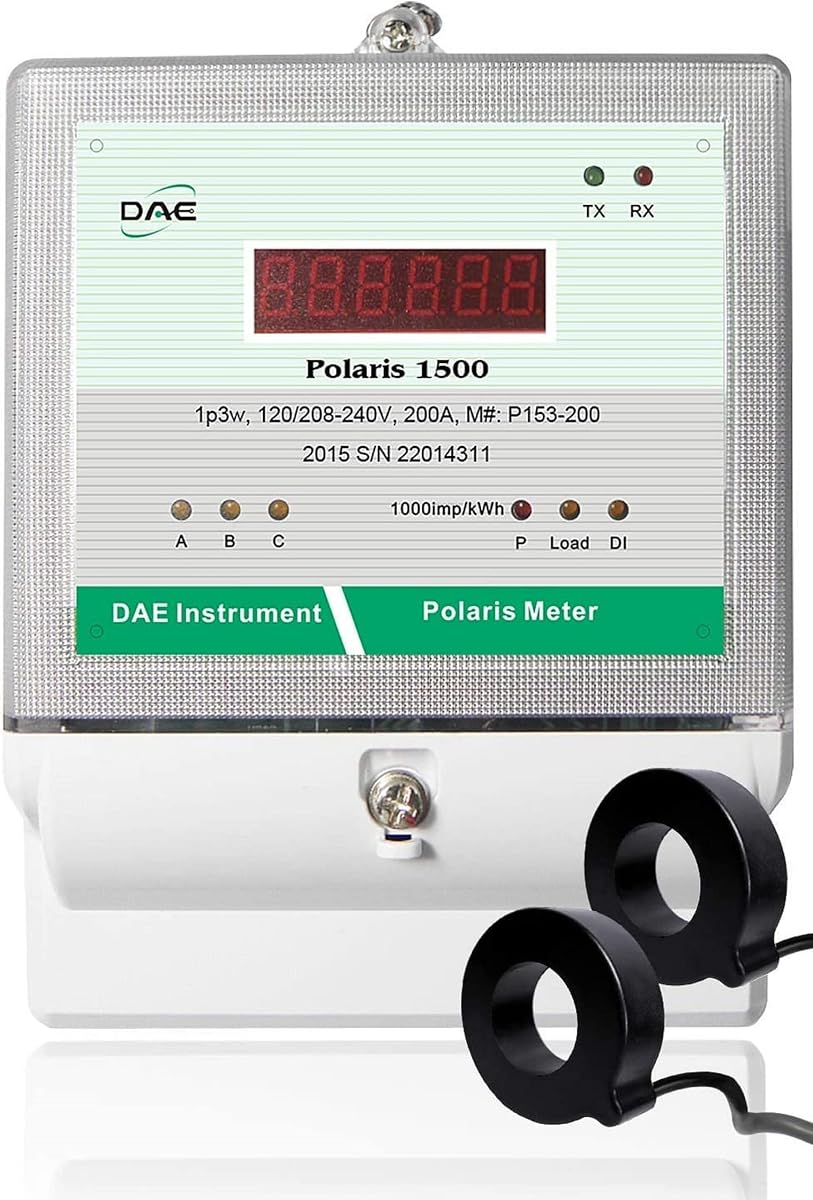
This kit offers revenue-grade accuracy approved by UL and CTEP making it ideal for legal billing purposes. Landlords can access real-time data and monthly reports through DAE cloud services without needing IT expertise.
We may earn a commission when you buy through this link, at no additional cost to you.
It includes two current transformers and supports RS485 communication for detailed tracking. The time of use billing reports help analyze peak consumption patterns to optimize energy costs.
The price is higher than standard sub meters but justified by the accuracy and cloud capabilities. Installation might be complex for existing buildings but wireless converters can simplify connections.
Select this model if you require verified data for tenant billing and want detailed cloud-based insights.
Conforms to ANSI C12.1 and C12.20 national accuracy standards for legal compliance.
Connect to cloud servers via Ethernet to access data from PCs or mobile devices.
We may earn a commission when you buy through this link, at no additional cost to you.
This meter features an internal current transformer which simplifies installation for circuits up to 50 amps. It follows IEC standards and works well with DAE cloud systems for remote data access.
We may earn a commission when you buy through this link, at no additional cost to you.
The RS485 interface enables connections to monitoring devices for detailed energy analysis. However the 50 amp limit makes it suitable for smaller apartments or specific circuits rather than main feeds.
Installation requires attention to indoor ratings as the unit is not weatherproof without additional enclosures. Users appreciate the ease of integrating with existing cloud management tools.
It is a good choice for residential sub-metering where load requirements are moderate and indoor installation is feasible.
Built-in CT eliminates external components for cleaner installation on small circuits.
Meets international standards for reliability in residential applications.
We may earn a commission when you buy through this link, at no additional cost to you.
This kit is designed for three phase systems allowing accurate monitoring of industrial or commercial loads. It supports voltages from 120 to 480 volts and includes three current transformers for complete coverage.
We may earn a commission when you buy through this link, at no additional cost to you.
Revenue grade accuracy ensures precise billing while cloud services provide remote access to energy trends. The RS485 interface allows integration into larger networks for centralized management.
Wiring can be complex for those without electrical experience so professional installation may be necessary. The three wire support accommodates both 3 wire and 4 wire configurations.
This meter is essential for facilities with three phase power that require high accuracy and remote monitoring.
Supports both 3 wire and 4 wire 3 phase configurations for flexible installation.
Operates across a broad range of voltages up to 480V for diverse electrical systems.
We may earn a commission when you buy through this link, at no additional cost to you.
This pass-through meter allows direct wiring of wires through the unit which simplifies installation for 100 amp circuits. It provides local LCD readings and a pulse output for external counters.
We may earn a commission when you buy through this link, at no additional cost to you.
It works with both 2 wire and 3 wire setups making it versatile for residential sub-panels. The 100 amp capacity covers most household circuits without needing external transformers.
It lacks cloud connectivity so data monitoring requires manual checks or separate hardware. However its simplicity makes it reliable for basic usage tracking.
Choose this meter for straightforward local monitoring where advanced software integration is not required.
Direct wire connections simplify installation by eliminating the need for external current transformers.
Pulse output allows connection to external counters for additional data logging.
We may earn a commission when you buy through this link, at no additional cost to you.
This kit offers an impressive rating score due to its balance of features and value. It supports Din Rail mounting which saves space in electrical panels and includes internal CTs.
We may earn a commission when you buy through this link, at no additional cost to you.
Data can be sent to cloud servers for remote monitoring and billing reports. The 100 amp capacity is sufficient for most main panels or large sub-panels.
While indoor use requires an enclosure outdoors, the design is compact and efficient. Wireless RF converters can be added if direct cabling is difficult.
It is the best value option for landlords needing cloud capabilities without spending on premium models.
Compact Din Rail design fits easily into tight electrical panel spaces.
RF converters allow wireless connection to gateways for flexible installation.
We may earn a commission when you buy through this link, at no additional cost to you.
This universal meter supports both 2 and 3 wire configurations providing flexibility for different setups. It has a 100 amp capacity and allows direct pass through wiring.
We may earn a commission when you buy through this link, at no additional cost to you.
Users can read consumption locally on the LCD display or connect pulse outputs for remote monitoring. It is suitable for general electrical tracking without advanced software integration.
The simplicity makes it reliable but limits remote management capabilities. Ensure proper wire sizing as it handles up to 13.5mm wire diameter.
Use this meter for basic sub-metering tasks where versatility and direct readings are prioritized.
Accommodates both 2 and 3 wire setups for diverse electrical systems.
LCD display allows quick checks while pulse output supports external counting.
We may earn a commission when you buy through this link, at no additional cost to you.
This meter is a class 1000 device designed for industrial environments demanding precise energy tracking. It supports both 1 and 2 phase configurations and handles 100 amp loads.
We may earn a commission when you buy through this link, at no additional cost to you.
Its voltage compatibility with 120 to 240 volts allows use in various commercial settings. The build quality reflects industrial standards ensuring durability under heavy use.
It is more expensive than residential models but justified by its robust performance and specifications. Professional installation is recommended due to the complexity.
Consider this model for industrial facilities where high reliability and precise class ratings are necessary.
Class 1000 rating ensures high precision and durability in demanding environments.
Supports single and dual phase systems to fit diverse commercial applications.
We may earn a commission when you buy through this link, at no additional cost to you.
Choosing the right electric sub meter depends on your specific application requirements and budget. This guide outlines key factors to consider before making a purchase.
Ensure the meter supports your system voltage such as 120/240V or 120/208V. Mismatched voltage can lead to inaccurate readings or equipment failure. Always check your breaker panel specifications.
Select a meter with an amperage rating that matches or exceeds your circuit load. Exceeding the amp rating can damage the meter or create safety hazards. Common options include 50A, 100A, and 200A.
Consider whether you need pulse output, Modbus, or cloud connectivity. Modbus and cloud features enable remote monitoring and billing automation. Pulse outputs are useful for simple integration with counters.
Decide between plug-in designs that fit ANSI sockets and Din Rail models for panels. Plug-in units are easier for retrofitting while Din Rail models save space. Check your panel layout before buying.
Revenue-grade meters offer higher accuracy for legal billing purposes. Standard models are sufficient for general usage tracking. Look for ANSI or UL certifications to ensure reliability.
If installing outside, choose a weather-resistant or enclosed model. Indoor-only meters require protective boxes when used outdoors. This protects electronics from moisture and temperature extremes.
Determine if you need internal or external CTs. Internal CTs simplify wiring for lower amp circuits while external CTs handle higher loads. Check if the kit includes CTs.
Advanced meters retain data during power outages via EEPROM. Cloud systems store history remotely for easy analysis. Verify that the memory type meets your retention needs.
Maintain the meter by keeping it clean and free of debris. Inspect connections annually for signs of wear or corrosion. Ensure the enclosure remains sealed if used outdoors.
Yes if you have experience with electrical systems but consult a professional for high amp loads. Ensure your breaker panel supports the new meter's connections. Follow local codes and regulations for safety.
Many models support import and export tracking to monitor solar output. Check for reverse flow indicators to verify system behavior. Always install between inverter and panel for accurate data.
Revenue-grade meters match utility accuracy but standard models vary. Most provide precise enough data for billing. Look for ANSI or UL certifications to ensure reliability.
Modbus allows the meter to send data to a network for centralized monitoring. It is used in commercial and industrial settings for efficiency. Requires a gateway or compatible software to read.
Many providers include basic data access but advanced features may require fees. Check the specific vendor terms before purchase. Some use free local storage instead of cloud.
No sub meters are for internal monitoring and cannot replace utility billing units. They measure usage after the main meter for tenants or circuits. Only utilities can change main metering.
Most meters support 22 AWG to 1 AWG wire. Verify your circuit breaker size matches the wire gauge. Consult an electrician to confirm safety and code compliance.
Only cloud-connected models need internet. Standard models work locally with pulse or analog outputs. Check your monitoring needs before deciding on connectivity options.
Prices and availability change regularly so verify current details before purchasing. Choose the model that best fits your electrical setup and data needs.