
LeapFrog 2-in-1 LeapTop Touch
4.7Editor score
Convertible design
Simple interface
Role play modes
Finding the right technology for children with autism requires careful consideration of sensory needs and learning styles. A good laptop offers structured activities, calming visuals, and intuitive controls that support development without causing overload. Parents seek devices that balance fun with educational value to keep engagement high during learning sessions.
We analyzed ten leading products based on their interface design, content variety, and adaptability for neurodivergent learners. Our comparison looks at screen types, input methods, and built-in features that reduce friction during use. This list covers toys, entry-level devices, and robust learning platforms suitable for various ages and skill levels.
Each pick highlights specific strengths such as bilingual options, offline capabilities, or durable construction. You will see how each device handles basic tasks and educational games. Note that availability and pricing change frequently, so verify current details before making a final purchase decision for your child.
4.7Editor score

4.5Editor score

4.4Editor score
As an Amazon Associate we earn from qualifying purchases.
The following table provides a side-by-side view of the top ten devices. It highlights key specifications like screen size, operating system, and included accessories to help you quickly identify the best fit for your needs.




This VTech device stands out for its realistic design that mimics a standard computer layout. It holds a strong 4.5 rating among parents seeking structured learning tools for young children. The full-size keyboard and cursor controller help build foundational computer skills in a familiar format.
We may earn a commission when you buy through this link, at no additional cost to you.
Over 80 pre-loaded activities cover subjects like math, science, and language arts. Each session can be played in English or Spanish, allowing for immersive language learning without external connectivity. This offline capability ensures uninterrupted use even when internet access is limited or unavailable.
While the device is robust, it relies on AA batteries which can be a recurring cost for heavy users. Additionally, the content is fixed rather than downloadable, which may limit long-term variety compared to internet-enabled tablets. However, the stability of offline play often outweighs these minor inconveniences.
It is an ideal choice for families wanting a dedicated learning tool that feels professional yet remains safe. Children gain confidence navigating a real keyboard while engaging with educational games. This balance of realism and accessibility makes it a top recommendation for early learners.
The full QWERTY layout helps kids transition smoothly to future school computers.
Every activity switches between English and Spanish to support language development.
We may earn a commission when you buy through this link, at no additional cost to you.
The LEXiBOOK LAPTAB offers a significant upgrade with its Android operating system and Google Play connectivity. It scores well for families needing access to a wider range of apps and educational tools. The 10.1-inch HD touchscreen provides a clear, interactive surface for touch-based learning.
We may earn a commission when you buy through this link, at no additional cost to you.
Its 128GB storage capacity ensures ample space for ebooks, games, and learning apps. The device includes a 15-language translator and Power Academy app, supporting diverse educational needs. Robust parental controls allow guardians to manage screen time and app access effectively.
Setting up Google Play requires a stable internet connection and account management, which can be complex for some users. The menu system is more intricate than simple toy laptops, potentially overwhelming very young children without guidance. These factors require initial setup effort.
This laptop is best for older kids or those needing versatile app access for school and play. The combination of storage, performance, and portability makes it a strong contender for growing children. It bridges the gap between toy laptops and full computers effectively.
Google Play access allows installation of tailored educational tools and games.
128GB internal memory supports offline downloads and media libraries easily.
We may earn a commission when you buy through this link, at no additional cost to you.
This Lenovo Chromebook offers a premium experience with a large 14-inch Full HD touchscreen and powerful processor. It is designed for longevity, running Chrome OS which is fast, secure, and simple to manage. The device includes a privacy shutter on the webcam for added safety.
We may earn a commission when you buy through this link, at no additional cost to you.
With 4GB of RAM and 128GB storage plus card support, it handles multiple tabs and apps smoothly. Chrome OS provides built-in cloud backups, ensuring that learning progress and documents are not lost if the device is damaged. This reliability is crucial for school and home use.
The primary limitation is its reliance on internet connectivity for many core functions. While some apps work offline, full functionality requires WiFi. Additionally, the price point is higher than toy laptops, though the durability justifies the investment over time.
It is an excellent choice for families needing a device that can grow with the child into teenage years. The combination of performance, security, and screen quality makes it a standout option. It supports both educational tasks and recreational needs effectively.
Chrome OS offers automatic updates and built-in protection for safe browsing.
The 14-inch display provides sharp visuals and wide viewing angles.
We may earn a commission when you buy through this link, at no additional cost to you.
This educational laptop focuses on core learning skills with 48 distinct modes covering math, colors, and logic. The 4.3-inch TFT color screen offers clear visuals that are easy to see. Its design mimics real laptops with a realistic mouse and keyboard for tactile feedback.
We may earn a commission when you buy through this link, at no additional cost to you.
The slim and elegant form factor makes it easy for small hands to grip and carry. Games and activities are tailored to test memory and speed, keeping engagement high. It is particularly useful for reinforcing basic concepts in a fun way.
The smaller screen size might be less engaging for older children accustomed to larger displays. Battery life depends on usage patterns and requires regular AA battery replacement. These factors limit its suitability for extended outdoor travel or long study sessions.
For younger learners focused on foundational skills, this device provides a dedicated platform. The ergonomic design ensures comfort during use while the variety of modes prevents boredom. It is a solid entry point into structured learning technology.
48 modes target alphabet, math, and logic for comprehensive early learning.
Slim design and realistic mouse support natural hand movements.
We may earn a commission when you buy through this link, at no additional cost to you.
The Acer Chromebook 315 distinguishes itself with an impressive 12-hour battery life. This feature ensures that the device lasts through a full day of school or activities without needing a recharge. The 15.6-inch Full HD IPS display offers vivid colors and wide viewing angles.
We may earn a commission when you buy through this link, at no additional cost to you.
Powered by an Intel Celeron processor, it handles basic tasks and web browsing efficiently. The lightweight design makes it easy to transport in a backpack or bag. Chrome OS remains secure and up-to-date, providing a reliable platform for students.
The processor may struggle with heavy multitasking or high-resolution video editing. Storage is limited to 64GB eMMC, which might fill up quickly with large media files. However, cloud storage options in Chrome OS mitigate this limitation for most users.
It is a reliable choice for families needing a device that stays powered all day. The large screen supports better focus during reading or learning tasks. This balance of endurance and screen size makes it a practical daily driver.
12-hour battery life supports full school days without charging interruptions.
15.6 inch IPS display provides clear visuals and comfortable text size.
We may earn a commission when you buy through this link, at no additional cost to you.
This LeapFrog toy is tailored for preschoolers aged 2 to 5 years. It features a screen that flips to convert between keyboard and tablet modes. This versatility allows children to interact with content in different ways as they grow.
We may earn a commission when you buy through this link, at no additional cost to you.
Five learning modes cover ABCs, numbers, music, and messages. Parents can customize settings to help children spell their names, adding a personal touch. The role play features let kids pretend to use email, mimicking adult behavior.
The age range is quite narrow, making it less suitable for older children. It is a standalone device without internet connectivity, which limits content expansion. However, this simplicity ensures safety and ease of use for very young users.
For parents of toddlers and preschoolers, it offers excellent value at a low price point. The durable build withstands active play while the educational content aligns with early milestones. It is a smart first device for developing basic skills.
Flip screen allows both typing and touch exploration for variety.
Customizable settings let parents add names and specific spelling lessons.
We may earn a commission when you buy through this link, at no additional cost to you.
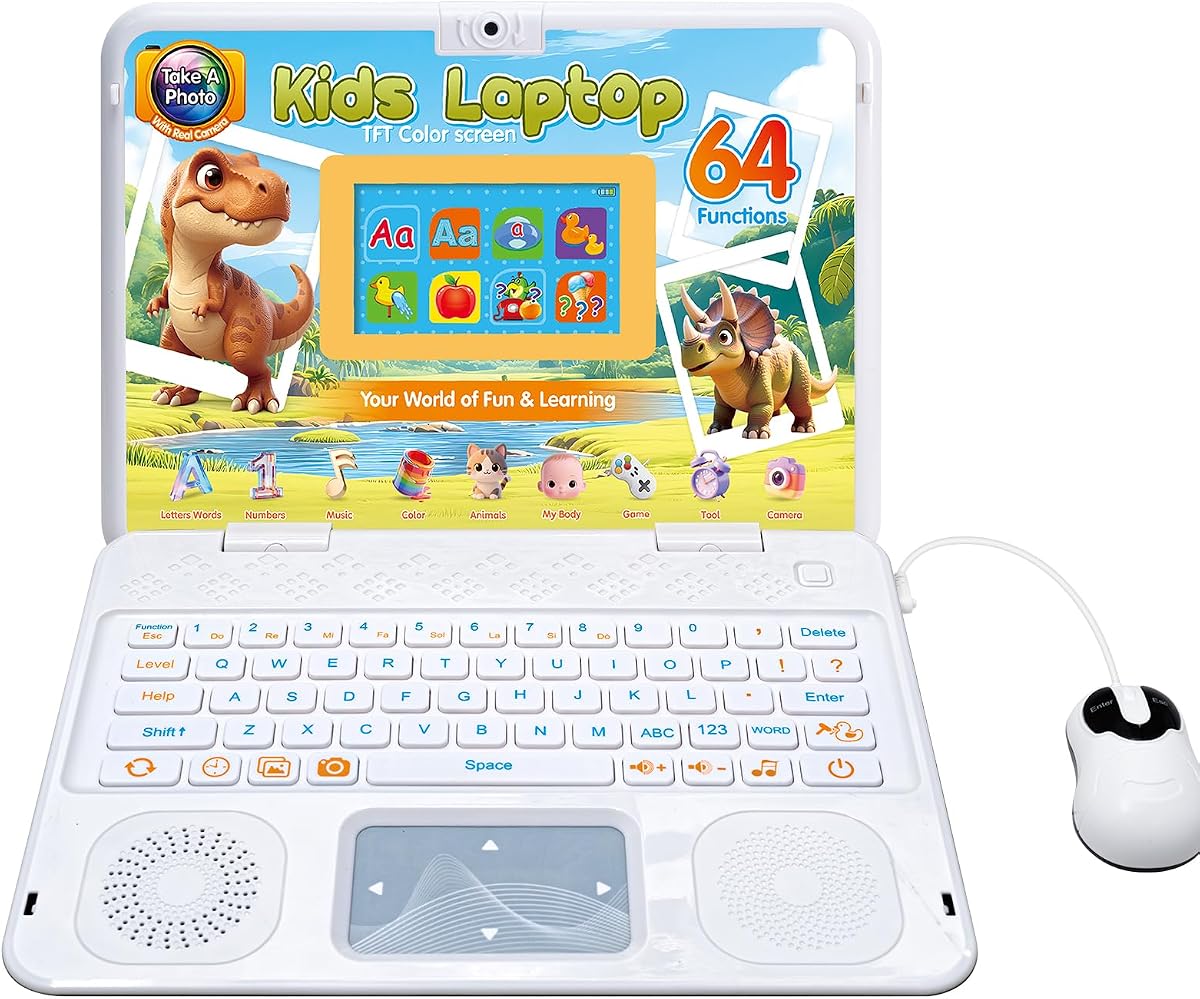
This laptop includes a built-in camera with photo frames and filter effects for creative play. It features 64 learning modes that range from math to general knowledge. The vibrant color screen ensures that visual content is clear and engaging.
We may earn a commission when you buy through this link, at no additional cost to you.
The design draws from real laptop ergonomics to support natural hand movements. Children can enjoy games after mastering educational activities, blending learning with fun. The camera feature allows them to record memories and express creativity freely.
The camera quality is basic and not intended for professional photography. Battery dependency remains a consideration for parents looking for portable use. However, the balance of education and creativity offers a well-rounded experience.
It is ideal for families wanting to encourage both academic and creative interests. The filters and photo modes add a unique touch that keeps interest high. This combination makes it a standout choice for expressive kids.
Built-in camera with filters lets kids take and edit photos safely.
64 modes cover various subjects to keep learning fresh and dynamic.
We may earn a commission when you buy through this link, at no additional cost to you.
This mini netbook runs Android 12 providing direct access to Google Play and apps. It is powered by a quad-core processor and 2GB RAM for smooth daily tasks. Weighing only 1.76 lbs, it is designed for easy mobility and travel.
We may earn a commission when you buy through this link, at no additional cost to you.
The package includes a carrying bag, mouse, and mouse pad making it ready to use out of the box. Connectivity options include USB ports and Bluetooth for peripheral support. It serves as a functional tool for home schooling or light work.
Reviews indicate performance limitations compared to higher-end devices. The 64GB storage is modest but expandable up to 1TB which helps. The lower rating suggests some variability in build quality or experience.
For those needing an affordable portable device with Android apps, it offers good value. The inclusion of accessories adds convenience for immediate setup. It is a solid entry point for Android-based learning.
Complete set with bag and mouse simplifies initial setup and transport.
Google Play Store support allows installation of diverse educational apps.
We may earn a commission when you buy through this link, at no additional cost to you.
This device resembles a traditional laptop with a keyboard and trackpad. It runs Android 12.0 system allowing access to Google Drive and Docs. The 10.1-inch IPS display supports learning and entertainment tasks effectively.
We may earn a commission when you buy through this link, at no additional cost to you.
Charging via Type-C is convenient and modern. It includes essential ports like USB and TF card for expanded connectivity. The packaging includes a charger and mouse ready for immediate use.
Battery life is rated at 5 to 7 hours which may require mid-day charging for heavy use. The storage options are modest but sufficient for basic apps. Performance is suitable for standard tasks rather than intensive work.
For users seeking an affordable Android laptop with a physical keyboard, this is a viable option. It supports study and work needs with a compact footprint. The design balances cost and functionality well for budget conscious buyers.
Type-C charging port offers faster power delivery and universal compatibility.
Full keyboard and trackpad support traditional typing navigation styles.
We may earn a commission when you buy through this link, at no additional cost to you.
This Lexibook laptop focuses on educational activities including music composition and play. It supports both English and Spanish to broaden learning opportunities. The design features a realistic mouse and keyboard for comfortable handling.
We may earn a commission when you buy through this link, at no additional cost to you.
Musical activities help children learn notes and compose melodies which adds an artistic layer. General knowledge and logic games round out the curriculum to test understanding. Games challenge logic and memory speed after study sessions.
As a toy device it lacks internet connectivity and expansion options. Battery dependency means users must keep spares on hand for extended use. These limitations are typical for this class of learning toy.
It is perfect for families prioritizing musical and bilingual learning experiences. The ergonomic design supports comfort during use while the variety keeps engagement high. It is a great choice for children interested in music and language.
Composing and playing melodies introduces basic musical concepts creatively.
Slim design with real mouse aids in natural hand and finger use.
We may earn a commission when you buy through this link, at no additional cost to you.
Selecting the right device involves assessing sensory needs, learning goals, and budget. Each factor below helps narrow down options for a better fit.
Larger screens with IPS panels provide better clarity and viewing angles which can reduce eye strain. For sensitive children, avoid screens with harsh glare or flickering. Touchscreens offer intuitive navigation while physical keyboards support motor skill development.
Look for screens between 10 to 14 inches for a balance of portability and comfort.
Simple operating systems like Chrome OS or Android reduce cognitive load during navigation. Built-in accessibility tools such as text-to-speech or high contrast modes are vital for some users. Avoid overly complex interfaces that may cause confusion.
Prioritize devices with robust parental controls and simple UI customization options.
Adjustable volume and brightness settings allow parents to tailor sensory input. Some devices offer muted modes or soft feedback sounds which prevent startling. Consistent visual cues in the interface help predict actions and outcomes.
Check if volume and brightness knobs or buttons are easy to find and use.
Realistic keyboards and mice help children transition to standard school computers. Ergonomic designs support small hands and reduce fatigue. If touch is preferred, ensure the device responds reliably without false taps.
Choose input tools that match your child's current motor skill level and preferences.
Pre-loaded educational content should align with learning goals like math or language. Games should be designed to reinforce skills rather than just distract. Look for options that allow progress tracking or adjustable difficulty levels.
Ensure apps and games are rated for the age group and offer structured activities.
Long battery life ensures uninterrupted learning sessions during school or travel. Devices using rechargeable batteries are more cost-effective than disposable options over time. Consider if the device works without an internet connection for offline learning.
Verify power sources match your household setup and expected daily usage time.
Sturdy construction and shock resistance protect the device from drops. Materials should be easy to clean if the child tends to use hands frequently. A good carrying case helps prevent damage during transport.
Select models known for reliability and include protective accessories if needed.
Lightweight designs make it easier for children to carry devices to classrooms. Compact sizes fit well in backpacks without adding too much weight. Ensure the device is sturdy enough to withstand daily travel.
Balance screen size with weight to ensure the device is manageable for the child.
Start by setting up user profiles with clear names and simple icons. Use parental controls to limit access to necessary apps and features. Adjust volume and brightness to comfortable levels immediately after unboxing.
Regularly clean the screen and keyboard with a microfiber cloth to remove dust. Avoid spraying liquids directly on the device and store it in a dry place. Ensure batteries are charged or replaced before starting daily sessions.
Encourage consistent usage times to build routine and predictability. Take short breaks to prevent eye strain and sensory fatigue. Update apps and settings periodically to keep content fresh and engaging.
Yes, many models offer visual interfaces and simple navigation that do not rely on speaking. Look for touchscreens and icon-based menus to facilitate interaction. Parents can customize settings to reduce barriers and improve usability for non-verbal users.
Use built-in parental controls to block apps and websites not needed for learning. Create whitelists of approved educational tools. Most devices allow you to set time limits and usage schedules to maintain focus.
The options span from toddlers to teenagers. Toy laptops work best for ages 2 to 5 while Chromebooks and Android devices suit older children. Always check the manufacturer's age recommendations for optimal safety and utility.
Several toy laptops and learning devices operate fully offline with pre-loaded content. Chromebooks and Android tablets require internet for full functionality but support some offline apps. Verify offline capabilities before purchase if connectivity is limited.
Ergonomic designs with smaller key sizes are available to match physical development. Look for keyboards that feel sturdy yet lightweight for comfortable use. Testing with the child helps ensure proper fit and reduced hand strain.
Regular cleaning of screens and keyboards is essential for longevity. Keep software updated and manage storage to maintain performance. Replace batteries as needed and store devices in a safe location when not in use.
Modern devices like Chromebooks allow multiple user profiles for family members. Set up individual accounts to keep progress and preferences separate. This ensures each child gets a tailored experience without interference from others.
Use physical volume buttons or software settings to lower output to a comfortable level. Some models include muted modes or haptic feedback alternatives. Check for external speakers or headphones that provide better control over sound.
This guide presented ten distinct options ranging from toy laptops to full computing platforms. Each device offers unique strengths like offline modes, bilingual content, or flexible operating systems. Consider your child's specific needs to select the most supportive tool.
Prioritize sensory-friendly features and durable build quality to ensure long-term satisfaction. Balancing educational value with entertainment keeps engagement high for children. A well-chosen device can become a trusted resource for learning and creativity.
Always check current availability and pricing before purchasing to ensure you get the best deal. Prices fluctuate frequently so staying informed helps maximize your investment. With the right support and device, technology can greatly enhance your child's development.