
EBOOT 30 Pieces Photoresistor
4.6Editor score
Thirty photoresistors included
Spectral peak at 540 nm
Ideal for DIY hand working projects
This guide compares the top light sensor for Arduino modules to help you choose the right photoresistor or digital sensor for your next electronic project.
Light sensors are essential components for any Arduino project requiring environmental awareness. Whether you are building a smart home device or an automated garden system, choosing the right sensor ensures reliable data collection and efficient performance.
We have carefully selected ten top-rated light sensor modules available for Arduino users. Each product was evaluated based on compatibility, accuracy, ease of use, and customer feedback to ensure you get the best value for your investment.
Every pick in this list highlights key features and real-world applications to guide your decision. Please note that product availability and specific terms may change over time, so verify details before purchasing.
4.6Editor score

4.4Editor score
4.7Editor score
The following table provides a side-by-side comparison of all ten selected light sensor modules to help you quickly identify the best fit for your specific Arduino project requirements.



This module combines a 5MM LDR with an LM393 comparator to offer both digital and analog outputs. It holds a solid rating and is widely used for basic ambient light detection in Arduino environments.
We may earn a commission when you buy through this link, at no additional cost to you.
The inclusion of the LM393 voltage comparator ensures a clean signal and strong driving capability. You can adjust the detection brightness using the built-in potentiometer to suit your specific project requirements.
While the analog output allows for nuanced readings, the photoresistor itself is less precise than digital light sensors. For simple threshold detection, this trade-off is acceptable and keeps costs low.
This is an excellent choice for beginners or projects needing automatic control based on light levels. It works well with Arduino, Raspberry Pi, and ESP32 boards.
The dual output design allows you to choose between simple on-off control or detailed light intensity readings.
Standard pin configuration and voltage compatibility make it straightforward to wire into existing breadboard setups.
We may earn a commission when you buy through this link, at no additional cost to you.
This module uses the BH1750FVI chip to provide precise digital light intensity measurements. It is highly rated for its accuracy and ease of integration with various microcontrollers.
We may earn a commission when you buy through this link, at no additional cost to you.
The I2C interface reduces wiring complexity compared to analog sensors. You get direct Lux readings which are useful for applications like automatic brightness control in displays or lighting systems.
Its compact dimensions allow it to fit into small enclosures easily. However, beginners may need to install specific libraries to communicate with the sensor correctly.
Choose this if you need reliable and accurate data without calibration. It is perfect for smart home projects requiring precise ambient light monitoring.
The sensor outputs light intensity in Lux, removing the need for manual conversion of analog values.
Using I2C means you only need two data pins, freeing up other resources on your Arduino board.
We may earn a commission when you buy through this link, at no additional cost to you.
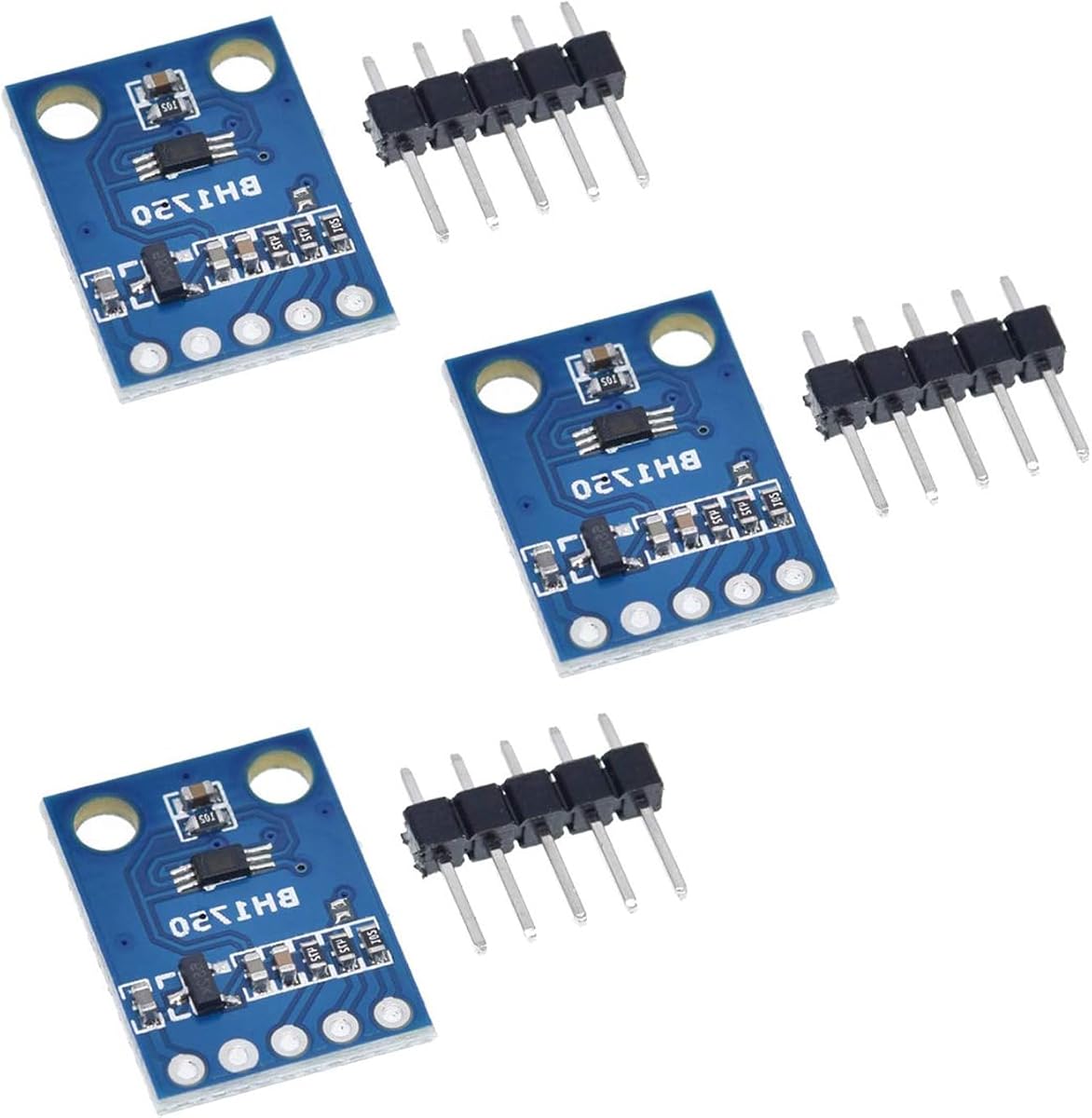
This package offers three identical GY-302 modules, providing value for multiple projects or backup. It shares the same high-quality chip as other top contenders.
We may earn a commission when you buy through this link, at no additional cost to you.
The use of the original ROHM BH1750FVI chip ensures stable and accurate readings. This is particularly useful if you are building several devices that require uniform sensor behavior.
While functionally similar to other BH1750 modules, buying in bulk can be more economical over time. The standard form factor ensures compatibility with existing projects.
If you plan to deploy sensors in multiple locations, this pack is a practical choice. It eliminates the need to buy modules individually for each unit.
Purchasing three units at once reduces the per-unit cost and ensures you have spares available.
Standardized manufacturing means each sensor in the pack performs similarly, simplifying calibration.
We may earn a commission when you buy through this link, at no additional cost to you.
This module uses a photodiode to detect light primarily from a fixed direction. It is useful for applications where light seeking or specific source detection is required.
We may earn a commission when you buy through this link, at no additional cost to you.
The module features both digital switch and analog voltage outputs. You can adjust sensitivity using the blue potentiometer to differentiate between ambient light and specific sources.
The small PCB size includes bolt holes for easy installation in enclosures. However, the directional nature means you must aim the sensor correctly to get accurate readings.
For projects like line followers or sun trackers, this directional capability is a major advantage. It helps filter out unwanted ambient light interference.
Unlike omnidirectional sensors, this module focuses on light from a specific angle for precise tracking.
Built-in fixing holes allow you to secure the module firmly in your project casing.
We may earn a commission when you buy through this link, at no additional cost to you.
This bulk pack provides thirty individual photoresistors without any breakout boards. It is the most budget-friendly way to stock up on sensors for multiple prototypes.
We may earn a commission when you buy through this link, at no additional cost to you.
Each resistor has a maximum voltage rating of 150 Volts DC, which is higher than typical module ratings. The spectral peak at 540 nm ensures sensitivity to visible light.
Since these are bare components, you must build your own voltage divider circuit to use them with Arduino. This offers more flexibility but requires more initial effort.
If you are a student or hobbyist wanting to understand how sensors work internally, this is the ideal choice. It saves money on future projects requiring spare parts.
Using raw components allows you to customize the circuit design to your exact specifications.
Purchasing in bulk significantly reduces the cost per resistor compared to pre-made modules.
We may earn a commission when you buy through this link, at no additional cost to you.
This pack offers ten complete sensor modules, each featuring an LM393 comparator. They are designed to easily drive relays for automated lighting control.
We may earn a commission when you buy through this link, at no additional cost to you.
The digital output provides a high or low level based on set light intensity. This simplifies code by removing the need to process analog data for on-off switching.
The modules are sensitive to ambient light changes, making them effective for night-light projects. The compact design allows multiple units to be used in one project.
For automated systems requiring reliable switching without complex logic, these modules are highly effective. They bridge the gap between sensing and acting on light levels.
The strong output signal can control a relay directly, enabling automatic light switching.
Three pins simplify wiring to your microcontroller, saving time on setup.
We may earn a commission when you buy through this link, at no additional cost to you.
This module provides both digital and analog outputs to offer flexibility in different project requirements. It is explicitly marketed as compatible with ESP32 and ESP8266 boards.
We may earn a commission when you buy through this link, at no additional cost to you.
The built-in potentiometer lets you fine-tune the triggered threshold for accurate detection. This versatility makes it suitable for both simple and intermediate projects.
Tutorials are provided for popular microcontrollers like ESP32, making setup easier for IoT projects. The four-piece pack ensures you have replacements ready.
If you are building a connected lighting project, this module offers the necessary features without complexity. It supports both threshold and intensity readings.
Designed for ESP32 compatibility, this module is great for sending data to the cloud.
Using both outputs allows you to switch between analog sensitivity and digital thresholds.
We may earn a commission when you buy through this link, at no additional cost to you.
This package contains fifty GL5516 photoresistors, ideal for large production runs or extensive workshops. It has an excellent customer rating of 4.9 stars.
We may earn a commission when you buy through this link, at no additional cost to you.
The provided resistance values for bright and dark conditions allow for precise circuit design. These specifications help you calculate the correct resistor for voltage dividers.
Without breakout boards, you have complete control over how the sensor is integrated. This is perfect for custom enclosures or high-density sensor arrays.
For industrial prototypes or educational kits requiring many units, this bulk supply is efficient. The high rating suggests consistent quality across all units.
With fifty units, you can build and test multiple iterations of your design simultaneously.
Knowing the resistance values helps in designing stable circuits without guesswork.
We may earn a commission when you buy through this link, at no additional cost to you.
This sensor is designed for professional applications like display backlight dimming and keypad lighting. It has achieved a perfect rating, indicating high user satisfaction.
We may earn a commission when you buy through this link, at no additional cost to you.
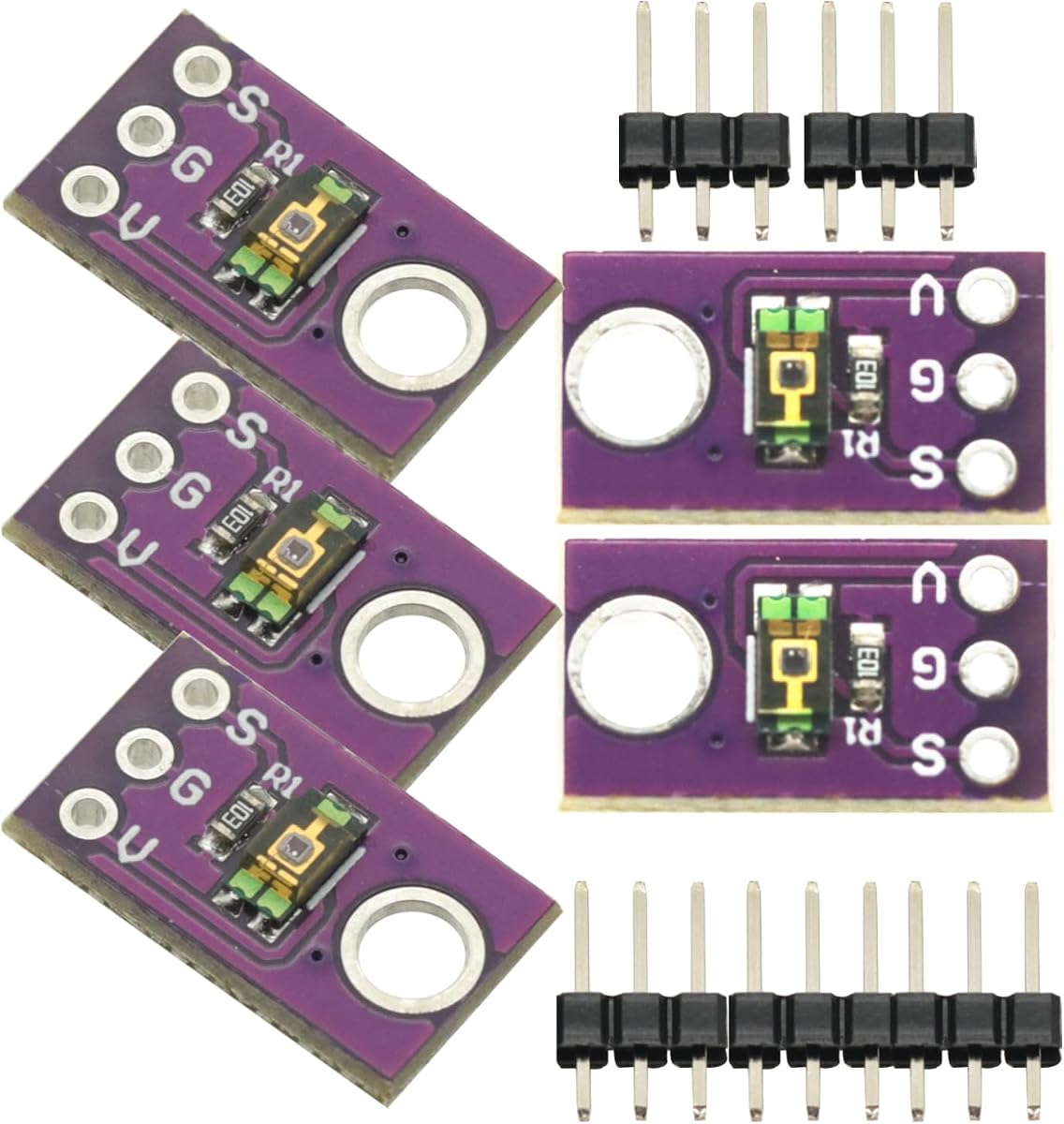
The TEMT6000 is known for linear response and high precision compared to standard photoresistors. This makes it ideal for interfaces where smooth brightness changes are required.
While it may be more expensive than basic sensors, its performance justifies the cost for critical displays. The compact form factor fits well behind screens.
Choose this module if you need reliable backlight control for a custom device. It offers the precision needed for industrial or consumer electronics.
Optimized for adjusting display brightness to match ambient light conditions automatically.
Linear response allows for accurate and smooth dimming transitions.
We may earn a commission when you buy through this link, at no additional cost to you.
This module combines a photodiode with an LM393 comparator for reliable light detection. It is widely used in applications like smart cars for headlight control.
We may earn a commission when you buy through this link, at no additional cost to you.
The module supports both digital and analog outputs, giving you flexibility in how you process the light data. The LM393 ensures stable performance across different voltage levels.
While it uses standard components, the reliability is high for general automation tasks. It works well for threshold detection in dynamic environments.
If you need a robust sensor for automotive or industrial projects, this is a solid choice. It balances cost and performance effectively.
Commonly applied in smart cars to automate headlight switching based on light conditions.
The LM393 comparator maintains stable output even if voltage fluctuates.
We may earn a commission when you buy through this link, at no additional cost to you.
Selecting the right light sensor requires understanding your project's specific needs regarding accuracy, interface, and environmental conditions.
Photoresistors are inexpensive and simple but lack precision compared to digital sensors like BH1750. Digital sensors provide direct Lux readings and are more stable over time.
Choose digital sensors for accuracy and analog for simple on-off control.
Analog outputs give continuous data useful for dimming, while digital outputs provide simple high or low signals for switching.
Decide if you need to measure intensity or just detect presence.
Ensure the module supports your board's voltage, such as 3.3V or 5V, to avoid damage or reading errors.
Always check the spec sheet before powering the device.
Modules with potentiometers allow you to adjust the trigger threshold manually for different environments.
This is useful for calibration without changing code.
Some modules are compact with mounting holes, which is crucial for fitting into tight enclosures.
Consider the physical footprint relative to your project box.
Standard sensors detect light from all sides, while photodiodes may be directional to focus on specific sources.
Pick directional sensors for tracking or avoiding ambient interference.
I2C interfaces simplify wiring by reducing pins, whereas analog sensors use a single pin for data.
I2C is better if your pins are limited.
Digital chips from reputable manufacturers like ROHM offer better long-term stability than generic resistors.
Reliability is key for critical automation projects.
Connect the VCC pin to the power supply, GND to ground, and the output pin to a digital or analog pin on your Arduino. Ensure voltage compatibility to prevent damage.
Upload a code example specific to the sensor model. Libraries are often required for digital sensors like BH1750 to interpret data correctly.
Protect the sensor from physical damage and avoid exposure to water. Regularly clean the sensor lens to prevent dust from affecting light detection accuracy.
An LDR is an analog component whose resistance changes with light intensity. A BH1750 is a digital sensor that outputs precise Lux readings. The BH1750 offers better accuracy and requires less calibration.
Many modules support both 3.3V and 5V power supplies. Check the voltage specifications of your specific module to confirm compatibility before connecting to the board.
Most modules include a potentiometer on the PCB. You can rotate this small screw to change the trigger threshold for digital output or affect the analog reading.
Popular libraries include Adafruit BH1750 or SparkFun BH1750. Install these via the Arduino Library Manager to easily read light intensity values in Lux.
Basic modules are not weather-resistant. You should enclose them in a waterproof case if using them outdoors to protect the electronics from rain and humidity.
A simple LDR module uses three pins (VCC, GND, OUT). Digital I2C sensors may use only four pins total (VCC, GND, SDA, SCL).
We have reviewed ten reliable options ranging from budget photoresistors to precision digital modules. Each product offers unique features suited for different types of Arduino applications.
Prioritize accuracy and interface type based on your project goals. If you need simple automation, analog sensors suffice; for smart displays, digital sensors are better.
Always check current product availability and compatibility before purchasing. These recommendations remain relevant for hobbyists and engineers seeking dependable light detection.